

Proper bathroom exhaust fan duct routing is the single most critical factor in preventing mold growth and structural rot in your home. While many homeowners focus solely on the fan’s power, the path the air takes to the exterior determines whether moisture is effectively removed or simply displaced to cause damage elsewhere.
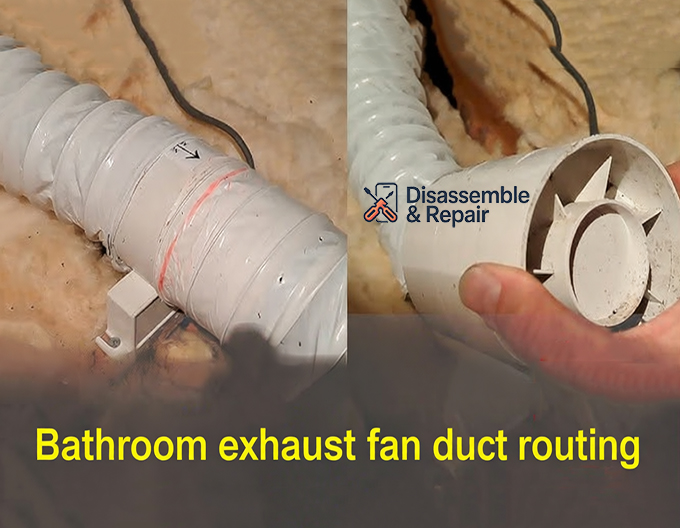
Bathroom exhaust fan duct routing: Designing the Optimal Path
The primary goal of bathroom exhaust fan duct routing is to create the shortest, straightest, and smoothest path from the bathroom ceiling to the outdoors. A poorly designed route increases static pressure, which drastically reduces the fan’s performance regardless of its CFM rating.
When planning your route through an attic space or wall cavity, consider these three standard termination points:
1. Roof Termination (Preferred)
Venting vertically through the roof is often the most efficient method, as warm air naturally rises.
- Best Practice: Run the duct straight up from the fan housing through the attic.
- Termination: Use a high-quality roof cap with a built-in damper and bird screen.
- Caution: Ensure the termination is high enough to avoid being covered by snow in colder climates.
2. Side Wall Termination
If the distance to the roof is too long or the roof is inaccessible (e.g., first-floor bathrooms), routing horizontally to a side wall is a viable alternative.
- Best Practice: Maintain a slight downward slope toward the exterior to allow any condensation to drain out.
- Termination: Install a wall hood with a backdraft damper.
3. Soffit Vent Termination (Complex)
Venting through the soffit (the underside of the roof overhang) is common but risky.
- The Risk: Moist air expelled from the soffit can be sucked back into the attic through nearby intake vents, leading to mold in the attic.
- The Solution: If you must use this route, never vent into the soffit itself. You must use a dedicated duct that passes through the soffit and terminates with a specialized soffit vent designed to direct air away from the house.
Rigid Metal Ducting vs. Flexible Ducting
Choosing the right material is just as important as the route itself. Building codes generally prefer smooth materials, but practical installation often requires a hybrid approach.
Rigid Metal Ducting
This is the gold standard for venting.
- Pros: The smooth interior surface minimizes air resistance, allowing the fan to operate at its full capacity. It is also durable and easier to clean.
- Cons: Harder to install in tight spaces.
- Verdict: Use rigid metal ducting for the majority of long, straight runs to maximize airflow.
Flexible Ducting
Often used for its convenience, but frequently misused.
- Pros: Easy to route around obstacles and connect to the fan housing.
- Cons: The ribbed interior creates turbulence, significantly reducing airflow. It is also prone to sagging and kinking.
- Verdict: Limit flexible ducting to short connections (typically less than 2-3 feet) between the fan and the rigid ductwork. Ensure it is pulled taut to minimize resistance.
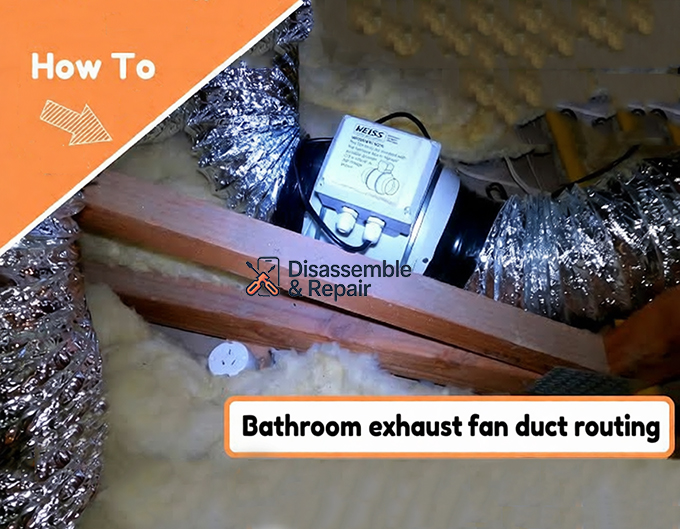
Essential Components for Moisture Control
A successful installation relies on more than just the pipe. Several key components ensure the system is sealed and weather-tight.
Insulated Ducting
In many climate zones, passing warm, moist air through a cold attic results in condensation inside the pipe. This water can trickle back down into the fan and damage your ceiling. To prevent this, you must use insulated ducting (or wrap rigid ducts with insulation sleeves) whenever the duct passes through unconditioned spaces. This keeps the air warm until it reaches the exit.
Backdraft Damper
A backdraft damper is a simple flap valve that allows air to escape when the fan is on but closes when the fan is off. This is essential for energy efficiency, as it prevents cold outside air from entering your bathroom and stops conditioned indoor air from escaping. Most quality termination vent caps include a damper, but installing a secondary rubber-sealed damper in the duct run can provide superior air sealing.
Calculating the Right Airflow
Before finalizing your route, verify that your fan is powerful enough for the duct length.
- CFM Rating: The Cubic Feet per Minute rating measures airflow. A standard rule is 1 CFM per square foot of bathroom area.
- The “Equivalent Length” Penalty: Every turn in your ductwork adds resistance. A 90-degree elbow can add the equivalent of 10 to 15 feet of straight pipe to the system’s load. If your routing is complex, you must size up your fan to compensate for this added static pressure.
Conclusion
Effective moisture control in your bathroom depends on a holistic system, not just a fan installation. By prioritizing rigid metal ducting, ensuring proper insulation in the attic space, and carefully planning your bathroom exhaust fan duct routing to a clear outdoor termination, you protect your home from long-term water damage. Always consult local building codes before starting your project to ensure your ventilation strategy meets safety standards.
Frequently Asked Questions
What is the best type of ducting material to use for a bathroom fan?
Rigid metal ducting is considered the gold standard because its smooth interior surface minimizes air resistance, allowing the fan to reach its full CFM capacity. Flexible ducting should be limited to short connections of three feet or less, as its ribbed interior creates turbulence and is prone to sagging, which significantly reduces airflow efficiency.
Why is it necessary to use insulated ducting in an attic?
When warm, moist air from the bathroom passes through a cold attic, it can condense into liquid water inside the duct. This moisture can then drip back down into the fan housing, causing damage to the motor and your ceiling. Using insulated ducting or wrapping rigid pipes with insulation keeps the air warm until it is safely exhausted outside.
Can I vent my bathroom exhaust fan into the attic or through the soffit?
You should never vent a fan directly into an attic, as this is a leading cause of mold and structural rot. While venting through a soffit is possible, it is risky because the moist air can be sucked back into the attic through nearby intake vents. If a soffit termination is necessary, you must use a dedicated duct that terminates with a specialized vent designed to direct air away from the house.
How do bends and elbows in the ductwork affect the fan’s performance?
Every turn in your duct routing increases static pressure and resistance. A single 90-degree elbow can add the equivalent of 10 to 15 feet of straight pipe to your system’s load. If your route requires multiple turns, you must select a fan with a higher CFM rating to ensure it has enough power to move air through the added resistance.
What is the function of a backdraft damper?
A backdraft damper is a one-way valve that opens when the fan is on and closes when it is off. This component is essential for energy efficiency because it prevents cold outdoor air from entering your bathroom and stops your heated or cooled indoor air from escaping through the ventilation system.