
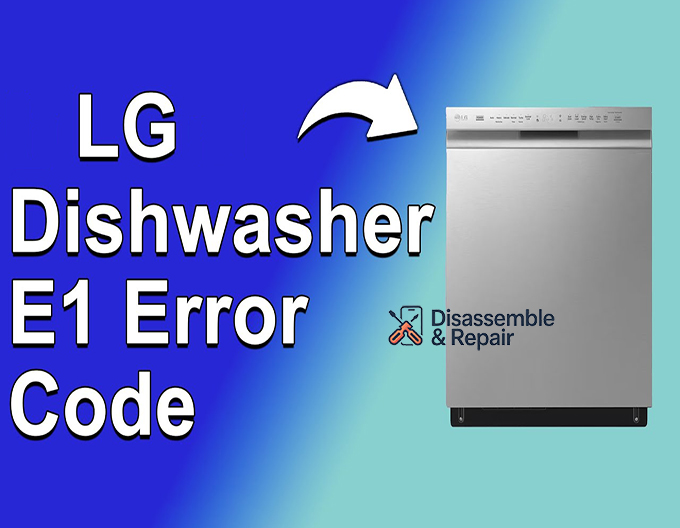
Encountering an LG dishwasher E1 error code can be a frustrating interruption to your daily routine, signalling a potential water leak or drainage issue within the appliance. This specific code is designed to protect your home from water damage by automatically activating the drain pump when the internal systems detect an anomaly in water levels or pressure. While seeing an error code on your display panel is alarming, understanding the underlying mechanics can help you diagnose and potentially resolve the issue without immediately calling for professional appliance repair.
Understanding the E1 Error Code
The LG dishwasher E1 error code is essentially a leak detection warning. Modern LG dishwashers are equipped with a safety mechanism located in the base of the unit, known as the base pan. When water accumulates in this area, it lifts a lightweight Styrofoam or plastic float. This movement triggers the float switch (often referred to as a leak sensor), which signals the control board that water is escaping the main tub.
Once this signal is received, the dishwasher enters a safety mode. It shuts off the water inlet valve to prevent further flooding and continuously runs the drain pump to expel existing water. This explains why you might hear the pump humming even if you try to turn the machine off; the system is prioritizing flood prevention over normal operation.
Primary Causes of the E1 Error
Before diving into the troubleshooting guide, it is essential to identify the components that most commonly fail or malfunction, leading to this error.
1. Water Leakage
The most direct cause is physical water leakage. This can occur at various connection points, such as the door seal, internal hoses, or the pump housing. Even a small drip can accumulate enough water in the base pan over time to trigger the sensor.
2. Improper Dishwasher Leveling
If your appliance is not perfectly level, water may slosh over the sides of the inner tub or pool in areas where it shouldn’t. Dishwasher leveling is critical for proper drainage and sealing. A unit tilted forward may leak from the door, while a backward tilt can cause pooling near the rear components.
3. Faulty Drain Hose Installation
The drain hose must be installed with a “high loop” or connected to an air gap to prevent backflow from your sink’s plumbing. If the hose is kinked, clogged, or lying flat on the floor, water may not exit the unit efficiently, causing back pressure that mimics a leak condition.
4. Detergent Issues
Using standard dish soap or too much dishwasher detergent can create excessive suds. These bubbles can expand and overflow into the base pan, tricking the float switch into detecting a “water” leak.
5. Component Failure
Wear and tear on the sump assembly, drain pump, or water inlet valve can lead to internal leaks or sensor malfunctions that generate the E1 code.
Step-by-Step Fixes for the LG dishwasher E1 error code
To resolve the issue, follow this detailed troubleshooting process. Ensure you have basic tools like a screwdriver, a towel, and a leveling tool handy.
Step 1: Safety and Hard Reset
Before touching any internal components, safety is paramount.
- Power Down: Unplug the dishwasher or flip the circuit breaker designated for the kitchen appliances.
- Water Supply: Turn off the water supply valve under the sink to prevent accidental flooding during repair.
- Hard Reset: Sometimes, the error is a digital glitch. Leave the power off for at least 15 minutes. This allows the control board capacitors to discharge and reset the system logic.
Step 2: Clearing the Base Pan
If the error persists after a reset, you likely have water in the base pan.
- Remove the kick plate (the toe grille) at the bottom front of the dishwasher.
- Use a flashlight to inspect the space underneath the tub. If you see water, this is the trigger.
- Use a towel or a wet-dry vacuum to carefully remove the water.
- Once dry, the float switch should lower, deactivating the error mode.
- Note: This clears the error, but you must still find the source of the leak, or the code will return during the next cycle.
Step 3: Inspecting the Drain Hose and Connections
A compromised drain hose is a frequent culprit.
- Check the hose connection under the sink. Ensure the clamp is tight and there are no drips.
- Inspect the length of the hose for kinks or heavy objects resting on it.
- Verify the “high loop” installation. The hose should be elevated above the water level of the dishwasher before connecting to the drain. This prevents dirty water from siphoning back into the machine.
Step 4: Verifying Dishwasher Leveling
Improper alignment can cause door leaks that trickle down into the base.
- Open the dishwasher door and place a spirit level on the top edge of the tub. Check side-to-side levelness.
- Place the level against the front of the tub to check front-to-back alignment.
- Adjust the leveling legs at the bottom of the unit. Rotating them clockwise usually raises the leg, while counter-clockwise lowers it.
- The door must align perfectly with the tub seals; otherwise, steam and water will escape during the high-pressure wash cycle.
Step 5: Checking the Sump Assembly and Float Switch
The sump assembly is the heart of the water circulation system, located at the bottom of the tub.
- Remove the lower dish rack to access the sump area inside the tub.
- Inspect the filter and remove any food debris or broken glass that might prevent a tight seal.
- If you are comfortable with disassembly, you can access the sump assembly from underneath the unit (after removing the bottom panel).
- Check the float switch assembly. It should move up and down freely. If it is stuck in the “up” position due to debris or gunk, it will permanently signal a leak. Clean it gently with warm water.
- Inspect the rubber seals around the sump motor and pump. If these are dried out or cracked, the entire sump assembly may need replacement.
Step 6: Testing the Water Inlet Valve
The water inlet valve controls the flow of fresh water into the unit. If this valve fails mechanically (stuck open), water will continuously fill the tub until it overflows into the base, triggering the E1 code.
- Locate the valve behind the kick plate on the left or right side.
- Inspect the connection where the water supply line attaches. Look for corrosion or mineral buildup (white crust), which indicates a slow leak.
- If you observe water dripping from the valve body itself during a fill cycle, the valve is defective and requires immediate replacement.
Step 7: Inspecting the Door Seal (Gasket)
A torn or loose door gasket allows water to run down the front of the unit and wick into the bottom compartment.
- Run your hand along the entire length of the rubber seal.
- Look for cracks, missing chunks, or areas where the seal has pulled away from the channel.
- Clean the seal with a mild soap solution. Sometimes, built-up food residue prevents a watertight seal.
NOTE: You might also want to check out how to fix the LG dishwasher’s IE error code—it’s one you’re especially likely to confuse with other error codes.
Advanced Diagnosis: Control Board and Sensors
If you have verified that the unit is dry, the drain pump is working, and there are no leaks, the issue might lie with the electronics.
The Leak Sensor (Moisture Sensor)
Some advanced LG models use a dedicated moisture sensor strip instead of a mechanical float. If this sensor oxidizes or gets dirty, it may send false positives to the control board.
- Fix: Locate the sensor in the base pan. If it appears corroded, it needs to be replaced. If it is just dirty, cleaning it with isopropyl alcohol might restore function.
The Control Board
The main control board acts as the brain of the appliance. If the board has a short circuit or a stuck relay, it might interpret normal signals as an error.
- Diagnosis: This is difficult to diagnose without a multimeter and schematic. If all mechanical checks pass, the board is the likely suspect. A technician can test the voltage outputs to confirm if the board is sending erroneous signals to the drain pump.
Preventing Future E1 Errors
Once you have cleared the LG dishwasher E1 error code, preventative maintenance is key to stopping its recurrence.
- Use Proper Detergent: Only use high-quality detergents designed specifically for automatic dishwashers. Never use liquid hand soap.
- Clean the Filter: Weekly cleaning of the sump filter prevents back-pressure issues that strain the pump seals.
- Check the Water Supply Line: Periodically inspect the braided metal line connecting your wall valve to the dishwasher. These lines have a lifespan of about 5-7 years before the internal rubber degrades.
- Monitor Drainage: Ensure your kitchen sink drain is clear. A slow-draining sink can impact the dishwasher’s ability to expel water, leading to backflow.
When to Call for Professional Appliance Repair
While many aspects of the E1 error can be handled by a handy homeowner, certain situations warrant professional intervention. You should consider calling a certified technician if:
- The leak is coming from the internal sump assembly or motor seals, which requires significant disassembly to access.
- The control board requires testing or replacement.
- You are unable to locate the source of the leak despite the base pan filling with water.
- The unit is still under warranty. DIY repairs involving disassembly can sometimes void the manufacturer’s warranty.
Conclusion
The LG dishwasher E1 error code is a protective measure, not a death sentence for your appliance. By systematically isolating the variables—checking for water leakage, verifying dishwasher leveling, and inspecting critical components like the drain hose and inlet valve—you can often identify the root cause. Whether it’s a simple case of a kinked hose or a more complex sump assembly failure, understanding the role of the float switch and leak sensor empowers you to take control of the situation. With patience and the right troubleshooting guide, you can restore your kitchen’s efficiency and ensure your dishes come out sparkling clean once again.
Frequently Asked Questions
What exactly does the E1 error code mean on my LG dishwasher?
The E1 code is a leak detection warning. It indicates that water has accumulated in the base pan of the dishwasher, lifting the float switch. This safety mechanism signals the control board to stop the water intake and run the drain pump continuously to prevent a potential flood in your kitchen.
Why does the drain pump keep running even when I try to turn the machine off?
This is a built-in safety feature designed to protect your home from water damage. As long as the float switch detects water in the base pan, the dishwasher remains in “flood prevention mode.” To stop the pump, you must disconnect the power by unplugging the unit or flipping the circuit breaker, then dry out the base pan to reset the sensor.
Can using the wrong detergent trigger an E1 error?
Yes. Using standard hand dish soap or an excessive amount of dishwasher detergent creates “oversudsing.” These bubbles can expand and overflow into the base pan, which triggers the leak sensor even if there isn’t a mechanical failure or a plumbing leak.
How do I perform a hard reset to clear the code?
To perform a hard reset, disconnect the dishwasher from its power source (unplug it or turn off the circuit breaker) and wait for at least 15 minutes. This allows the control board to discharge and reset its logic. Keep in mind that if physical water is still present in the base pan, the error code will likely return as soon as the power is restored.
When should I stop troubleshooting and call a professional?
You should consider calling a certified technician if you have dried the base pan but the error returns immediately, if you see water leaking from the internal motor or sump assembly seals, or if you suspect the main control board is malfunctioning. Additionally, if your unit is still under warranty, professional repair is recommended to avoid voiding your coverage.