
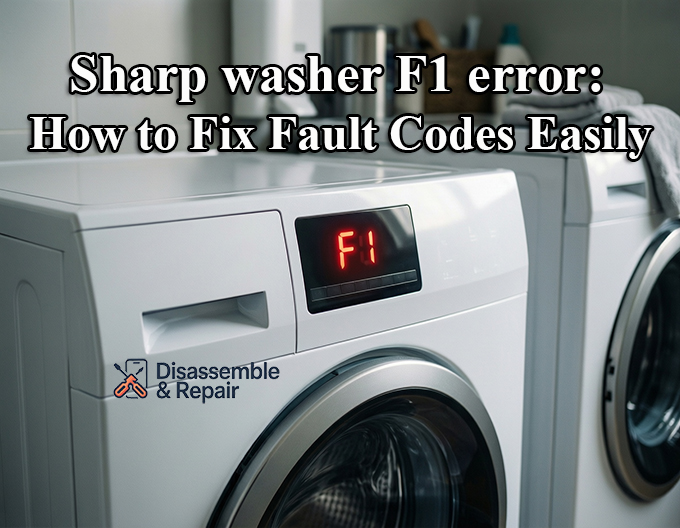
Encountering a Sharp washer F1 error can be frustrating, especially when it interrupts your laundry routine mid-cycle. This specific error code typically signals a communication breakdown or failure related to the machine’s electronic monitoring systems, most commonly pointing towards the water level sensing circuit or the main control unit.
In this guide, we will break down the technical causes of the F1 error and provide a professional, step-by-step approach to diagnosing and resolving the issue.
Understanding the Sharp Washer F1 Error
The “F1” code on a Sharp washing machine is generally classified as an electronic fault or a sensor monitoring error. While specific definitions can vary slightly between model series (especially between top-load and front-load units), it most frequently indicates a discrepancy between the main control board and the water level sensor.
When the machine cannot accurately determine how much water is in the drum, it triggers the F1 safety protocol to prevent overfilling or running the heating element dry. This effectively locks the machine to prevent component damage.
Common Causes
- Failed Water Level Sensor: The component responsible for measuring water pressure inside the tub.
- Wiring Harness Issues: Corroded, loose, or damaged wires preventing signal transmission.
- PCB Failure: A fault in the main control board (Printed Circuit Board) where it can no longer process sensor data.
- Blocked Pressure Hose: Debris or kinks in the tube connecting the tub to the sensor.
Step-by-Step Troubleshooting for the Sharp Washer F1 Error
Before attempting any home appliance repair, always ensure the machine is disconnected from the power source to avoid electrical shock.
1. Perform a System Reset
Modern washing machines run on complex firmware that can sometimes glitch due to power surges. A simple reset procedure is the first line of defense.
- Unplug the washer from the wall outlet.
- Wait for at least 5 to 10 minutes to allow the capacitors on the control board to discharge.
- Plug the machine back in and attempt to start a new cycle.
- If the Sharp washer F1 error clears, it was likely a temporary software glitch. If it persists, proceed to hardware inspection.
2. Inspect the Pressure Switch and Hose
The pressure switch (or water level sensor) is a small round device usually located under the top panel of the washer. It operates via air pressure transmitted through a thin tube.
- Check the Pressure Hose: Locate the clear or black rubber hose connecting the switch to the drum. Ensure it is not kinked, punctured, or clogged with lint. A blockage here often mimics a sensor failure.
- Verify Connections: Ensure the hose is tightly secured at both the tub and switch ends. Air leaks will cause inaccurate readings.
3. Check the Wiring Harness
Vibration during the spin cycle can cause connections to loosen over time.
- Access the main electronics compartment (refer to your technical manual for safe disassembly).
- Trace the wires from the water level sensor back to the main PCB.
- Look for any signs of wear, corrosion, or physical damage to the wiring harness.
- Unplug and re-plug the connectors to ensure they are seated firmly.
4. Diagnostic Testing of the Inlet Valve and Drainage
While less common for the F1 code, issues with the inlet valve or drainage system can sometimes trigger cascading errors if the machine fails to fill or drain within a set timeframe.
- Ensure the water supply is turned on and the mesh filters in the inlet valve are clean.
- Verify that the drain pump is functioning and the hose is not obstructed.
Advanced Repair: Component Replacement
If the basic troubleshooting steps do not resolve the issue, you are likely dealing with a hardware failure.
Replacing the Water Level Sensor
If the wiring and hose are intact, the sensor itself is the primary suspect.
- Source the correct part number using your washer’s model number.
- Disconnect the wire connector and remove the pressure hose.
- Unscrew or unclip the old sensor and install the new unit.
- Run a test cycle to confirm the Sharp washer F1 error is resolved.
Main Control Board (PCB) Failure
If replacing the sensor fails, the fault likely lies with the main control board. This is the “brain” of the washer. A PCB failure means the board is physically unable to read the signals from the components.
- Visually inspect the board for burn marks or swollen capacitors.
- Replacement of the main board is a complex task. If you are not comfortable working with delicate electronics, it is highly recommended to contact a professional technician.
Preventive Maintenance
To avoid recurring electronic faults:
- Avoid overloading the machine, which causes excessive vibration that damages wiring.
- Periodically clean the drainage system filter.
- Use a surge protector to shield the sensitive electronic components from voltage spikes.
By systematically isolating the problem—starting with the reset procedure and moving to the pressure switch and wiring harness—you can often fix the Sharp washer F1 error without the need for a full machine replacement. However, if the problem points to the main PCB, consulting a certified repair specialist is often the most cost-effective route.
Frequently Asked Questions
What does the F1 error code mean on a Sharp washing machine?
The F1 error is an electronic fault that indicates a communication problem between the main control board and the water level sensor. It is a safety feature designed to prevent the machine from overfilling or running the heating element without sufficient water.
How can I quickly reset my Sharp washer to clear the error?
To perform a system reset, unplug the washing machine from the power outlet and wait for 5 to 10 minutes. This allows the electronic capacitors to discharge completely. After the wait, plug the machine back in and attempt to start a new cycle. If the error was caused by a temporary software glitch, this should clear it.
Can a simple blockage cause the F1 error code?
Yes. A blocked or kinked pressure hose is a common cause. This thin tube connects the drum to the water level sensor; if it is obstructed by lint or debris, the sensor cannot accurately measure air pressure, leading the machine to trigger the F1 code.
What should I check if the water level sensor is not the problem?
If the sensor and its hose are in good condition, you should inspect the wiring harness for any loose, corroded, or damaged wires. If the wiring is intact, the issue likely lies with the main control board (PCB). If the PCB has failed, it will be unable to process signals from the sensors and will likely require professional replacement.