
Is your dishwasher not cleaning dishes effectively, leaving you with gritty plates and cloudy glasses? This frustrating issue often stems from a few common maintenance oversights or component failures that you can diagnose and fix yourself.
When you open your appliance expecting sparkling results but find residue instead, it is time to investigate the root cause. This guide explores the twelve most critical factors affecting your machine’s performance, from simple clogs to complex mechanical issues.
Common reasons for a dishwasher Not cleaning dishes
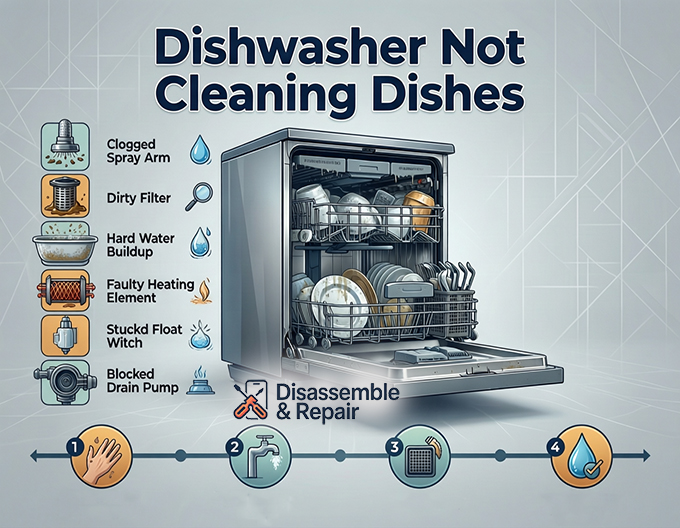
If you are struggling with a dishwasher not cleaning dishes, the problem usually lies within the water circulation system, the water temperature, or the drainage process. Below are the key components and conditions you must inspect to restore your appliance’s cleaning power.
1. Clogged spray arm
The spray arm is responsible for distributing water to every corner of the tub. Over time, small food particles like seeds, popcorn kernels, or bits of plastic can become lodged in the tiny jets.
- The Fix: Remove the spray arms (usually by twisting a locking nut) and inspect the holes. Use a toothpick or a piece of wire to poke out any debris. Run water through the arm in the sink to ensure clear flow.
2. Dirty dishwasher filter
Modern dishwashers rely on a manual dishwasher filter system to trap debris and prevent it from redepositing on clean dishes. A clogged filter restricts water flow to the pump, drastically reducing cleaning pressure.
- The Fix: Locate the cylindrical filter at the bottom of the tub. Twist to unlock it, remove the mesh screen, and rinse both under hot running water. Use a soft brush to scrub away greasy residue.
3. Hard water and limescale buildup
If you live in an area with hard water, dissolved minerals (calcium and magnesium) are your dishwasher’s enemy. These minerals precipitate out of the water during the heat cycle, leaving white, chalky spots on glassware and accumulating as limescale buildup on internal components.
- The Fix: regularly use a dishwasher cleaner or run an empty cycle with a cup of white vinegar on the top rack to dissolve mineral deposits. Consider adding a rinse aid or installing a whole-home water softener.
4. Malfunctioning inlet valve
The water inlet valve controls the amount of water that enters the machine. If this valve is clogged with sediment or electrically failing, the dishwasher may not fill with enough water. Low water levels mean the pump cannot generate enough pressure to wash the dishes.
- The Fix: Listen for the water filling the tub. If it stops too soon or trickles, the valve may be restricted. You can check the inlet screen for debris, but often the valve needs replacement if it fails.
5. Faulty detergent dispenser
A detergent dispenser that fails to open properly will drop the soap too late in the cycle or not at all. This often happens due to a broken spring, a gummed-up latch, or loading tall plates in front of the dispenser door.
- The Fix: Check the dispenser door latch for freedom of movement. Clean out any old, caked-on detergent that might be jamming the mechanism.
6. Damaged impeller
The impeller is a small plastic fan inside the pump that propels water through the spray arms. If the fins on the impeller are broken or worn down, the water pressure will be weak, regardless of how much water is in the tub.
- The Fix: This requires disassembling the pump motor housing. If you hear a loud droning noise or notice weak spray, the impeller likely needs to be replaced.
7. Burnt out heating element
Hot water is essential for activating detergent and dissolving grease. The heating element maintains the water temperature between 120°F and 150°F. If the element burns out, the water remains lukewarm, leading to poor cleaning and drying results.
- The Fix: Visually inspect the element at the bottom of the tub for blistering or breaks. A multimeter can be used to test for continuity to confirm if it has failed.
8. Stuck float switch
The float switch is a safety mechanism that prevents the dishwasher from overfilling. If the float gets stuck in the “up” position due to gunk or debris, the machine will think it is full and shut off the water supply prematurely.
- The Fix: Lift the float (usually a mushroom-shaped plastic piece on the tub floor) up and down. It should move freely and click. Clean underneath it to remove any trapped food particles.
9. Blocked drain pump
A drain pump that cannot empty the dirty water effectively will cause the machine to wash dishes with recycled, filthy water. Debris like broken glass or bone fragments can jam the pump.
- The Fix: If water remains in the bottom of the tub after a cycle, listen for a humming sound. You may need to clear the drain hose or remove the pump cover to dislodge foreign objects.
Maintenance tips for peak performance
Preventing future issues is easier than fixing them. Incorporate these habits into your routine:
- Scrape, Don’t Prerinse: Modern detergents need enzymes to cling to food to work effectively. Scrape off large solids, but leave the sauce.
- Run Hot Water: Before starting the cycle, run the kitchen faucet until the water is hot. This ensures the first fill is not cold.
- Clean Monthly: Once a month, check the filter and wipe down the door seals to prevent mold and odors.
By methodically checking these components—from the spray arm to the heating element—you can diagnose why you have a dishwasher not cleaning dishes and likely solve the problem without an expensive service call.
Frequently asked questions
Why are my glasses coming out cloudy or covered in white spots?
Cloudy glassware is typically caused by hard water and mineral deposits like calcium and magnesium. To fix this, you can run an empty cycle with a cup of white vinegar or use a dedicated dishwasher cleaner. Using a rinse aid regularly can also help prevent these spots from forming.
How often should I clean my dishwasher filter?
For the best cleaning results, you should inspect and clean your filter at least once a month. Simply remove the cylindrical filter from the bottom of the tub, rinse it under hot running water, and use a soft brush to scrub away any trapped grease or food particles.
Do I need to rinse my dishes before putting them in the dishwasher?
No, you should scrape off large food solids but avoid pre-rinsing. Modern dishwasher detergents use enzymes that need to cling to food particles to work effectively. Additionally, running the hot water at your kitchen sink before starting the cycle ensures the machine fills with hot water right away.
What should I do if the detergent dispenser doesn’t open?
If the dispenser door is stuck, check for caked-on detergent residue that might be jamming the latch. Also, ensure that you aren’t loading tall plates or cookie sheets in the bottom rack directly in front of the dispenser, as these can physically block the door from swinging open during the cycle.
Why is there standing water left at the bottom of the tub?
Standing water usually indicates a blockage in the drain pump or the drain hose. Check for debris like broken glass, bone fragments, or food scraps that may be jamming the pump. You should also ensure the float switch moves freely and isn’t stuck in the “up” position, which can disrupt the water cycles.