
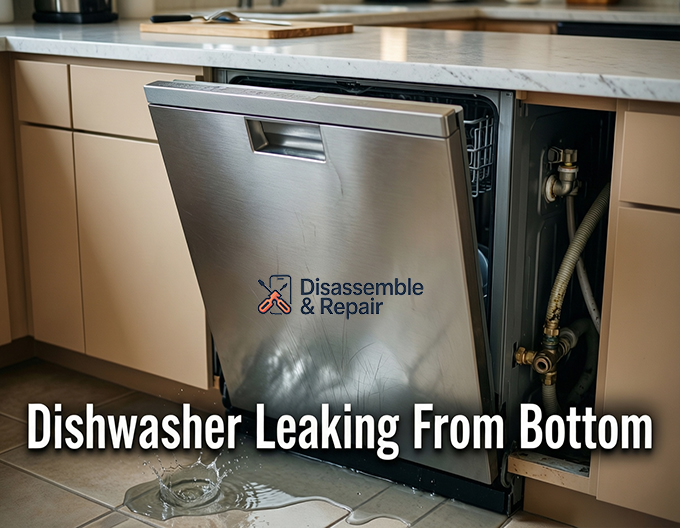
A dishwasher leaking from bottom components can quickly turn from a minor nuisance into a major kitchen disaster, threatening your flooring and cabinetry with water damage. While the sight of a puddle forming at the base of your appliance is alarming, the culprit is often a specific, replaceable part rather than a catastrophic machine failure.
Identifying the exact source of the leak is the first step toward a solution. This guide breaks down the most common causes, focusing on critical components like the pump and motor assembly, door gasket, and water inlet valve, to help you diagnose and resolve the issue efficiently.
Common causes of a dishwasher leaking from bottom
When you find water pooling underneath your unit, it rarely comes from a single mysterious source. Instead, it is usually traced back to one of several key systems that manage water flow and containment.
1. Compromised door gasket
The door gasket is the soft rubber seal that runs along the perimeter of the dishwasher door or tub. Its primary job is to create a watertight barrier during operation. Over time, this rubber can become brittle, cracked, or simply coated in grime. If the gasket is damaged or fouled with food debris, water can seep past the seal and drip down the front legs, appearing as a leak from the bottom.
- Fix: Clean the gasket with warm soapy water. If it is torn or feels hard and brittle, it needs to be replaced.
2. Faulty water inlet valve
The water inlet valve controls the flow of fresh water into the main tub. It is typically located behind the bottom kick plate. If this valve gets stuck in the “open” position due to mineral deposits or electrical failure, the dishwasher may overfill, leading to a spillover. Alternatively, the valve itself can develop a drip at the connection point where the water supply line attaches.
- Fix: Remove the bottom kick plate to inspect the valve. If you see active dripping or corrosion, the valve likely needs replacement.
3. Pump and motor assembly issues
The heart of your dishwasher is the pump and motor assembly, located centrally at the bottom of the unit. This complex part circulates water during the wash cycle and drains it afterward. A common failure point is the internal seal of the pump. When this seal wears out, water leaks directly from the pump housing onto the floor beneath.
- Fix: This is a more advanced repair. If the leak is tracing back to the center of the machine’s underside, you may need to replace the pump seal or the entire assembly.
4. Loose or damaged hoses
A network of hoses keeps your dishwasher running, including the drain hose and the circulation hoses.
- Drain Hose: Connects the pump to your sink drain or garbage disposal. cracks, kinks, or loose hose clamps at either end can cause wastewater to spray out during the drain cycle.
- Hose Clamps: The metal bands securing these hoses can loosen over time due to vibration or rust, breaking the watertight seal.
- Fix: Inspect all visible hoses for wetness. Tighten any loose clamps with a screwdriver or replace hoses that show signs of cracking.
Internal leaks and component failures
Sometimes the leak isn’t about plumbing connections but rather internal components that have failed or become misaligned.
1. Float switch malfunction
The float switch acts as a safety device to prevent overfilling. It consists of a float inside the tub and a switch underneath. If the float gets stuck due to debris or the switch fails electrically, the water will not shut off at the correct level, causing the main tub to overflow.
- Fix: Lift the float manually to ensure it moves up and down freely. Clean out any gunk underneath it. If it still fails, test the switch for continuity.
2. Spray arm problems
A damaged spray arm can cause surprising leaks. If a spray arm is cracked or its holes are clogged with debris, it may shoot water directly at the bottom of the door where there is no seal (the “wave action” effect). This water can then ripple over the front lip of the tub.
- Fix: Remove the spray arms and inspect them for splits or blockages. clear debris with a toothpick or replace the arm if the plastic is separated.
3. Heating element seal
The heating element at the bottom of the tub is secured by two metal nuts that pass through the tub floor. A rubber heating element seal sits between the element and the tub. If these nuts loosen or the rubber washer degrades, water will leak directly through the bolt holes.
- Fix: Locate the nuts under the tub (accessible by removing the kick plate) and tighten them. If the leak persists, the rubber washers need replacing.
Installation and usage factors
Not all leaks require a trip to the parts store. Sometimes, the issue is environmental or related to how the machine is set up.
1. Improper leveling
If your dishwasher isn’t sitting flat, water can pool in areas not designed to hold it. Leveling legs located at the four corners of the base allow you to adjust the height and angle of the appliance. If the dishwasher tilts too far forward, water can slosh against the front door; if it tilts to the side, it might override the safety seals.
- Fix: Use a bubble level on the door and inside the tub. Adjust the leveling legs by screwing them up or down until the unit is perfectly balanced.
2. Detergent buildup and “Suds-Lock”
Using the wrong type of soap (like regular dish soap) or too much detergent creates excessive suds. This foam can expand rapidly, pushing water out through the door vent or the bottom seal. Detergent buildup in the dispenser can also prevent the door from latching correctly.
- Fix: Only use detergent specifically made for dishwashers. If you have a suds accident, pour vegetable oil into the suds to break the foam and run a rinse cycle.
3. Door latch failure
The door latch secures the door against the gasket. If the latch is loose, bent, or misaligned, the door won’t close with enough pressure to form a tight seal. This often results in a leak at the top or sides that drips down to the bottom.
- Fix: Inspect the latch catch on the main frame. Tighten it if it’s loose, or replace the latch mechanism if it is physically broken.
Step-by-Step troubleshooting checklist
If you are dealing with a Dishwasher Leaking From Bottom, follow this logical order to isolate the problem:
- Dry the Floor: Clean up the water so you can see fresh drips.
- Check the Door: Inspect the door gasket and clean it. Ensure the door latch clicks firmly.
- Remove the Kick Plate: Unscrew the panel at the very bottom front of the dishwasher.
- Run a Test Cycle: Start a short cycle and watch underneath with a flashlight.
- Pinpoint the Drip:
- Front Left/Right: Likely the water inlet valve (usually left) or door corners.
- Center: Likely the pump and motor assembly.
- Hose Connections: Check the drain hose and hose clamps for moisture.
- Inspect Inside: Check the spray arm for cracks and the float switch for movement.
By systematically checking these entities, you can often save the cost of a service call and get your appliance back to its watertight self.
Frequently asked questions
Why is my dishwasher leaking specifically from the front corners?
This is most often caused by a compromised door gasket or improper leveling. If the rubber seal is dirty, brittle, or cracked, water can seep through the gaps. Additionally, if the leveling legs are not adjusted correctly and the unit tilts forward, water can slosh over the front lip of the tub during the wash cycle.
Can using the wrong detergent actually cause my dishwasher to leak?
Yes. Using regular liquid dish soap or excessive amounts of dishwasher detergent creates “suds-lock.” These extra bubbles create pressure that can push foam and water out through the door vents or the bottom seal, appearing as a leak even though the mechanical parts are functioning correctly.
How do I know if the water inlet valve is the source of the leak?
The water inlet valve is typically located behind the bottom kick plate on the front left or right. If you see active dripping at the connection point where the water line attaches, or if the dishwasher continues to fill with water even when it is turned off, the valve is likely faulty and needs to be replaced.
What should I do if water is dripping from the very center of the machine?
Leaking from the center usually indicates an issue with the pump and motor assembly. This is often caused by a worn internal pump seal. To confirm, remove the kick plate and use a flashlight to watch the center underside of the unit during a test cycle; if water originates there, you may need to replace the seal or the entire assembly.
Can a cracked spray arm really cause a leak at the bottom?
Yes. If a plastic spray arm is cracked or its holes are blocked, it can create a “wave action” effect, shooting a concentrated stream of water directly at the bottom of the door. Since the bottom of the door often relies on a splash guard rather than a full pressure seal, this direct spray can cause water to ripple over the edge and onto your floor.