
Discovering unexplained damage to your laundry can be incredibly frustrating, especially when you suspect it is your LG washer tearing clothes. This issue not only results in financial loss due to ruined garments but often signals a critical mechanical failure or operational error within the appliance that requires immediate attention.
As a homeowner, relying on a reputable brand like LG brings expectations of durability and fabric care. However, like all appliances, components wear down over time, and specific parts can turn into hazards for delicate fabrics. This comprehensive guide will explore the mechanical and usage-based reasons why this occurs, utilizing professional insights to help you diagnose and resolve the problem effectively.
Read more LG washer shaking violently during spin
Common Mechanical Causes of an LG Washer Tearing Clothes
When diagnosing fabric damage, the first step is to isolate the physical component responsible for the friction or snagging. While LG manufactures high-quality appliances, specific parts are prone to wear that can turn smooth surfaces into sharp hazards.
Damaged Drum Baffles
In a front-load washer, the drum baffles (also known as lifters or paddles) are the plastic ridges inside the drum that tumble the clothes. Over time, these can crack, break, or become loose. Even a hairline fracture in a baffle can create a sharp edge capable of catching threads. If a baffle is loose, clothes can get pinched between the baffle and the washing machine drum, leading to significant rips.
The Stocking Test
To verify if your drum or baffles are the culprits, perform the “stocking test.” Put an old nylon stocking over your hand and run it over the entire interior surface of the inner tub, including the baffles and the thousands of drainage holes. If the stocking snags or tears, that specific spot is sharp enough to damage your clothes.
Issues with the Rubber Door Gasket
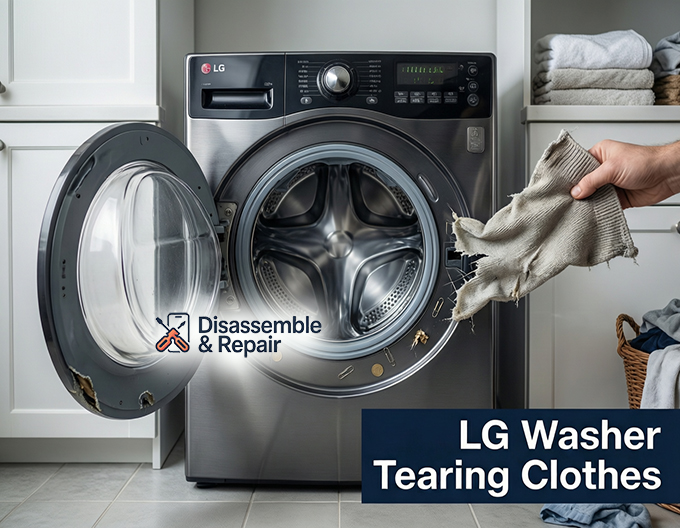
The rubber door gasket (boot seal) is a critical component in front-loading units. It creates a watertight seal between the door and the drum. However, it is also a common area for debris accumulation. Coins, buttons, or paperclips can get lodged in the folds of the gasket, protruding outward and slicing clothes as they spin past. Furthermore, if the gasket itself is torn or warped, it can create a gap where clothes get pinched during the high-speed spin cycle, resulting in friction burns or tears.
Agitator Damage in Top-Loaders
If you own a top-load washer, the dynamic is different. These units often utilize a central post, known as an agitator, to move clothes through the water. If the agitator fins become chipped or rough due to wear or impact from heavy items (like belt buckles), they act like a cheese grater against your fabrics. Additionally, clothes can sometimes get trapped under the agitator if it is not seated correctly, causing them to twist and tear.
Structural Failures: The Spider Arm and Bearings
Sometimes the issue is not what touches the clothes, but how the drum moves. Structural failures are more severe and often require professional repair, but they are a leading cause of persistent clothing damage.
Broken Spider Arm Assembly
The spider arm assembly is a three-pronged aluminum bracket attached to the back of the inner drum. It connects the drum to the drive motor via a shaft. Because it is constantly exposed to water and detergent, the spider arm is susceptible to galvanic corrosion.
When the spider arm cracks or breaks, the drum loses its stability. It begins to wobble during rotation. This unbalance causes the stainless steel drum to rub against the outer tub or the door seal. The resulting gap variance allows clothes to slip between the spinning drum and the stationary parts of the washer, effectively shredding them. If your machine is making a loud banging noise during the spin cycle alongside tearing clothes, the spider arm is a likely suspect.
Read more How to open LG washing machine door during cycle safely
Worn Bearing Assembly
Similarly, the bearing assembly supports the drum’s smooth rotation. When the seal on the bearings fails, water penetrates the metal bearings, causing them to rust and seize. A failed bearing causes the drum to spin unevenly. Much like a broken spider arm, this wobble creates pinch points. The gap between the inner drum and the door glass or gasket fluctuates, trapping fabric and causing fabric snags or complete tears.
User Error: Are You Overloading?
While mechanical failures are common, user habits play a significant role in the longevity of both the machine and the clothes. It is crucial to distinguish between a broken machine and improper usage.
Overloading is perhaps the most common cause of laundry damage. When you stuff too many clothes into the washer, there is insufficient room for the items to move freely. In a front-loader, overloading pushes the clothes forcefully against the rubber door gasket and the glass. As the drum spins at high velocities, the friction generated against the stationary door seal can cause friction burns (small holes that look like melted spots) or tears.
In top-loaders, overloading forces clothes against the agitator or the top of the tub ring. The excessive pressure can cause garments to catch on components they would otherwise clear safely. Furthermore, overloading puts immense strain on the drive motor and suspension, accelerating the wear on the spider arm and bearings mentioned earlier.
The Danger of Unsecured Accessories
Before blaming the washer, inspect the garments being washed. Metal zippers, unclasped bra hooks, and decorative buckles are the natural enemies of wet fabric. When these items tumble, they can snag other clothes in the load.
However, these items also damage the machine. A loose underwire from a bra can slip through the drum holes and get stuck between the inner and outer tubs. The sharp metal end can poke back through into the drum, acting as a hidden needle that snags clothes in subsequent loads. Always check the washing machine drum visually and with the stocking test to ensure no foreign objects are protruding.
Diagnostic Checklist for Homeowners
If you are consistently finding damaged clothes, follow this systematic inspection logic to identify the root cause:
- Inspect the Load: Did you overload the machine? Were all zippers closed and delicates placed in mesh bags?
- Check the Gasket: Pull back the folds of the rubber door gasket. Look for trapped debris, glass shards, or sharp objects. Check if the rubber itself is chewed up or missing chunks.
- Feel the Drum: Perform the stocking test on the drum baffles and the stainless steel surface. Look for burrs around the drainage holes.
- Test for Wobble: Open the door and push up on the stainless steel drum. It should move slightly with the outer tub (as they are suspended together). If the inner drum moves significantly independently of the outer tub, or if it makes a clicking/clunking sound, your spider arm assembly or bearing assembly may be compromised.
- Listen: Run a spin cycle empty. Grinding, roaring, or banging noises suggest structural failure that leads to uneven spinning and pinch points.
Repair vs. Replace: Making the Financial Decision
Once you have identified the source of the LG washer tearing clothes, you must decide on the solution.
- Minor Repairs: Replacing a torn door gasket or a cracked drum baffle is generally cost-effective. These parts are relatively inexpensive and can often be installed by a handy homeowner or a technician in less than an hour.
- Major Repairs: If the issue stems from a broken spider arm, failed bearings, or a damaged inner tub, the repair cost rises significantly. These repairs require completely dismantling the machine. The cost of labor plus parts (spider arm, bearings, tub seal) can often approach 50% or more of the cost of a brand-new machine.
- Age Factor: If your LG washer is over 7-10 years old and requires a major structural repair (like the spider arm), replacement is usually the more prudent financial decision.
Preventive Maintenance to Protect Your Clothes
To ensure your LG washer stops tearing clothes and to prevent future occurrences, adopt a strict maintenance and usage routine.
Proper Loading Techniques
Never fill the tub more than three-quarters full. Your hand should fit vertically between the top of the clothes and the top of the door frame (front load) or the tub ring (top load). This prevents overloading and ensures clothes do not rub against the door seal.
Use Laundry Bags
Invest in high-quality mesh laundry bags. Place delicates, bras with hooks, and items with heavy zippers inside these bags. This protects the item itself and prevents metal hardware from damaging the drum baffles or snagging other fabrics.
Read more LG washing machine CL error
Regular Cleaning and Inspection
Once a month, wipe down the door gasket and glass. Remove any lint, coins, or debris. periodically check the baffles for tightness. If you hear a coin rattling in the machine, stop the cycle immediately and retrieve it; a spinning coin can chip the porcelain or stainless steel, creating the sharp edges that cause fabric snags.
Address Vibration Early
If your washer starts walking or vibrating excessively, level the legs immediately. continued operation off-balance stresses the spider arm assembly and bearings, leading to the catastrophic failures that cause pinching and tearing.
Conclusion
Dealing with an LG washer tearing clothes is a solvable problem, but it requires a methodical approach to diagnosis. Whether the culprit is a sharp plastic baffle, a worn-out bearing causing drum wobble, or simply the habit of overloading the machine, identifying the root cause is the only way to protect your wardrobe.
By understanding the function of critical entities like the agitator, rubber door gasket, and drive motor mechanics, you can better maintain your appliance. Regular inspection of the inner tub and adhering to proper loading capacities will not only save your favorite garments from destruction but also extend the lifespan of your washing machine. If the damage points to major structural failure like a broken spider arm, consult with a professional technician to weigh the costs of repair against upgrading to a new unit.
Frequently Asked Questions
How can I check for sharp spots inside my LG washer drum?
The most effective method is the “stocking test.” Take an old nylon stocking, put it over your hand, and run it across the entire interior of the inner tub, the drum baffles, and the drainage holes. If the stocking snags or catches on any surface, you have found a sharp edge or burr that is likely responsible for damaging your clothing.
Can overloading my washing machine actually cause clothes to tear?
Yes. Overloading is one of the leading causes of fabric damage. In front-loaders, too many clothes push the fabric forcefully against the stationary door gasket and glass during high-speed spins, causing friction burns or tears. In top-loaders, overloading forces clothes against the agitator or tub ring with excessive pressure, increasing the risk of garments getting caught or snagged.
What are the signs of a broken spider arm or bearing assembly?
If your washer is tearing clothes and also making a loud banging, grinding, or roaring noise during the spin cycle, it likely has structural damage. You can test this by pushing up on the inner stainless steel drum; if it moves significantly independent of the outer tub or feels “wobbly,” the spider arm or bearings have likely failed. This instability creates gaps where fabric gets pinched and shredded.
Why is the rubber door gasket often the cause of torn clothes?
The rubber door gasket (or boot seal) can damage clothes in two ways. First, it easily traps small metal objects like coins, paperclips, or bra underwires in its folds, which then snag clothes as they tumble. Second, if the gasket is torn or warped, it creates a “pinch point” where fabric can get stuck between the spinning drum and the seal, leading to friction holes or large rips.