

To maintain the efficiency and hygiene of your laundry appliance, knowing how to clean LG washer drum surfaces properly is essential. Regular maintenance not only eliminates odors caused by mold and mildew but also prevents mechanical issues often stemming from detergent buildup and residue.
Over time, your washing machine can become a breeding ground for bacteria, soap scum, and mineral deposits. If you have noticed a musty smell or visible grime, it is time for a thorough cleaning. This guide covers everything from the Tub Clean cycle to manual maintenance of key components like the drain pump filter and detergent dispenser.
Understanding the “Tub Clean” Cycle
LG washers come equipped with a specialized maintenance feature known as the Tub Clean cycle. This cycle is designed to use high water temperatures and intense agitation to dislodge drum residue and sanitize the interior.
Read more LG washer always unbalanced
Instructions for Front Load Washers
- Empty the Drum: Ensure the washer is completely empty. Remove all clothing and any foreign objects.
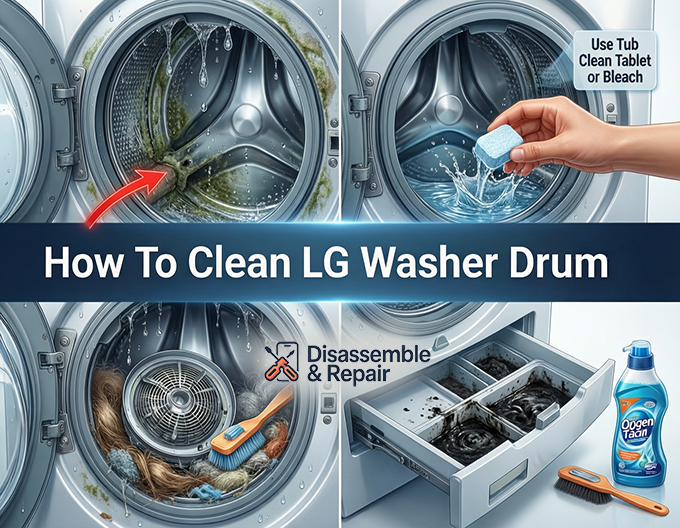
- Add Cleaning Agent: Open the detergent dispenser. You may use a commercial tub cleaner tablet, liquid chlorine bleach, or a specific oxygen bleach powder.
- Note: If using liquid bleach, pour it into the bleach compartment. If using a tablet, place it directly inside the drum.
- Activate the Cycle: Power on the machine and look for the “Tub Clean” setting. On some models, this is a dedicated position on the dial. On others, you may need to press and hold a button labeled “Tub Clean” (often paired with the “Extra Rinse” button) for 3 seconds.
- Start: Press the Start/Pause button. The door will lock, and the machine will begin the cleaning process.
Instructions for Top Load Washers
- Clear the Tub: Remove all laundry from the top load washer.
- Add Cleaner: Select your cleaning agent. For top loaders, you can often pour liquid bleach into the bleach dispenser or place a cleaning tablet at the bottom of the tub.
- Select Cycle: Press the “Tub Clean” button on the control panel. If your model does not have a dedicated button, consult your manual for the specific button combination.
- Run: Press Start. The cycle will fill the tub with hot water to soak and agitate the drum, breaking down limescale buildup and grime.
Choosing the Right Cleaning Agents
Selecting the correct cleaner is vital for protecting your machine’s internal components while ensuring a deep clean.
Liquid Chlorine Bleach
This is highly effective for killing bacteria and removing tough mold stains. It is the best choice if your machine has developed a strong “rotten egg” smell. However, it is harsh and should be used with care. Never mix bleach with other cleaners.
Oxygen Bleach (Sodium Percarbonate)
Oxygen bleach is a safer, eco-friendly alternative that is excellent for general maintenance. It helps break down organic residues and stains without the corrosive properties of chlorine. It is safe for septic systems and less likely to damage rubber seals over time.
Descalers for Limescale
If you live in a hard water area, white, chalky deposits known as limescale buildup can form on the drum and heating element. While vinegar is a popular home remedy, frequent use can degrade rubber parts. Instead, consider using a specialized washing machine descaler or citric acid powder during a hot cycle to safely dissolve minerals.
Deep Cleaning Specific Components
Running the automatic cycle is only half the battle. To truly master how to clean LG washer drum environments, you must manually address the parts where moisture and gunk accumulate.
Read more How to drain LG washing machine with no power
The Rubber Door Gasket (Front Loaders)
The rubber door gasket, also known as the door seal, is the most common culprit for bad odors in a front load washer. Water pools in the folds, creating a perfect environment for black mold.
- Open the Door: Wide open the door to access the seal.
- Inspect the Folds: Peel back the rubber lips. You will likely find hair, lint, and slime trapped inside.
- Wipe Down: Use a cloth soaked in a diluted bleach solution (¾ cup bleach to 1 gallon of water) to wipe the interior of the seal thoroughly.
- Scrub: For stubborn mold spots, use an old toothbrush dipped in the solution to scrub the rubber.
- Dry: After cleaning, wipe the gasket dry with a clean towel. Always leave the door slightly ajar between washes to allow air circulation.
The Drain Pump Filter
A clogged drain pump filter can cause drainage issues and odors. On front-load models, this is located behind a small access panel at the bottom front of the machine.
- Note for Top Loaders: Most modern LG top load washers do not have an accessible external drain pump filter. They rely on internal self-cleaning mechanisms or lint filters inside the drum.
Steps for Front Loaders:
- Locate the Panel: Open the small square door on the bottom left or right of the machine.
- Drain Excess Water: You will see a small rubber hose and a large cap. Place a shallow tray or towel underneath. Pull the small hose out, uncork it, and let the residual water drain into the tray.
- Remove the Filter: Once drained, unscrew the large circular cap counter-clockwise.
- Clean: Remove the filter and rinse it under warm running water. Remove any lint, coins, or debris.
- Reassemble: Screw the filter back in tightly and replace the small drain hose plug. Close the panel.
The Detergent Dispenser
The detergent dispenser drawer often gets neglected, leading to a buildup of fabric softener and biological detergent that turns into black sludge.
- Remove the Drawer: Pull the dispenser drawer out until it stops. Press down on the release tab (usually a blue or plastic lever) and pull the drawer completely out.
- Disassemble: Remove the inserts for the bleach and softener compartments.
- Soak and Scrub: Soak the drawer and inserts in warm soapy water. Use a brush to scrub away hardened soap and mold and mildew.
- Clean the Housing: Before reinserting the drawer, use a damp cloth or bottle brush to clean the inside of the drawer housing in the washer, where water jets can get clogged.
Maintenance Schedule for Optimal Performance
To keep your LG washer running smoothly, adhere to a regular cleaning schedule:
- Weekly: Wipe down the door seal and glass after wash days. Leave the door and dispenser drawer open to air dry.
- Monthly: Run the Tub Clean cycle using a commercial tablet or bleach. Clean the drain pump filter (front loaders).
- Quarterly: Remove and deep clean the detergent dispenser. If you have hard water, perform a descaling treatment to prevent limescale buildup.
By following these professional steps on how to clean LG washer drum and its components, you will extend the lifespan of your appliance and ensure your laundry comes out fresh and sanitary every time.
Frequently Asked Questions
How often should I clean my LG washing machine?
For optimal performance and hygiene, you should run the Tub Clean cycle once a month. Additionally, it is recommended to wipe down the door seal weekly and deep clean the detergent dispenser and drain pump filter on a quarterly basis.
What should I do if my washer has a strong “rotten egg” smell?
A strong sulfur or “rotten egg” smell usually indicates bacteria growth. The most effective way to eliminate this is to run a Tub Clean cycle using liquid chlorine bleach. Ensure the drum is empty and do not mix the bleach with any other cleaning agents.
Can I use vinegar to remove limescale from my LG washer?
While vinegar is a common household cleaner, frequent use can eventually degrade the rubber seals and components inside your machine. To safely remove mineral deposits and limescale, it is better to use a specialized washing machine descaler or citric acid powder during a hot water cycle.
Read more LG washing machine BE error
Why does my front-load washer smell even after running a Tub Clean cycle?
Odors often persist if the rubber door gasket or the drain pump filter are neglected. Mold and slime frequently accumulate in the folds of the gasket and inside the filter housing. These areas must be cleaned manually with a diluted bleach solution to fully eliminate odors.
Read more How to turn off wifi on LG washer
How do I activate the Tub Clean cycle if there is no dedicated button?
On many LG models without a dedicated “Tub Clean” dial position, you can activate the cycle by pressing and holding a specific button combination—usually the “Extra Rinse” button—for three seconds. Consult your specific model’s manual to identify the correct button pairing.