

Understanding how to remove dirt from LG washing machine is essential for extending the lifespan of your appliance and ensuring your laundry remains fresh and hygienic. Without regular maintenance, even the most advanced appliances can accumulate residue, mold, and odors that eventually transfer to your clothing. As a Senior SEO Specialist and home maintenance expert, I have compiled a comprehensive, professional guide to deep cleaning your LG unit, ensuring it operates at peak efficiency.
The Importance of Regular Washer Maintenance
Many users assume that because a washing machine constantly holds water and detergent, it cleans itself. However, the opposite is often true. High-efficiency models, particularly the front-load washing machine, are sealed tightly to prevent leaks. This design can trap moisture, promoting the growth of mold and mildew in hidden crevices.
Read more LG front load washing machine not filling with water
Furthermore, the detergents and fabric softeners we use can leave behind a waxy film. Combined with scale and mineral deposits from hard water, this creates a breeding ground for bacteria. If you notice a musty odor, visible black spots on the door seal, or debris on your freshly washed clothes, it is time to perform a thorough cleaning.
Read more LG washing machine E7 error
Step-by-Step Guide: How to remove dirt from LG washing machine
To effectively clean your appliance, you must tackle specific zones where grime accumulates. Follow this structured approach to restore your machine to its original condition.
Read more LG washing machine E3 error
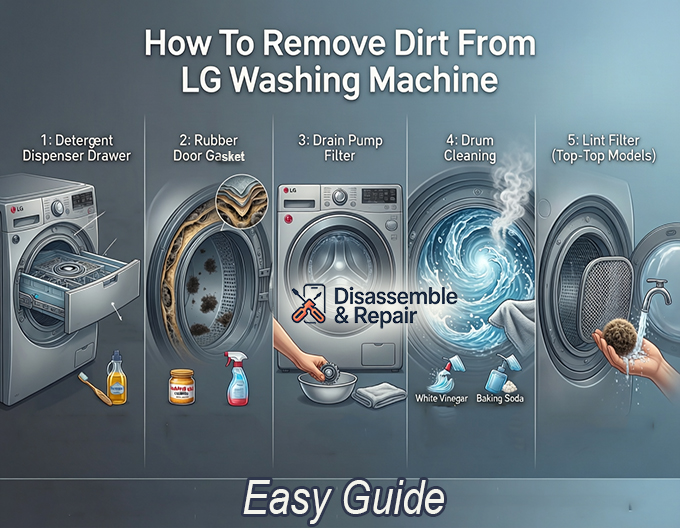
1. Cleaning the Detergent Dispenser Drawer
The detergent dispenser drawer is often the first place where mold begins to colonize. Detergent and softener residues can cake onto the plastic, restricting water flow and introducing bacteria into the drum.
Read more LG washing machine start button not responding
- Removal: Pull the drawer out until it stops. Press down on the disengage tab (usually blue or marked with an arrow) and pull the drawer completely out.
- Soaking: Fill a sink with warm water and a cup of white vinegar. Submerge the drawer components and let them soak for 30 minutes to dissolve built-up soap scum.
- Scrubbing: Use a soft brush or an old toothbrush to scrub every corner of the drawer. Pay close attention to the siphon tubes (the small plastic covers in the softener compartment), as these clog easily.
- Housing Clean: Before reinserting the drawer, look inside the drawer housing slot in the machine. Use a cloth soaked in vinegar to wipe away any black mold or slime on the spray nozzles.
2. Deep Cleaning the Rubber Door Gasket
For owners of a front-load washing machine, the rubber door gasket is the most critical area to clean. This seal prevents water from leaking but also traps lint, hair, and moisture.
- Inspection: Peel back the folds of the rubber seal. You will likely find trapped debris, hair, and potentially black mold spots.
- Wiping: Remove any loose objects (coins, hairpins) and wipe the area with a damp cloth.
- Mold Treatment: If mold and mildew are present, create a paste using baking soda and water, or use a 50/50 solution of water and white vinegar. Apply this generously to the moldy areas inside the seal folds.
- Soaking Time: Leave the solution to sit for at least one hour. The acidity of the vinegar breaks down mold spores, while the baking soda acts as a mild abrasive.
- Rinse: Wipe the gasket thoroughly with a clean, wet cloth. Ensure no residue remains, as this could degrade the rubber over time.
3. Cleaning the Drain Pump Filter
The drain pump filter is the unsung hero of your LG washer. It traps lint, coins, and small items to prevent them from damaging the drain pump. If this filter is clogged, your machine may not drain properly, leading to standing water and odors.
- Access: Locate the small access panel at the bottom front of your washer. Open it to reveal the drain hose and the filter cap.
- Preparation: Place a shallow towel and a bowl on the floor. This process will release water.
- Drain Excess Water: Unclip the small black drain hose and remove the plug. Let the residual water drain into the bowl until it stops.
- Remove Filter: Twist the large round filter cap counter-clockwise to remove it.
- Clean: Remove all lint, coins, and debris from the filter. Rinse it under hot running water. Use a flashlight to check the filter housing in the machine for any remaining obstructions.
- Reassemble: Securely screw the filter back in and re-plug the drain hose.
4. Drum Cleaning: The TubClean Cycle
The internal drum requires high heat and agitation to remove the invisible biofilm coating its surface. LG simplifies this with the TubClean cycle, a specialized setting designed for drum cleaning.
Using Commercial Cleaners:
You can purchase a specialized washing machine cleaner (tablets or powder) designed to chemically break down residue. Place the cleaner directly into the drum (not the dispenser) and run the TubClean cycle.
The Natural Method (Vinegar and Baking Soda):
If you prefer eco-friendly solutions, you can achieve excellent results without harsh chemicals.
- Vinegar Phase: Pour two cups of white vinegar into the detergent dispenser.
- Run Cycle: Select the TubClean cycle (or the hottest available cycle if your model lacks this feature). The hot water combined with vinegar will dissolve scale and mineral deposits and sanitize the drum.
- Baking Soda Phase: Once the cycle finishes, pour half a cup of baking soda directly into the drum and run a rinse cycle. The baking soda neutralizes the vinegar smell and scrubs away loosened dirt.
- Wipe Down: After the cycle is complete, wipe the inside of the door and the drum surface with a microfiber cloth.
5. The Lint Filter (For Top-Load Models)
While front-loaders use a drain pump filter, many LG top-load models utilize a mesh lint filter located inside the drum.
- Locate: Find the filter on the side of the drum.
- Remove and Clean: Press the release clip and pull the filter out. Remove the lint ball and wash the mesh net under running water.
- Reinstall: Snap it back into place until you hear a click. A clogged lint filter can cause dirt to redeposit onto your clothes, defeating the purpose of washing them.
Pro Tips for Preventing Dirt Buildup
Knowing how to remove dirt from LG washing machine is vital, but prevention is far more efficient. By adopting small changes in your laundry routine, you can significantly reduce the frequency of deep cleans required.
Leave the Door Ajar
After every load, leave the washer door and the detergent drawer slightly open. This allows air to circulate, evaporating residual moisture. Mold cannot grow in a dry environment. This simple habit is the single most effective way to prevent odors in front-load machines.
Use High-Efficiency (HE) Detergent Correctly
LG washers are designed to use very little water. Using too much detergent, or using non-HE detergent, creates excessive suds that the machine cannot fully rinse away. This leads to a sticky layer of soap scum throughout the internal components. Always follow the manufacturer’s recommended dosage—more detergent does not equal cleaner clothes; it often equals a dirtier machine.
Monthly Maintenance Washes
Do not wait for a smell to develop. Schedule a TubClean cycle once a month. Consistent maintenance prevents the hardening of scale and mineral deposits, which can be extremely difficult to remove once they calcify on the heating element and drum spider.
Check Pockets
Metal objects like coins, keys, and screws can rust inside the machine, leaving stains on the drum and potentially damaging the drain pump filter. Always empty pockets before loading the washer.
Wipe the Seal Weekly
Make it a habit to quickly wipe down the rubber door gasket with a dry cloth after your laundry day is finished. Removing the sitting water prevents the slime and mold from establishing a foothold.
Troubleshooting Persistent Odors
If you have followed the steps on how to remove dirt from LG washing machine and a smell persists, consider the following advanced checks:
Check the Drain Hose:
Sometimes, dirt and grime accumulate in the corrugated drain hose behind the machine. If the hose is bent or obstructed, water may sit inside and stagnate. Ensure the hose has a proper “high loop” or is elevated correctly to prevent backflow from your home’s plumbing.
Inspect Incoming Water Filters:
There are small mesh filters where the water inlet hoses connect to the back of the machine. If your water supply has high sediment levels, these can get clogged, reducing water pressure and preventing the machine from flushing out dirt effectively during cycles. Turn off the water taps, unscrew the hoses, and clean these small mesh screens carefully.
Conclusion
A clean washing machine is the prerequisite for clean laundry. By systematically cleaning the detergent dispenser drawer, scrubbing the rubber door gasket, clearing the drain pump filter, and utilizing the TubClean cycle, you ensure your LG appliance operates flawlessly for years.
Whether you choose to use a commercial washing machine cleaner or rely on the natural cleaning power of white vinegar and baking soda, the key is consistency. Mastering how to remove dirt from LG washing machine not only protects your investment but also ensures that your family’s clothes are free from allergens, mold spores, and detergent residue. Implement these maintenance steps today to restore the sparkle and freshness to your laundry routine.
Frequently Asked Questions
How often should I perform a deep clean on my LG washing machine?
To keep your appliance in top condition and prevent the buildup of mold and odors, you should perform a deep clean once a month. Running the specialized TubClean cycle monthly helps prevent scale, mineral deposits, and biofilm from hardening on the internal components.
Is it better to use a commercial cleaner or natural ingredients like vinegar?
Both methods are effective. Commercial washing machine cleaners are specifically formulated to chemically break down tough residue. However, the natural method using white vinegar to dissolve mineral deposits followed by baking soda to scrub and deodorize the drum is a highly effective, eco-friendly alternative.
Why does my front-load LG washer develop a musty odor?
Front-load washing machines are designed with an airtight seal to prevent leaks, which can trap moisture inside the drum and the folds of the rubber door gasket. This damp environment promotes the growth of mold and mildew. To prevent this, always leave the washer door and detergent drawer slightly ajar after each use to allow the interior to dry.
What should I do if my washing machine is not draining properly?
If your machine has standing water or a persistent smell, check the drain pump filter located behind the small access panel at the bottom front of the unit. Clear out any trapped lint, coins, or debris. Additionally, ensure the drain hose is not kinked and has a proper “high loop” to prevent water from flowing back into the machine.
Does the type of detergent I use affect how dirty the machine gets?
Yes. LG washing machines are high-efficiency (HE) appliances that require HE detergent. Using regular detergent or too much soap creates excessive suds that cannot be fully rinsed away. This leaves behind a waxy film of soap scum that traps bacteria and leads to significant grime buildup over time.