
Is your laundry routine at a standstill because you are unsure how to fix LG washing machine door lock failures? When the door latch malfunctions, the machine will not start, often displaying an error code that leaves many homeowners frustrated. This guide serves as a comprehensive resource for diagnosing, troubleshooting, and replacing the faulty components of your appliance.
A broken washer door switch is one of the most common issues with a front load washing machine. Whether it is due to mechanical wear and tear or an electrical fault, fixing this issue is often a manageable DIY project. By following these professional steps, you can restore your appliance to working order without the immediate need for a costly appliance repair service.
Understanding the Symptoms
Before picking up a screwdriver, it is essential to confirm that the door lock is indeed the culprit. LG washers are equipped with a self-diagnosis system that communicates issues via the display panel. The most significant indicator of a door lock failure is the LG error code dE (Door Error).
Depending on your specific model, you might see variations such as dE1 or dE2.
- dE Code: Indicates the door is not locked. This could be a simple obstruction or a failed locking mechanism.
- dE1 Code: often points to a failure in the door lock switch or the wiring harness connections being loose.
- dE2 Code: Usually signifies a damaged door latch or a tripped circuit within the door lock assembly.
Aside from the error codes, physical symptoms include the door failing to click shut, the cycle stopping mid-wash, or the door remaining locked even after the cycle is complete. If the door latch striker—the plastic or metal piece on the door itself—does not engage with the lock assembly inside the cabinet, the machine will not sense that it is safe to fill with water.
Read more LG washer light blinking
Essential Tools and Replacement Parts
To perform this repair safely and effectively, you must gather the correct tools. Using improper tools can damage the door seal gasket or the exterior cabinet of the washer.
Required Tools:
Read more LG washing machine E1 error
- Phillips head screwdriver: This is necessary for removing the door hinge screws and the lock assembly screws.
- Spring expansion tool: This specialized tool makes removing and re-installing the retention wire around the boot seal significantly easier. If you do not have one, a pair of needle-nose pliers can work, though it requires more effort.
- Small Flathead Screwdriver: Useful for prying off the retention spring.
- Work Gloves: To protect your hands from sharp metal edges inside the chassis.
Required Parts:
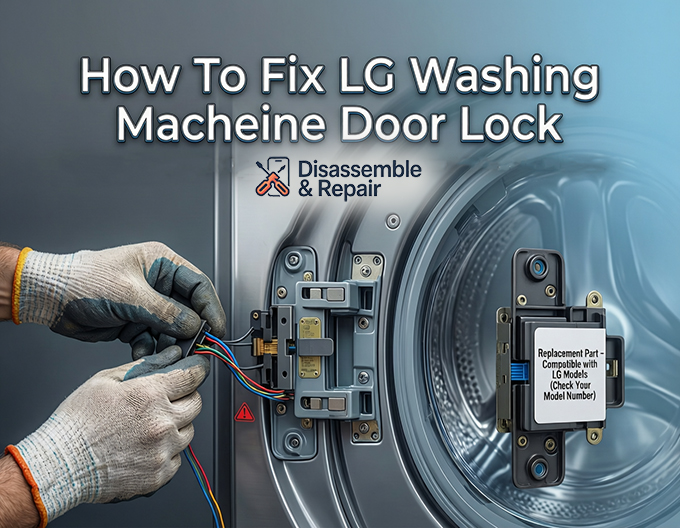
- Replacement parts: You must identify the correct door lock assembly part number for your specific LG model. This part is generally located behind the front panel on the right side of the door opening.
- Door latch striker: If the lock assembly is fine but the hook on the door is broken, you will need to replace the striker instead.
Step-by-Step Guide: How to fix LG washing machine door lock
Replacing the locking mechanism is the most effective way to resolve persistent dE errors. This section details how to fix LG washing machine door lock issues by replacing the assembly.
Step 1: Safety First
Before attempting any repair, always disconnect the washing machine from the power source. Unplug the unit to ensure there is no electricity flowing through the wiring harness. If your washer is hardwired, flip the appropriate breaker in your electrical panel.
Step 2: Accessing the Door Seal Gasket
Open the washer door completely. You will see a gray rubber boot, known as the door seal gasket, which prevents water from leaking out. This gasket is held in place against the front panel by a wire clamp with a spring tensioner.
Locate the spring on the wire clamp; it is usually found at the bottom (6 o’clock position) or the side (3 o’clock position).
- Insert the small flathead screwdriver under the wire clamp near the spring.
- Gently pry the spring outward to expand it, then slide the wire off the lip of the gasket.
- Set the wire clamp aside.
Step 3: Exposing the Door Lock Assembly
Once the wire clamp is removed, you can peel back the edge of the door seal gasket. You do not need to remove the entire gasket; simply peel it back from the right side (near the lock) to push it into the drum.
This will reveal the door lock assembly mounted on the inside of the front panel. It is typically held in place by two screws accessible from the outside front of the washer.
Step 4: Removing the Faulty Lock
Using your Phillips head screwdriver, remove the two screws securing the lock assembly to the front panel. Hold the assembly from the inside with one hand while unscrewing to prevent it from falling.
Once the screws are out, pull the assembly through the opening you created between the front panel and the gasket. You will see three wire connectors (or a single block connector depending on the model) attached to the assembly.
Step 5: Disconnecting the Wiring Harness
This step requires patience. The wiring harness connects the lock to the main control board. The connectors often have locking tabs.
- Depress the small tabs on the plastic connectors to release them.
- Gently pull the plugs out of the socket on the old lock assembly. Do not pull by the wires themselves, as this can break the electrical connection.
- Discard the old switch.
Step 6: Installing the New Assembly
Take your new replacement parts and orient them exactly as the old one was positioned.
- Reconnect the wiring harness plugs into the new door lock assembly. Ensure they click firmly into place. Loose connections can cause future intermittent failures.
- Position the new lock assembly behind the front panel, aligning the screw holes.
- Secure it with the two Phillips screws you removed earlier. Tighten them firmly, but be careful not to strip the plastic housing.
Step 7: Reinstalling the Gasket and Spring
This is often considered the most difficult part of the repair.
Read more How to turn off wifi on LG washer
- Pull the door seal gasket back out from the drum and fit the lip over the edge of the front panel. Ensure the seal is flush and smooth all the way around.
- Place the wire clamp into the groove of the gasket.
- This is where the spring expansion tool is invaluable. Hook the tool into the eyelets of the spring, squeeze the handles to expand the spring, and seat the wire into the groove.
- If using pliers, you may need a second pair of hands to hold the wire in place while you stretch the spring.
Advanced Troubleshooting: Diagnostic Mode and Alignment
If you have replaced the lock but the issue persists, you may need to investigate further using the machine’s software or checking mechanical alignment.
Utilizing Diagnostic Mode
Most modern LG washers have a diagnostic mode that allows technicians to test individual components. To enter this mode:
- Turn the washer off.
- Press and hold the “Spin Speed” and “Soil Level” buttons simultaneously.
- While holding them, press the “Power” button.
- The machine should beep and display a code, indicating it is in test mode.
- Press the “Start/Pause” button to cycle through tests. Look for the door lock test to see if the computer registers the lock engaging.
Checking the Door Latch Striker
Sometimes the lock assembly works, but the door itself is sagging, or the door latch striker is damaged. Inspect the plastic or metal hook on the door. If it is chipped or loose, it will not engage the switch properly. Tighten the striker with your Phillips head screwdriver or replace it if it shows signs of damage.
Inspecting the Hinge
If the door hangs slightly lower than it should, the striker will hit the face of the lock assembly rather than inserting into the hole. Lift the door slightly when closing it. If this allows the machine to lock and start, your hinges are likely worn and need replacement.
Maintaining Your Washing Machine Door
Preventative maintenance can extend the life of your new lock assembly.
- Gentle Closing: Never slam the washer door. This damages both the washer door switch and the striker.
- Clean the Seal: Regularly wipe down the door seal gasket to prevent mold and detergent buildup, which can cause the door to stick.
- Leave it Ajar: When not in use, leave the door slightly open. This prevents pressure on the seal and allows the drum to dry, reducing odors.
Conclusion
Knowing how to fix LG washing machine door lock problems empowers you to handle one of the most frequent appliance breakdowns without waiting for a technician. By identifying the LG error code dE, securing the right replacement parts, and carefully managing the wiring harness and door seal gasket, you can extend the life of your machine.
While this guide covers the complete replacement process, always remember that safety is paramount. If you encounter wiring issues that look burnt or complex control board failures during your diagnostic mode tests, contacting a professional for appliance repair is the wisest course of action. However, for the standard mechanical lock failure, following these steps will get your laundry routine back on track immediately.
Frequently Asked Questions
What does the LG error code dE actually mean?
The dE error code stands for “Door Error.” It indicates that the washing machine’s control board cannot confirm that the door is securely locked. This can be caused by a simple obstruction, a misaligned door, or a mechanical or electrical failure within the door lock assembly. Variations like dE1 or dE2 specifically point toward wiring issues or a damaged locking circuit.
Can I still run my washer if the door lock is faulty?
No, for safety reasons, LG front-load washing machines will not begin a cycle if the door lock sensor does not engage. The machine must confirm the door is sealed to prevent water leakage and to ensure the drum does not spin while the door is open. Replacing the faulty door switch is necessary to restore functionality.
Do I have to remove the entire rubber gasket to replace the lock?
You do not need to remove the entire door seal gasket. By removing the outer wire tension clamp, you can peel back just the right side of the gasket and tuck it into the drum. This provides enough space to reach behind the front panel, unscrew the lock assembly, and disconnect the wiring harness.
What tools are essential for a DIY door lock repair?
The most important tools are a Phillips head screwdriver to remove the mounting screws and a small flathead screwdriver to pry the tension spring. While you can use needle-nose pliers to handle the gasket’s wire clamp, a specialized spring expansion tool is highly recommended to make reinstalling the wire clamp much easier and to prevent damage to the rubber seal.
Read more LG washing machine water not stopping
What if replacing the door lock assembly doesn’t fix the dE error?
If a new lock doesn’t solve the problem, inspect the door latch striker (the hook on the door) to see if it is bent or broken. Also, check the door hinges; if they are sagging, the striker will not align with the hole in the lock assembly. If those parts are fine, the issue may lie in a damaged wiring harness or a fault in the main control board.