

When facing piles of workwear, muddy sports uniforms, or deeply soiled linens, the Samsung heavy duty cycle is an indispensable tool designed to restore cleanliness to your most durable fabrics. This powerful setting transforms your Samsung washer into a stain-fighting powerhouse, utilizing extended wash times and vigorous agitation to break down grime that standard cycles often miss.
As a Senior SEO Specialist and home appliance expert, I have analyzed the mechanics behind modern appliances to help users maximize efficiency. Many users default to the “Normal” setting for every load, inadvertently shortening the lifespan of their machine and failing to achieve optimal cleanliness. Understanding the nuances of the heavy duty setting not only ensures better stain removal but also protects the integrity of your washing machine over time. This comprehensive guide will explore the mechanics, best use cases, and expert tips for utilizing the heavy duty cycle on both front load and top load Samsung models.
Understanding the Samsung Heavy Duty Cycle
The Samsung heavy duty cycle is a pre-programmed wash setting engineered specifically for sturdy, colorfast fabrics and heavily soiled items. Unlike the Normal or Quick Wash cycles, which prioritize speed and energy efficiency, the heavy duty cycle prioritizes mechanical action and deep cleaning performance.
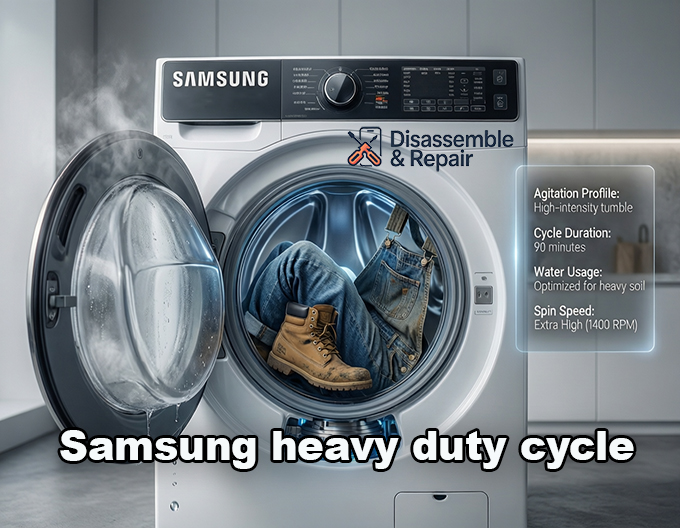
At its core, this cycle alters the behavior of the Samsung washer in three distinct ways:
- Agitation Profile: The machine utilizes a more aggressive tumble pattern (in front loaders) or impeller motion (in top loaders) to physically dislodge dirt from fabric fibers.
- Cycle Duration: The wash time is significantly extended. This allows the laundry detergent enzymes more time to activate and break down proteins and oils found in stains.
- Water Usage: Depending on the model and soil level selection, the machine may use slightly more water to ensure that the removed dirt is flushed away effectively, preventing redeposition onto clean clothes.
This cycle relies heavily on the Digital Inverter Motor, a hallmark of Samsung technology. This motor uses strong magnets for a quieter and more powerful performance, providing the necessary torque to handle heavy, water-logged fabrics without straining the system.
Front Load Washer vs. Top Load Washer: Operational Differences
While the end goal is the same, the execution of the heavy duty cycle differs based on the architecture of your machine.
The Front Load Washer Experience
In a front load washer, the heavy duty cycle utilizes gravity and tumbling. The drum rotates with higher intensity, lifting the wet clothes to the top of the drum and dropping them to the bottom. This impact forces water and detergent through the fabric weave.
- Water Temperature: Front loaders often utilize internal heaters to boost water temperature, which is crucial for activating chemical reactions in detergents for superior stain removal.
- Spin Mechanics: Front loaders generally achieve a higher spin speed at the end of the cycle, extracting more water and reducing drying time.
The Top Load Washer Experience
A top load washer relies on an agitator or a high-efficiency impeller plate. During the heavy duty cycle, the impeller moves the clothes vigorously against each other.
- Deep Fill Options: Many top-loading Samsung models offer a “Deep Fill” option compatible with heavy duty cycles. This submerges the clothes completely, which is beneficial for rinsing away heavy grit or sand.
- Load Balance: Because heavy duty loads are often bulky, top loaders monitor balance carefully. If the load becomes uneven, the machine may attempt to refill and rinse to redistribute the weight before spinning.
Read more Samsung washer self clean cycle how to use
When to Utilize the Heavy Duty Setting
Knowing when to switch from “Normal” to “Heavy Duty” is key to fabric care. This cycle is aggressive and should be reserved for specific scenarios.
Ideal Candidates for Heavy Duty:
- Workwear: Jeans, canvas overalls, and uniforms covered in grease, oil, or construction dust.
- Outdoor Gear: Gardening clothes or children’s play clothes caked with mud.
- Towels and Mats: Bath mats and kitchen towels that require deep cleaning to remove odors and bacteria.
- Sturdy Bedding: While there is a specific bedding cycle, the heavy duty cycle can be used for durable cotton sheets that have significant staining.
Fabrics to Avoid:
- Delicates: Lace, silk, and sheer fabrics will be damaged by the high agitation.
- Wool: The friction can cause felting and shrinkage.
- Performance Wear: Elastic and moisture-wicking coatings can degrade under the intense mechanical action.
Optimizing Settings: Soil Level, Spin Speed, and Temperature
To get the most out of the heavy duty cycle, you must customize the modifiers. A Samsung washer allows you to adjust the soil level, temperature, and spin speed to match the specific load.
Soil Level Adjustments
The soil level setting is the most critical modifier.
- Heavy Soil: Increases the wash time and agitation intensity. Use this for items with visible, caked-on dirt.
- Light Soil: If you are washing sturdy fabrics like denim that aren’t visibly dirty but need a refresh, lowering the soil level reduces wear and tear on the fabric while still utilizing the heavy duty tumble pattern.
Spin Speed Considerations
The heavy duty cycle defaults to a high spin speed to extract water from heavy fabrics. However, you should adjust this based on the load type.
- High/Extra High: Best for cottons and denims. It reduces drying time significantly.
- Medium: If you are washing heavy items that might wrinkle easily or cause the machine to become unbalanced (like a heavy canvas drop cloth), reducing the spin speed can protect the machine’s bearings.
Temperature Settings
Heat is a catalyst for cleaning.
- Hot: Best for oil-based stains and sanitization.
- Warm: The standard for most heavy duty loads, balancing cleaning power with color protection.
- Cold: Use only if the heavy fabrics are dark-colored and prone to bleeding, though this may reduce the efficacy of stain removal.
Advanced Features: Steam Sanitize and Deep Cleaning
Modern Samsung washers are equipped with advanced features that complement the heavy duty cycle, pushing cleanliness to a hospital-grade level.
Steam Sanitize
The steam sanitize function is a game-changer for households with allergy sufferers or babies. When selected alongside the heavy duty cycle, the washer releases steam from the bottom of the drum. This steam penetrates the fabric fibers before the wash cycle begins.
- Benefit: It eliminates 99.9% of bacteria and allergens without the need for harsh chemicals.
- Application: Ideal for cloth diapers, pet bedding, or linens used by a sick family member.
Pre-Soak and Deep Cleaning
For dried-on stains, the “Active Soak” or pre-soak option adds time before the main cycle. The machine gently tumbles the clothes in water and laundry detergent, allowing the solution to loosen the grime before the heavy agitation begins. This combination ensures deep cleaning results that manual scrubbing often cannot match.
Heavy Duty vs. Bedding Cycle: Which One to Choose?
Confusion often arises between the heavy duty cycle and the bedding cycle. While both handle large loads, their engineering goals are different.
- Samsung Heavy Duty Cycle: Focuses on cleaning power and agitation. It is designed for dirt removal. It uses less water than the bedding cycle but moves the clothes more aggressively.
- Bedding Cycle: Focuses on bulk management. It uses more water to ensure large items like comforters are fully saturated. The agitation is gentler to prevent the internal batting of comforters from bunching up.
Rule of Thumb: If the item is dirty and durable (like a canvas drop cloth), use Heavy Duty. If the item is bulky and lofty (like a down comforter), use the Bedding cycle.
Best Practices for Maintenance and Detergent Use
Using the heavy duty cycle puts more stress on your machine than standard cycles. To ensure the longevity of your Samsung washer, follow these maintenance tips.
The Role of Laundry Detergent
Because the heavy duty cycle uses less water than older traditional washers, using the correct laundry detergent is vital.
- HE (High Efficiency) Detergent: Always use HE detergent. It produces fewer suds.
- Dosage: Do not overdose. Excess suds cushion the clothes, reducing the friction needed for cleaning. The heavy duty cycle relies on clothes rubbing against each other; too much soap prevents this.
Calibration and Cleaning
After running several heavy duty loads, residues from heavy soils can build up in the drum.
- Run a Self-Clean Cycle: Use the “Self Clean+” or similar cycle on your Samsung washer monthly to remove odor-causing bacteria.
- Check the Filter: On front load models, check the drain pump filter. Heavy soils often contain debris (coins, screws, heavy lint) that can clog the system.
- Leave the Door Open: Allow the drum to dry out completely to prevent mold growth, especially after a hot, steamy heavy duty wash.
Conclusion
The Samsung heavy duty cycle is a sophisticated feature that, when used correctly, offers professional-grade cleaning results at home. By understanding the interplay between soil level, spin speed, and the mechanical advantages of the Digital Inverter Motor, you can tackle the toughest laundry challenges with confidence. Whether you are sanitizing work clothes or reviving muddy outdoor gear, mastering this cycle ensures your fabrics emerge spotless and your Samsung washer operates at peak performance for years to come. Remember to always check fabric care labels, use high-quality HE detergent, and select the appropriate modifiers to customize the wash to your specific needs.
Frequently Asked Questions
What items are best suited for the Samsung heavy duty cycle?
The heavy duty cycle is specifically designed for durable, colorfast fabrics that are heavily soiled. Ideal items include workwear like jeans and canvas overalls, muddy sports uniforms, sturdy floor mats, and heavily stained towels or linens.
How does the heavy duty cycle differ from the bedding cycle?
The primary difference lies in the cleaning goal. The heavy duty cycle focuses on intense agitation and cleaning power to remove deep-set dirt from durable fabrics. In contrast, the bedding cycle is designed for bulk management, using more water and gentler movements to ensure large items like comforters are cleaned without the internal padding bunching up.
Can I use the heavy duty cycle for all my laundry loads?
No, it is not recommended for every load. Because this cycle utilizes aggressive agitation and high spin speeds, it can damage delicate fabrics like silk, lace, and wool. It can also degrade the elastic and moisture-wicking coatings found in performance athletic wear.
Why does the heavy duty cycle take longer than a normal wash?
The cycle duration is extended to provide more time for the detergent enzymes to chemically break down tough stains like oils and proteins. The extra time also allows for the increased mechanical action required to physically dislodge stubborn grime from thick fabric fibers.
Should I use extra detergent for a heavy duty load?
You should avoid using excessive detergent. Samsung washers are designed for High Efficiency (HE) detergent, and using too much can create an overabundance of suds. These suds act as a cushion between clothes, reducing the friction and “scrubbing” effect that the heavy duty cycle relies on for superior cleaning results.