

It is incredibly frustrating when you pull laundry out of the machine expecting freshness, only to find that your Samsung washer clothes don’t smell clean. Instead of the scent of linen or lavender, you are greeted by a damp, musty odor that clings to your fabrics even after drying.
This issue is surprisingly common with high-efficiency front-load washers, but it doesn’t mean your machine is broken. The problem usually stems from a combination of residue buildup, trapped moisture, and bacterial growth in hidden crevices. This guide will walk you through the professional steps to eliminate these odors and restore your machine’s cleaning performance.
Why Samsung Washer Clothes Don’t Smell Clean
To solve the problem, you first need to understand the root cause. If your Samsung washer clothes don’t smell clean, it is likely due to the machine’s airtight design combined with improper usage habits.
The Role of Mold and Mildew
Front-load washers are designed with watertight seals to prevent leaking. However, these seals also trap moisture inside the drum between cycles. Dark, warm, and damp environments are perfect breeding grounds for mold and mildew. Over time, these fungi develop on the rubber gasket and behind the drum, transferring their spores and smell to your clothing.
Read more How to clean Samsung AddWash compartment
Biofilm and Drum Residue
Bacteria can form a slimy layer known as biofilm on the internal components of your washer. This film feeds on drum residue left behind by detergents and soil from your clothes. If you frequently wash with cold water, this residue never fully dissolves, creating a permanent bacterial host that makes your laundry smell sour.
Fabric Softener and Detergent Buildup
Using too much detergent or fabric softener buildup is a leading cause of odor. Excess soap does not rinse away completely; instead, it coats the inside of the tub and the drain hoses. This sticky layer traps dirt and dead skin cells, which eventually decompose and produce a sewage-like smell that permeates your load.
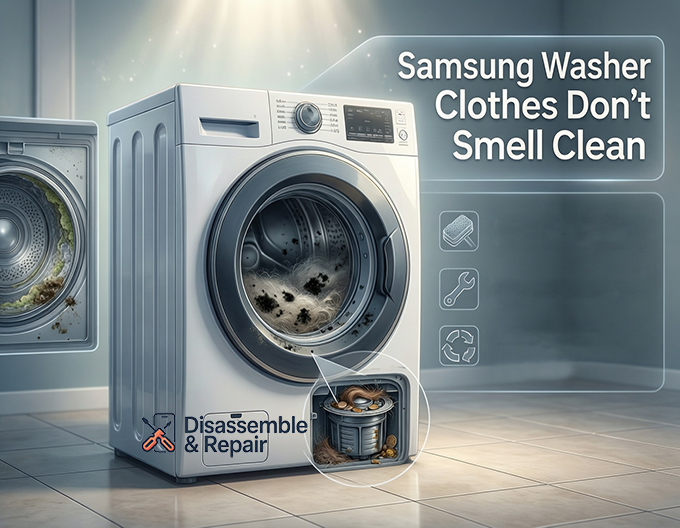
Immediate Fixes for a Smelly Samsung Washer
If your laundry smells bad right now, simply re-washing it won’t help until you address the source of the odor. Follow these steps to deep clean your machine.
1. Deep Clean the Rubber Gasket
The rubber gasket (the large gray seal at the door) is the most common culprit for bad smells. Fold back the lip of the seal and inspect it. You will likely find trapped lint, slime, or black spots of mold.
- Action Plan: Mix a solution of hot water and white vinegar. Dip a microfiber cloth into the solution and scrub the inside of the seal vigorously. For stubborn mold spots, you may need a toothbrush. Ensure you wipe deep into the fold where water tends to pool.
2. Service the Drain Pump Filter
Many users are unaware that their front-load washer has a debris filter that needs regular cleaning. The drain pump filter traps lint, coins, and hair. If it becomes clogged, water cannot drain effectively, leaving stagnant, smelly water sitting in the bottom of the pump.
- Action Plan: Locate the small access panel at the bottom front of your machine. Open it and place a shallow pan or towel underneath. Unscrew the small drain hose cap to release standing water, then unscrew the filter itself. Remove any debris, rinse the filter under hot water, and screw it back in tightly.
3. Run the Self Clean Cycle
Samsung washers are equipped with a specialized Self Clean cycle (or Self Clean+) designed to eliminate bacteria from the drum. This cycle uses extremely hot water and high agitation to scour the tub.
- Action Plan: Ensure the drum is empty. Select the Self Clean cycle. For an extra boost against odors, you can add liquid chlorine bleach to the bleach compartment (do not add detergent). If you prefer a natural alternative, pour two cups of white vinegar directly into the drum before starting. Note that some manufacturers recommend specific washing machine cleaner tablets like Affresh for this cycle if the odor is persistent.
Preventing Future Odors
Once you have neutralized the smell, the goal is to prevent it from returning. Small changes to your laundry routine can stop mold and mildew from taking hold again.
Master Your Detergent Use
You must use HE detergent (High Efficiency) for Samsung front-loaders. These formulas are low-sudsing and designed to rinse out with less water.
- The Rule: Never fill the detergent cup to the brim. You likely only need 1 to 2 tablespoons per load. Excess suds create a “suds lock” that leaves residue on both the clothes and the drum.
Limit Fabric Softener
Fabric softener buildup is essentially animal fat (tallow) coating your machine. It is one of the hardest residues to remove. Consider switching to white vinegar as a natural softener in the rinse cycle, or significantly reduce the amount of commercial softener you use.
Improve Ventilation
The airtight seal that keeps water in also keeps air out. After every wash cycle, you must leave the door wide open for at least an hour to allow the drum to dry. Similarly, pull the detergent drawer out slightly to let air circulate through the dispenser housing, preventing mold growth in the feeder tubes.
Read more How to clean Samsung front load door gasket
Regular Maintenance Schedule
Don’t wait until your clothes smell to clean the machine.
- Monthly: Wipe down the door glass and rubber gasket.
- Every 40 Loads: Run the Self Clean cycle. Most Samsung washers will illuminate a reminder light when it is time to do this.
- Quarterly: Clean the drain pump filter to ensure proper drainage.
Conclusion
When Samsung washer clothes don’t smell clean, it is rarely a sign of mechanical failure. It is almost always a hygiene issue within the machine caused by moisture and residue. By manually removing the biofilm from the gasket, clearing the drain pump filter, and utilizing the heat of the Self Clean cycle, you can eliminate the source of the stench. Adopting better habits with HE detergent and ventilation will ensure your appliance remains fresh, keeping your clothes smelling exactly the way they should.
Frequently Asked Questions
Why does my Samsung washer smell like sewage or rotten eggs?
This smell is typically caused by a combination of biofilm buildup and stagnant water. Biofilm forms when excess detergent, fabric softener, and organic matter from your clothes create a slimy layer that hosts bacteria. Additionally, if the drain pump filter is clogged, old water sits at the bottom of the machine and begins to rot, releasing a foul, sewage-like odor.
How much detergent should I actually be using?
Even though detergent drawers have large compartments, you should only use 1 to 2 tablespoons of High Efficiency (HE) detergent per load. Using too much soap creates excess suds that cannot be fully rinsed away, leading to a sticky residue inside the drum that traps odors and encourages mold growth.
Is it safe to use vinegar in my Samsung washing machine?
Yes, white vinegar is a safe and effective natural cleaner for your washer. You can use it to scrub the rubber gasket to kill mold or pour two cups directly into the drum during a Self Clean cycle to help dissolve mineral deposits and neutralize lingering smells.
How do I know when it is time to run the Self Clean cycle?
Most modern Samsung washers are programmed to track your usage and will illuminate a specific “Self Clean” icon or light on the control panel every 40 wash cycles. However, if you notice your clothes don’t smell fresh before the light comes on, you can run the cycle manually at any time to sanitize the drum.
Read more Samsung washer Steam cycle
Why is moisture still trapped in my washer after a cycle ends?
Front-load washers are designed with a watertight, airtight seal to prevent leaks during operation. Because air cannot circulate when the door is closed, moisture remains trapped inside. To prevent this, you should always leave the washer door and the detergent drawer slightly ajar after every load to allow the internal components to air dry.