

Regular appliance maintenance is vital for hygiene, and knowing how to clean Samsung washing machine drum is the first step toward ensuring your laundry remains fresh and odor-free. Over time, residue from detergents, softeners, and minerals can accumulate, creating an environment ripe for bacteria, yet many owners overlook this critical maintenance task until smells appear. This comprehensive guide will walk you through the professional methods for cleaning your Samsung washer, utilizing both built-in technology and effective manual solutions.
Why Drum Maintenance Matters
Before diving into the procedures, it is important to understand what is happening inside your appliance. Whether you own a front-load washing machine or a top-load washing machine, the drum is constantly exposed to moisture and organic matter from soiled clothing.
Without regular cleaning, limescale buildup can occur, particularly in hard water areas, which may damage the heating element and sensors. Furthermore, the warm, damp environment is a breeding ground for mold and mildew. If your clean clothes are coming out with a musty odor or visible dark flecks, it is a clear indicator that the drum requires immediate attention.
Step-by-Step: How to clean Samsung washing machine drum
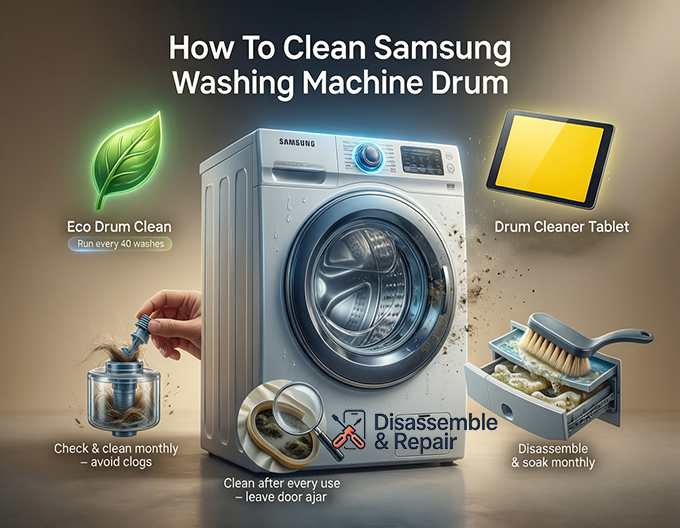
The most effective way to maintain your appliance is to utilize the features Samsung has engineered specifically for this purpose. Most modern models come equipped with Eco Drum Clean or Self Clean+ cycles. These distinct cycles are designed to eliminate residue without the need for harsh chemicals.
Using the Eco Drum Clean or Self Clean+ Cycle
Samsung recommends running this cycle every 40 washes. Your machine may even display a blinking notification on the control panel when it is time to clean the drum.
- Empty the Drum: Ensure the washing machine is completely empty. Remove all laundry before starting.
- Power On: Press the Power button to turn on the washing machine.
- Select the Cycle: Turn the cycle selector knob to Eco Drum Clean or Self Clean+.
- No Detergent Required: One of the most common mistakes users make is adding detergent. These cycles use high-speed spinning and extremely hot water to sanitize the drum. Adding standard detergent can cause excessive suds, leading to error codes or leaks.
- Start the Cycle: Press the Start/Pause button. The machine will fill with water and agitate the drum at high speeds to dislodge dirt and bacteria.
Note: If your machine is exceptionally dirty or hasn’t been cleaned in months, you may run this cycle twice consecutively for optimal results.
Read more How to clean Samsung detergent dispenser
Using Drum Cleaner Tablets
If you prefer a commercial solution or if your machine lacks a dedicated cleaning cycle, drum cleaner tablets are a viable option. These are formulated to break down heavy grime and scale.
- Place a tablet directly into the empty drum (do not put it in the dispenser).
- Run a standard hot water cycle (at least 60°C or 140°F) or the dedicated cleaning cycle if available.
- Wipe away any residue left behind after the cycle completes.
Manual Deep Cleaning: The Vinegar and Baking Soda Method
If you prefer natural cleaning agents or need to tackle severe odors, a manual approach using household staples is highly effective. This method is particularly useful for breaking down limescale buildup.
The Process
- Prepare the Solution: You will need 2 cups of white vinegar and 1/4 cup of baking soda.
- Application:
- For a front-load washing machine: Pour the white vinegar into the detergent dispenser and sprinkle the baking soda directly into the drum.
- For a top-load washing machine: Select the hottest temperature setting and largest load size. Let the drum fill with water, then add the white vinegar and baking soda. Allow the machine to agitate for a minute, then pause the cycle and let the mixture soak for one hour.
- Run the Cycle: Run a complete wash cycle on the hottest setting available. The acidity of the vinegar cuts through mineral deposits and soap scum, while the baking soda acts as a mild abrasive and deodorizer.
- Wipe Down: Once the cycle finishes, use a dry microfiber cloth to wipe the inside of the drum to remove any loosened debris.
Cleaning the Critical “Grime Magnets”
Cleaning the drum itself is only part of the equation. To truly sanitize your Samsung washer, you must address the peripheral components that feed into the drum. Neglecting these areas will result in the reintroduction of bacteria into your clean drum.
Read more How to clean Samsung washing machine drum
1. The Rubber Gasket (Door Seal)
In front-loading models, the rubber gasket is the number one location for mold and mildew growth. Water often pools in the folds of the seal after a wash cycle, creating a dark, wet environment.
- Inspection: Open the door and peel back the lip of the rubber gasket. You may find trapped lint, coins, or black slime.
- Cleaning: Remove any foreign objects. Mix a solution of dilute white vinegar and warm water. Dip a soft cloth or a toothbrush into the solution and scrub the inside of the seal thoroughly.
- Maintenance: Leave the door slightly ajar after every wash to allow air circulation, which dries out the gasket and prevents mold recurrence.
2. The Detergent Drawer
The detergent drawer is often overlooked, but it is a hotspot for hardened soap and fabric softener residue, which can turn into black mold.
- Removal: Pull the drawer out until it stops. Press the release lever (usually a blue tab) and pull the drawer completely out of the chassis.
- Scrubbing: Disassemble any plastic inserts (like the liquid detergent guide). Soak the drawer in warm water and scrub away residue with a soft brush.
- Cavity Cleaning: Before reinserting the drawer, use a brush or cloth to clean the drawer housing (the slot in the machine). Debris here can block water jets, preventing the detergent from flushing correctly.
3. The Pump Filter (Debris Filter)
Located at the bottom front of most Samsung front-loaders (and some top-loaders), the pump filter protects the drain pump from lint and small objects. If this clogs, your machine will not drain water effectively, leading to stagnant water smells in the drum.
- Access: Open the small cover panel at the bottom right of the machine.
- Drain: Locate the emergency drain tube (a small black hose). Place a shallow bowl or towel underneath, remove the cap, and let the excess water drain out.
- Clean: Once drained, unscrew the main pump filter cap by turning it counter-clockwise. Pull it out and remove any lint, coins, or hair. Rinse the filter under warm running water.
- Reassemble: Screw the filter back in tightly and replace the drain tube cap.
Preventative Maintenance for Long-Term Hygiene
Now that you have executed a deep clean, maintaining that level of hygiene requires minor behavioral changes in how you use the machine.
Leave the Door Open
Moisture is the enemy of a clean machine. After every cycle, leave the door and the detergent drawer slightly open. This ventilation allows the remaining moisture to evaporate, making it difficult for mold and mildew to establish a foothold on the rubber gasket or inside the drum.
Avoid Overloading
Overloading the machine prevents the laundry from tumbling correctly and prevents the detergent from rinsing out completely. This leaves a soap residue on both your clothes and the drum walls, which accelerates the buildup of grime.
Use High-Efficiency (HE) Detergent
Samsung washers are designed to use High-Efficiency detergents. Using too much detergent or using non-HE detergent creates excessive suds that the machine cannot rinse away. This “sudsing” leaves a film behind that traps dirt and leads to odors.
Monthly Checks
Make a habit of checking the pump filter and running the Eco Drum Clean cycle once a month. Preventive maintenance is far less time-consuming than trying to scrub established mold out of a rubber seal.
Conclusion
Understanding how to clean Samsung washing machine drum effectively is about more than just aesthetics; it is about protecting your investment and ensuring the hygiene of your home. By leveraging the Eco Drum Clean technology and supplementing it with manual cleaning of the rubber gasket, detergent drawer, and pump filter, you can extend the life of your appliance significantly. Whether you choose drum cleaner tablets or the natural power of baking soda and vinegar, consistency is key. A clean machine results in cleaner clothes, better energy efficiency, and a fresher smelling home.
Frequently Asked Questions
Can I use bleach to clean the drum of my Samsung washing machine?
While bleach is an effective disinfectant, it can be harsh on internal rubber components if used frequently. If you choose to use bleach, it is essential to run an additional rinse cycle afterward to ensure no residue remains that could damage your clothes. For regular maintenance, white vinegar is a safer, non-corrosive alternative for breaking down limescale and soap scum.
Why does my washing machine still have an odor even after I cleaned the drum?
If a musty smell persists after you have cleaned the drum, rubber gasket, and detergent drawer, the issue may be located elsewhere. Check the pump filter (debris filter) at the bottom of the machine for trapped organic matter. If that is clear, the odor may be originating from a kinked drain hose or a clog in your household plumbing standpipe.
Should I add detergent when running the Eco Drum Clean or Self Clean+ cycle?
No, you should not add standard laundry detergent to these cycles. Samsung’s dedicated cleaning cycles are designed to sanitize the drum using extremely hot water and high-speed agitation. Adding detergent can lead to excessive sudsing, which may cause leaks or trigger error codes on your control panel.
Read more Samsung washer drain pump filter cleaning
How often should I perform maintenance on my Samsung washer?
Samsung recommends running the Eco Drum Clean or Self Clean+ cycle every 40 washes. For the peripheral parts, you should wipe down the rubber gasket after every use, and check the pump filter and detergent drawer for buildup at least once a month to ensure optimal hygiene and performance.
What is the best way to prevent mold and mildew from growing in the first place?
The most effective preventative measure is moisture control. Always leave the washer door and the detergent drawer slightly ajar after a cycle finishes to allow air to circulate and dry out the interior. Additionally, using the correct amount of High-Efficiency (HE) detergent prevents the filmy residue that traps bacteria and leads to mold growth.