

Implementing a consistent routine with these Samsung washer maintenance tips long life will ensure your appliance operates at peak efficiency for years to come. While Samsung washers are renowned for their durability and advanced features, neglect can lead to mechanical issues, odors, and reduced cleaning performance. This comprehensive guide covers every aspect of machine care, from internal calibration to external inspections.
Essential Samsung Washer Maintenance Tips Long Life
To maximize the investment in your laundry appliance, integrating specific Samsung washer maintenance tips long life into your weekly and monthly chores is strictly necessary. A proactive approach prevents common failures such as drainage blocks, drum imbalance, and mold growth. The following sections detail the technical and practical steps required to maintain your washer’s structural integrity and washing capability.
The Critical Role of HE Detergent
Modern Samsung washers are designed to operate with High-Efficiency (HE) detergent. Unlike traditional soaps, HE detergent is formulated to produce low suds while maintaining high soil suspension in the low-water environments typical of modern front and top loaders.
Using non-HE detergent or excessive amounts of the correct detergent can lead to a phenomenon known as “suds lock.” This excess foam triggers the machine’s sensors to add more rinse cycles, wasting water and time. Over time, the un-rinsed soap residue creates a sticky film on the drum and internal hoses, which becomes a breeding ground for mold and attracts hard water scale.
Hard Water Considerations:
If you live in an area with hard water, the minerals can react with detergent to form lime scale on the heating element and drum. In these environments, using a powdered HE detergent is often more effective than liquid, as it contains builders that help soften the water. Alternatively, you may need to add a dedicated water softener tablet to your wash cycle to prevent scale accumulation that can damage the internal components.
Read more Samsung washer Steam cycle
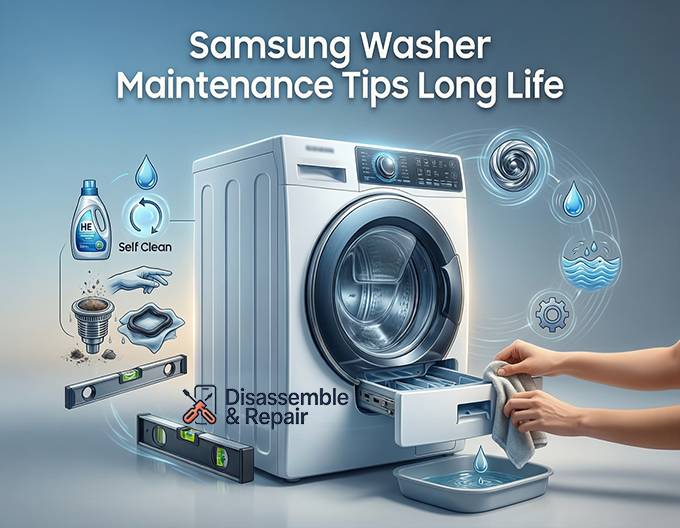
Mastering the Self Clean Cycle
One of the most powerful tools at your disposal is the Self Clean cycle (or Self Clean+ on some models). This pre-programmed cycle is designed to eliminate residue and bacteria from the drum without the need for harsh chemicals.
How to Use Self Clean:
- Empty the Drum: Ensure the washer is completely empty.
- Select the Cycle: Turn the dial to “Self Clean.”
- Start: Press the Start/Pause button. The machine will fill with hot water and agitate at high speeds to scour the drum.
You should run this cycle every 20 to 40 loads. Most Samsung washers feature an indicator light that illuminates when a cleaning cycle is due. For older models without this feature, a monthly schedule is recommended.
Drum Sanitization and Mold Prevention:
While the Self Clean cycle handles the internal drum sanitization, manual habits are equally important for mold prevention. After every wash, leave the door and the detergent drawer slightly ajar. This allows air to circulate, evaporating moisture that would otherwise get trapped in the dark, damp recesses of the machine, preventing the growth of mildew and distinct musty odors.
Managing Load Capacity and Vibration
Overloading is one of the primary causes of premature bearing and suspension failure. Every Samsung washer has a specific load capacity rating. Forcing too many clothes into the drum prevents them from tumbling freely, resulting in poor cleaning performance and putting immense strain on the motor.
Vibration Reduction:
Samsung washers are equipped with Vibration Reduction Technology (VRT), but this system relies on the machine being perfectly level. If your washer vibrates excessively or “walks” across the floor:
- Check Leveling: Place a carpenter’s level on top of the machine. Adjust the leveling legs at the bottom corners until the bubble is centered.
- Balance the Load: Wash heavy items like towels or bedding in smaller loads to prevent the drum from becoming unbalanced during the spin cycle.
Calibration Mode: The Forgotten Step
Calibration is a critical maintenance step that is often overlooked. Your Samsung washer uses weight sensors to determine the size of the load and the amount of water required. If these sensors are not calibrated, the machine may use too much water or spin at incorrect speeds, leading to inefficiency and wear.
When to Calibrate:
You should run calibration mode immediately after installation and whenever you move the washing machine or make adjustments to its leveling legs.
How to Perform Calibration (General Procedure):
- Empty the Washer: The drum must be empty.
- Enter Mode: Power on the machine, then hold down a specific combination of buttons simultaneously for 3 seconds. Common combinations include “Temp + Delay End” or “Spin + Soil Level.” Consult your user manual for your specific model’s key combination.
- Activate: Once the display shows a code (usually “Cb”), press the Start/Pause button.
- Process: The drum will rotate back and forth for a few minutes. When finished, the display will show “0” or “End,” and the machine will turn off.
Deep Cleaning the Drain Pump Filter
For front-loading Samsung washers, the drain pump filter (also known as the debris filter) is a vital component that protects the drain pump from lint, coins, hair, and other debris. A clogged filter can prevent the machine from draining or spinning and may cause “5E” or “nd” error codes.
Cleaning Procedure (Monthly):
Read more How to clean Samsung detergent dispenser
- Locate the Panel: Find the small access panel on the bottom front of the washer.
- Drain Residual Water: Place a towel and a shallow pan under the panel. Pull out the small emergency drain hose, remove its cap, and let the water drain into the pan.
- Remove the Filter: Once drained, turn the large round filter knob counter-clockwise to unscrew it.
- Clean: Remove any debris from the filter and rinse it under warm running water. Use a soft brush to clean the filter housing inside the machine.
- Reassemble: Screw the filter back in tightly and replace the emergency drain hose and cap.
Care for the Door Gasket and Detergent Drawer
The gray rubber seal around the door, known as the door gasket, is a prime location for mold and slime accumulation. Water and lint can get trapped in the fold of the gasket.
Gasket Maintenance:
Read more Samsung Tub Clean cycle instructions
- After Every Wash: Wipe the inside of the seal with a dry cloth to remove standing water.
- Monthly Deep Clean: Inspect the seal for dark spots. Clean with a solution of mild bleach and water or a specialized mildew remover. Ensure you wipe deep into the folds where small socks or debris might be hiding.
Detergent Drawer Hygiene:
Detergent and fabric softener residues can build up in the dispenser drawer, leading to clogs and black mold.
- Remove the Drawer: Pull the drawer out, then press the release tab (usually blue) inside the compartment to slide it completely out.
- Scrub: Wash the drawer components in a sink with warm water and a soft brush.
- Clean the Recess: Use a bottle brush or toothbrush to scrub the inside of the drawer recess in the machine, where water jets can get clogged with hardened soap.
Inspecting Water Inlet Hoses
A burst water hose can cause catastrophic flooding. As part of your long-term maintenance, inspect the hot and cold water inlet hoses at the back of the machine every six months. Look for:
- Cracks or brittleness in the rubber.
- Bulges or bubbles in the hose line.
- Corrosion or moisture at the connection points.
Manufacturers generally recommend replacing these hoses every 5 years, regardless of their visible condition. Upgrading to stainless steel braided hoses offers superior protection against bursting compared to standard rubber hoses.
Conclusion
Adhering to these professional guidelines will significantly extend the operational life of your appliance. By respecting load capacities, utilizing the Self Clean cycle, and performing manual cleaning of the filter and gasket, you ensure that your laundry routine remains efficient and hygienic. Remember that the “Samsung washer maintenance tips long life” philosophy is about preventative care—stopping problems before they require expensive repairs. A well-maintained washer not only cleans better but also conserves energy and water, providing value for years to come.
Frequently Asked Questions
How often should I run the Self Clean cycle on my Samsung washer?
You should run the Self Clean or Self Clean+ cycle every 20 to 40 wash loads. Many modern Samsung washers have an indicator light that will signal when a cleaning cycle is necessary. If your model does not have an indicator, performing this maintenance once a month is a recommended best practice to prevent residue buildup and odors.
Why is it necessary to use High-Efficiency (HE) detergent?
Samsung washers are designed for low-water usage, and HE detergents are specifically formulated to produce fewer suds while still cleaning effectively. Using regular detergent can cause “suds lock,” where excessive foam triggers extra rinse cycles and leaves a sticky residue inside the drum and hoses. Over time, this residue leads to mold growth and can damage the machine’s internal sensors.
What should I do if my washer is vibrating excessively or “walking” during a cycle?
Excessive vibration is usually caused by the machine being unlevel or the load being unbalanced. First, use a carpenter’s level and adjust the leveling legs at the bottom of the washer until it is perfectly flat. Second, ensure you are not overloading the machine; wash heavy items like towels in smaller batches to help the drum maintain balance during high-speed spins.
Read more Samsung washer drain pump filter cleaning
How do I prevent mold and musty smells from developing in my front-load washer?
To prevent mold, you should leave the washer door and the detergent drawer slightly open after every wash to allow air to circulate and moisture to evaporate. Additionally, wipe down the gray rubber door gasket after each use to remove trapped water and lint, and perform a deeper cleaning of the gasket with a mild bleach solution once a month.
What is calibration mode and when should I use it?
Calibration mode is a process where the washer rotates the empty drum to reset its weight sensors. This ensures the machine accurately detects the load size and uses the correct amount of water. You should perform calibration immediately after installing the washer, whenever you move the machine to a new location, or after adjusting the leveling legs.