

Knowing how to clean Samsung AddWash compartment areas properly is essential for maintaining the hygiene and performance of your washing machine. Over time, moisture and detergent residue can lead to mold growth and unpleasant odors in the AddWash door, detergent drawer, and drum seals, making regular maintenance crucial.
A Samsung AddWash washing machine offers the unique convenience of adding forgotten clothes mid-cycle, but this extra functionality adds specific areas that require attention. To keep your appliance running efficiently, you must clean the AddWash door seals, the detergent drawer, and the main rubber gasket regularly. This guide provides a professional, step-by-step approach to deep cleaning these components, ensuring your laundry remains fresh and your machine operates at its best.
How to clean Samsung AddWash compartment
The “AddWash compartment” typically refers to the small, secondary door integrated into the main door of your Samsung washing machine. This feature has its own set of rubber seals and latches that can trap water, lint, and soap scum. If neglected, this area becomes a breeding ground for mold and mildew.
Step 1: Open and Inspect the AddWash Door
Start by ensuring the machine is turned off and the drum is empty. Push the upper area of the AddWash door to open it. Visually inspect the inner mechanism and the rubber seals surrounding the opening. You may notice a buildup of lint or a thin film of detergent residue.
Step 2: Wipe Down the Seals
Using a damp microfiber cloth, gently wipe the rubber seals around the AddWash opening. These seals are smaller than the main rubber gasket but are just as prone to trapping moisture.
- For light cleaning: Warm water is usually sufficient to remove surface dust and softener residue.
- For heavy buildup: Create a mild solution of water and white vinegar. Dip your cloth into the solution and carefully wipe the crevices of the seal. Avoid using harsh abrasive cleaners that could damage the rubber.
Step 3: Dry Thoroughly
After wiping away the dirt, use a dry section of your microfiber cloth to remove any remaining moisture. Leaving this compartment wet is the primary cause of odors. It is good practice to leave the AddWash door slightly ajar when the machine is not in use to allow for air circulation.
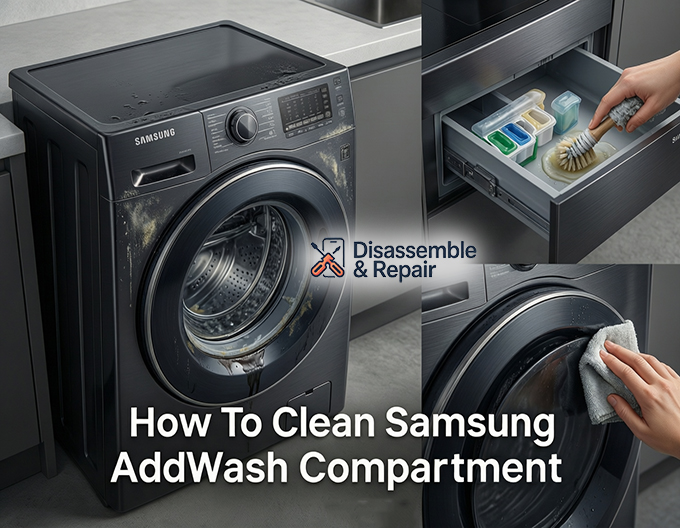
Deep Cleaning the Detergent Drawer
The detergent drawer is another critical compartment that requires frequent cleaning. Detergent and fabric softener dispenser channels often become clogged with congealed fluid, which can restrict water flow and lead to bacterial growth.
Removing the Drawer
- Pull the detergent drawer out until it stops.
- Locate the release lever inside the drawer, typically found within the liquid detergent or fabric softener guide. It is often blue or marked with a “Push” indication.
- Press down on the release lever while simultaneously pulling the drawer outward. It should slide out easily.
Cleaning the Components
Once removed, disassemble the drawer by lifting out the liquid detergent guide and the softener divider. Wash all parts under warm running water. Use a soft brush (an old toothbrush works well) to scrub away hardened soap scum from the corners.
Read more Samsung washer drain pump filter cleaning
Cleaning the Drawer Recess
Before reinserting the drawer, look inside the empty compartment slot (the recess) in the washing machine. You will likely see residue on the top and bottom of this spray area.
- Use a bottle brush or a damp cloth wrapped around your finger to clean deep inside the recess.
- Ensure the water jet nozzles are free of obstructions.
- Wipe the area dry before sliding the clean detergent drawer back until it clicks into place.
Maintaining the Rubber Gasket and Drum
The main rubber gasket (door seal) is the most common area where owners experience mold and mildew issues. Water often pools at the bottom of the seal after a wash cycle.
Cleaning the Rubber Gasket
- Open the main door and carefully pull back the lip of the gray rubber gasket.
- Check for trapped foreign objects like coins, buttons, or lint.
- Wipe the entire circumference of the seal with a cloth soaked in a mild bleach solution or a dedicated washer cleaner. Pay special attention to the bottom fold where water stagnates.
- If mold is already present, soak a few paper towels in white vinegar or a bleach solution and pack them into the fold of the gasket. Leave them for 30 minutes to an hour, then scrub with a toothbrush and rinse thoroughly.
Running the Maintenance Cycle
Samsung washing machines are equipped with a self-cleaning cycle known as Eco Drum Clean (or Eco Drum Clean+ on some models). This maintenance cycle is designed to remove dirt and bacteria from the drum and the door gasket without using chemical detergents.
Read more How to clean Samsung detergent dispenser
- Power on the washing machine.
- Turn the cycle selector to Eco Drum Clean.
- Press the Start/Pause button.
- The machine will heat water to a high temperature (typically around 60°C to 70°C) and spin at high speeds to dislodge residue.
- Note: Your user manual will specify how often to run this cycle, but generally, the machine will alert you every 40 washes. Do not add laundry or detergent during this cycle.
Best Practices for Odor Prevention
To maintain a clean Samsung washing machine and prevent the return of odors, adopt these daily habits:
- Air it Out: Always leave the main door, the AddWash door, and the detergent drawer slightly open after every wash. This allows trapped moisture to evaporate.
- Wipe After Use: Take ten seconds to quickly wipe the remaining water from the rubber gasket and the glass of the AddWash door after unloading your laundry.
- Use High-Efficiency (HE) Detergent: Excess suds from non-HE detergents contribute significantly to soap scum buildup. Use only the recommended amount of detergent.
- Clean the Debris Filter: Located at the bottom front of the machine, the debris filter catches lint and small objects. Clean this every two months to prevent drainage issues and bad smells.
Troubleshooting Stubborn Stains
If you have followed the steps on how to clean Samsung AddWash compartment areas and still notice mold stains or persistent odors, deeper action may be required.
Read more How to clean pump filter on Samsung washer
- Persistent Mold: If the rubber gasket is deeply stained with black mold that does not come off with bleach, the rubber may have degraded. In this case, the seal may need to be replaced by a professional.
- Blocked Dispensers: If the fabric softener compartment remains full of water after a wash, the siphon hole is likely blocked. Remove the blue siphon cap from the drawer and clean the small hole thoroughly with warm water and a pin if necessary.
By systematically cleaning the AddWash door, detergent drawer, and main seals, you ensure your Samsung washing machine continues to operate efficiently and keeps your clothes smelling fresh. Regular maintenance not only extends the lifespan of your appliance but also ensures a hygienic wash environment for your family.
Frequently Asked Questions
How often should I clean the AddWash door and rubber seals?
For the best results, you should quickly wipe down the AddWash door seals and the main rubber gasket after every wash cycle to remove moisture. A more thorough cleaning with a damp cloth or a mild vinegar solution should be performed at least once a month to prevent soap scum and lint buildup.
Read more How to flush Samsung washer hoses
What is the purpose of the Eco Drum Clean cycle?
The Eco Drum Clean (or Eco Drum Clean+) cycle is a specialized maintenance setting that uses high-temperature water and high-speed spinning to remove bacteria and residue from the drum and gaskets. You should run this cycle approximately every 40 washes, or when the machine alerts you, without adding any laundry or detergent.
Why does my detergent drawer still have water or softener in it after a cycle?
If the fabric softener compartment remains full, the siphon hole is likely blocked by congealed fluid. To fix this, remove the detergent drawer, take off the blue siphon cap, and clean both the cap and the small hole thoroughly with warm running water to ensure proper drainage.
Can I use regular detergent instead of High-Efficiency (HE) detergent?
It is highly recommended to use only HE detergent in your Samsung AddWash machine. Regular detergents create excess suds that leave behind a film of soap scum, which eventually leads to mold growth and unpleasant odors in the compartments and seals.
How do I prevent mold from growing in the AddWash compartment?
The most effective way to prevent mold is to promote air circulation. Leave the main door, the AddWash door, and the detergent drawer slightly open whenever the machine is not in use. This allows any trapped moisture to evaporate rather than stagnate and breed mildew.