
Encountering a Samsung washing machine 3C1 error can be a frustrating interruption to your laundry routine, signaling a specific breakdown in the appliance’s motor operation. This code is not merely a generic glitch; it points directly to a malfunction within the motor assembly or the electronic communication pathways governing it. For homeowners and technicians alike, understanding the technical nuances of this error is the first step toward a successful resolution.
Understanding the Samsung Washing Machine 3C1 Error
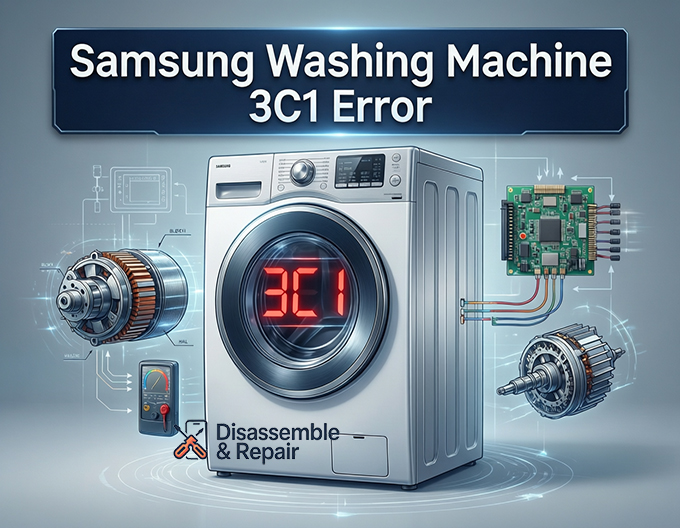
The Samsung washing machine 3C1 error is a diagnostic code that indicates a failure in the main drive motor’s operation. Specifically, the machine’s Main PCB (Printed Circuit Board) has detected that the motor is not rotating as expected, or there is an anomaly in the feedback signal it receives.
Modern Samsung washers typically utilize a BLDC motor (Brushless DC motor) or an Inverter motor for efficiency and variable speed control. Unlike older conventional motors, these sophisticated components rely on precise digital signals to function. When the control board sends a command to spin but receives no confirmation of movement—or detects an overcurrent situation—it triggers the 3C1 code to prevent further electrical damage.
Read more Samsung washing machine HE2 error
Common Technical Causes
- Mechanical Obstruction: Physical items jamming the drum.
- Wiring Faults: Damaged or loose connections in the wiring harness.
- Sensor Failure: Issues with the Hall sensor which tracks motor speed and position.
- Component Failure: A defective drive motor or a burnt-out PCB control board.
Step-by-Step Error Code Troubleshooting
Effective error code troubleshooting requires a systematic approach, moving from the simplest checks to more complex hardware inspections. Before attempting any physical repairs, ensure the machine is disconnected from the power source to prioritize safety.
1. Perform a System Power Cycle
The first step in any appliance repair diagnostic is to rule out transient electronic glitches. The electronic controller may occasionally lock up due to power surges or software misreads.
- Turn off the washing machine.
- Unplug the unit from the wall outlet.
- Wait for at least 5 to 10 minutes. This allows the capacitors on the PCB control board to discharge completely.
- Plug the machine back in and attempt to run a Rinse + Spin cycle.
If the Samsung washing machine 3C1 error persists immediately or halfway through the cycle, the issue is likely hardware-related rather than a software hiccup.
Read more Samsung washing machine not washing
2. Check for Drum Rotation and Obstructions
A common mechanical trigger for this error is a physically stuck drum. If the drive motor attempts to turn but meets excessive resistance, the system detects an overload and shuts down.
- Open the door and attempt to rotate the drum by hand.
- The drum should spin relatively freely with only a mild hum of the motor magnets (in the case of a Direct drive motor).
- If the drum feels seized or makes a grinding noise, look for foreign objects like coins, buttons, or underwires trapped between the inner and outer tubs.
- Check that the load is balanced. An severely overloaded machine can strain the motor enough to trip the 3C1 code.
3. Inspect the Wiring Harness and Connections
Communication breakdown is a leading cause of the 3C1 error. The wiring harness carrying signals between the main control module and the motor is subject to vibration during high-speed spins, which can loosen connections over time.
Read more Samsung washing machine UE error
- Access the motor area (usually by removing the back panel).
- Trace the wires from the motor up to the main PCB.
- Look for any signs of wear, chafing, or rodent damage.
- Disconnect and reconnect the motor terminal connection. Ensure the plugs are seated firmly and there is no corrosion on the pins. A loose pin can cause intermittent signal loss, confusing the computer into thinking the motor has failed.
4. Diagnosing the Hall Sensor and Motor Assembly
If the wiring appears intact, the focus shifts to the internal components of the motor system. In many Inverter motor setups, a component called the Hall sensor is responsible for monitoring the position and speed of the rotor.
The Hall sensor sends a feedback pulse to the PCB. If the board powers the motor but receives no pulse back (indicating movement), it assumes the motor is broken and displays 3C1.
- Testing the Hall Sensor: A multimeter is required for this step. You will need to check for voltage output while slowly turning the drum rotation by hand. A fluctuating voltage usually indicates the sensor is working; a flatline suggests failure.
- Testing Motor Windings: You can also check the resistance across the motor terminals. For a three-phase BLDC motor, the resistance between any two of the three main terminals (usually U, V, W) should be consistent (e.g., all reading around 5-15 ohms, depending on the specific model). Significant variance indicates a shorted winding, necessitating a full motor replacement.
5. Evaluating the PCB Control Board
If the motor, Hall sensor, and wiring all test fine, the fault likely lies with the PCB control board itself. The board contains the inverter circuit that converts AC power to the DC frequencies needed to drive the motor.
Look for visual signs of damage on the board, such as blackened components, swollen capacitors, or burn marks near the motor connection headers. If the inverter circuit is blown, it cannot send power to the drive motor, regardless of the motor’s condition. In this scenario, replacing the main PCB is the only solution.
Direct Drive vs. Belt Drive Considerations
While the troubleshooting logic remains similar, the physical layout differs depending on whether your Samsung unit uses a belt system or a Direct drive motor.
Read more Samsung washing machine 5E error
- Direct Drive: The motor is attached directly to the back of the drum. Troubleshooting focuses heavily on the Hall sensor (often integrated into the stator) and the stator coils themselves.
- Belt Drive: Ensure the belt hasn’t snapped or slipped off. A motor spinning a broken belt will rev up efficiently, but the drum won’t move. However, modern sensors often detect the lack of load or the lack of drum movement via a separate tachometer, which could still trigger motor errors like 3C1 or related codes.
Summary of Repair Protocol
Resolving a Samsung washing machine 3C1 error is a process of elimination. Start with the easiest non-invasive steps before dismantling the machine.
- Power cycle the machine to reset the memory.
- Verify the drum rotation is smooth and unobstructed.
- Check the wiring harness for continuity and secure seating.
- Inspect the motor terminal connection for corrosion.
- Test the Hall sensor and motor windings with a multimeter.
- Inspect the PCB control board for physical damage.
By systematically checking these entities, you can isolate whether the failure is a simple loose wire or a complex component failure like the BLDC motor or the inverter board. While some homeowners may feel comfortable checking for jammed clothing or loose plugs, diagnosing electrical resistance and replacing circuit boards often requires professional appliance repair expertise to ensure the longevity of the machine and personal safety.
Frequently Asked Questions
What does the 3C1 error code actually mean on my Samsung washer?
The 3C1 error code is a specific diagnostic signal indicating a failure in the main drive motor’s operation. It means the washing machine’s control board (PCB) has detected that the motor is not rotating correctly or is sending an abnormal feedback signal. This is often triggered to prevent further electrical damage to the system.
Can a simple reset fix the 3C1 error code?
Sometimes. If the error is caused by a temporary electronic glitch or a power surge, a “system power cycle” may clear it. Unplug the washing machine from the power outlet for 5 to 10 minutes to allow the control board to discharge completely, then plug it back in and attempt a Rinse + Spin cycle.
How can I tell if the 3C1 error is caused by a mechanical obstruction?
With the power off, open the door and try to rotate the drum by hand. It should spin relatively freely. If the drum feels seized, resists movement significantly, or makes a grinding noise, there may be a foreign object like a coin or underwire trapped between the tubs, or the machine may simply be overloaded.
What is the role of the Hall sensor in a 3C1 error?
The Hall sensor is a component that tracks the speed and position of the motor and sends that information back to the control board. If the Hall sensor is defective, the control board won’t receive the “confirmation” that the motor is spinning, causing the system to stop and display the 3C1 error even if the motor itself is physically capable of turning.
Is it safe to repair a 3C1 error myself?
Homeowners can safely perform basic checks, such as power cycling the unit or checking the drum for trapped clothing. however, more advanced troubleshooting—such as testing motor windings with a multimeter or inspecting the PCB control board for burn marks—involves handling sensitive electrical components and may require professional expertise to ensure a safe and lasting repair.