
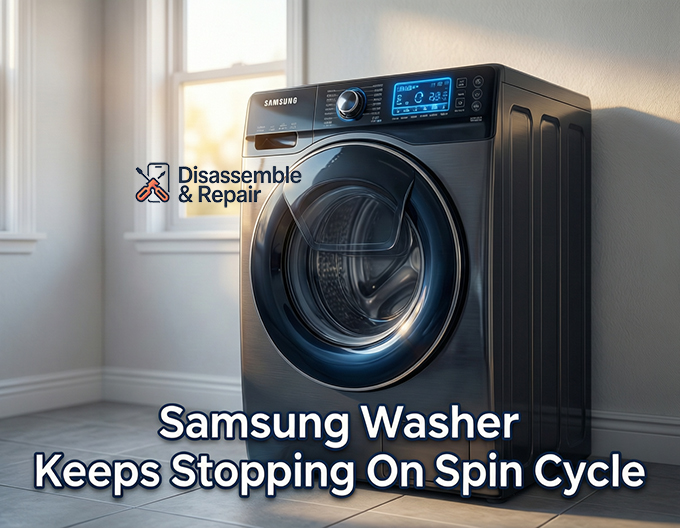
It can be incredibly frustrating when your Samsung washer keeps stopping on spin cycle, leaving you with soaking wet clothes and a laundry pile that won’t disappear. This issue often stems from built-in safety features designed to protect the machine from damage, but identifying the specific root cause requires a systematic approach. By examining components like the drain pump, suspension system, and various sensors, you can often resolve the problem without an expensive service call.
Why Your Samsung Washer Keeps Stopping on Spin Cycle
The most common reason a Samsung washer keeps stopping on spin cycle is an unbalanced load, which triggers the machine’s safety sensors to halt operation to prevent violent shaking. However, if redistributing the laundry doesn’t fix it, the issue likely lies within the drainage system, suspension components, or electronic control sensors.
Below is a detailed breakdown of the potential culprits and how to troubleshoot them.
1. Unbalanced Load and Leveling Issues
Before dismantling the machine, rule out the simplest causes. Samsung washers are sensitive to weight distribution.
- The Problem: If heavy items (like towels or bedding) clump on one side, the drum oscillates dangerously. The washer attempts to add water to rebalance the load, extending the cycle time. If it fails repeatedly, it stops and may display the Ub, Ur, or UE error codes.
- The Fix:
- Open the door and manually redistribute the items.
- Check the leveling legs at the bottom of the washer. If the machine rocks even slightly when pushed, adjust the legs until it is perfectly stable on the floor.
- Pro Tip: Run the calibration mode after moving the washer or adjusting the legs. This resets the weight sensors.
- How to Calibrate: Empty the drum. Turn the power on. Hold two specific buttons (often Temp + Delay End, but check your manual) for 3 seconds until “Cb” appears. Press Start. The drum will rotate back and forth for a few minutes.
2. Drainage System Failures
A washer cannot enter a high-speed spin if it detects water remains in the tub.
Read more Samsung washing machine UB error
- Drain Pump: If the pump is humming but not moving water, the impeller might be broken or jammed.
- Drain Hose: A clogged or kinked drain hose will restrict water flow. Also, ensure the hose is not inserted more than 6–8 inches into the standpipe; inserting it too far can create a vacuum (siphoning) that prevents proper drainage.
- Debris Filter: On front-load models, the debris filter (located at the bottom front) catches lint, coins, and buttons. A clogged filter is a leading cause of spin cycle failures. Clean this regularly.
3. Suspension Rods and Dampers
If your washer bangs loudly before stopping, your suspension rods (top loaders) or shock absorbers (front loaders) may be worn out.
- The Role: These components act like springs on a car, absorbing the vibration of the spinning drum.
- Symptoms: The tub seems to bounce excessively even with a small load. In top loaders, pressing down on the tub should reveal firm resistance. If the tub bounces up and down like a basketball, the rods are shot.
- The Fix: Replace all four suspension rods simultaneously to ensure even stability.
4. Door Latch Assembly
Modern Samsung washers will not spin if the main control board detects the door is not securely locked.
- The Issue: A faulty door latch assembly might engage mechanically but fail to send the electrical “locked” signal to the control board.
- Error Codes: Watch for dS, LO, or FL codes.
- Troubleshooting: If the door clicks shut but the cycle pauses or the “Lock” icon never illuminates, inspect the latch for damage. If the plastic hook is intact, the internal switch might be defective, requiring a replacement of the assembly.
5. Vibration Sensor (MEMS Sensor)
Samsung washers use a specific sensor to detect excessive movement.
- The Problem: A faulty vibration sensor (often located on the top of the outer tub) can send false data to the control board, causing it to stop the spin cycle proactively even if the load is balanced.
- Symptoms: The washer stops abruptly mid-cycle (often around the 8-10 minute mark remaining) and may display the 8E, 8E1, or 8E2 error codes.
- Resolution: Check the wiring harness connecting the sensor for loose connections. If the wiring is good but the error persists, the sensor itself likely needs replacement.
6. Pressure Switch (Water Level Sensor)
The pressure switch monitors the water level in the tub.
- How it Stops the Spin: If the pressure hose is clogged with “gunk” or the switch is stuck, it may falsely report that the tub is full of water. The control board will prohibit the high-speed spin to avoid throwing water everywhere.
- Troubleshooting: Locate the clear plastic tubing connected to the pressure switch. Remove it and blow through it to clear any sediment or blockage. If the switch reads incorrect resistance (typically tested with a multimeter), it must be replaced.
7. Drive Belt and Motor Issues
In older front-load or top-load models, a worn drive belt can cause slippage.
- Symptoms: You may hear the motor running, but the drum struggles to pick up speed. A burning rubber smell is a classic sign of a friction-damaged belt.
- The Fix: Remove the back panel and inspect the belt. If it is frayed, cracked, or loose, replace it.
Summary of Troubleshooting Steps
| Component | Symptom | Potential Solution |
|---|---|---|
| Leveling Legs | Machine rocks physically. | Adjust legs to sit flat; run Calibration Mode. |
| Drain Pump/Hose | Water remains in tub; “5C” or “nd” error. | Clean debris filter; clear hose clogs; replace pump. |
| Suspension Rods | Loud banging; violent shaking. | Replace all 4 suspension rods. |
| Door Latch | Door won’t lock; “dS” or “FL” error. | Replace door latch assembly. |
| Vibration Sensor | Stops mid-cycle; “8E” error. | Check wiring; replace MEMS sensor. |
| Control Board | Erratic stopping; no error codes. | Inspect for burn marks; professional diagnosis needed. |
By methodically checking these entities—starting with the load balance and drainage, then moving to the suspension and sensors—you can effectively diagnose why your Samsung washer keeps stopping on the spin cycle and get your appliance back to optimal performance.
Frequently Asked Questions
What do the error codes Ub, Ur, or UE mean on my Samsung washer?
These codes indicate an unbalanced load. The washer’s sensors have detected that the laundry is unevenly distributed or the machine itself is not level. To fix this, manually redistribute the wet clothes and ensure the leveling legs are firmly touching the floor.
How do I perform a calibration on my Samsung washer?
Calibration resets the internal weight sensors and should be done after moving or leveling the machine. With the drum empty and the power on, hold the Temp and Delay End buttons simultaneously for 3 seconds until “Cb” appears on the display. Press the Start/Pause button to begin the 2–3 minute process.
Read more Samsung washing machine PF error
Why is my washer stopping mid-cycle with water still in the tub?
If water remains in the machine, it cannot enter the high-speed spin. This is usually caused by a clogged debris filter (located at the bottom front of front-load models), a kinked drain hose, or a drain hose that is inserted too far into the standpipe. Clean the filter and ensure the hose is only 6–8 inches deep in the drain pipe.
What causes my washer to stop and display an 8E or 8E1 error?
These codes refer to a fault with the MEMS (vibration) sensor. This sensor is designed to detect excessive shaking; if it is faulty or has loose wiring, it will send a signal to the control board to stop the cycle immediately to prevent damage.
How can I tell if my suspension rods need to be replaced?
In top-load washers, you can test the rods by pressing down firmly on the drum and letting go. If the drum bounces up and down several times like a basketball, the rods are worn out. A healthy suspension should provide firm resistance and settle almost immediately.