
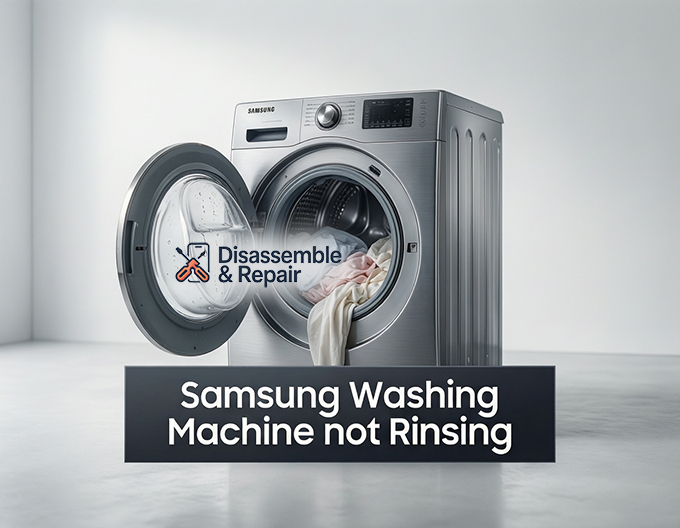
If you find your clothes soaking wet or covered in soap residue, you are likely dealing with a Samsung washing machine not rinsing properly. This frustration is common among homeowners, but it often stems from identifiable components that can be tested and fixed without a complete appliance replacement.
When a rinse cycle fails, the machine cannot effectively remove dirty water and detergent from the drum. This issue can leave clothes unwashed and may eventually damage the appliance if left unaddressed. This guide will walk you through the technical reasons behind this malfunction, focusing on critical components like the drain pump filter, pressure switch, and water inlet valve.
Why is My Samsung Washing Machine Not Rinsing?
The rinsing process relies on a synchronized effort between the water supply, the drainage system, and the sensors that monitor water levels. When a Samsung washing machine stops rinsing, it is usually because the water cannot exit the machine (drainage issue) or fresh water cannot enter (supply issue).
In many cases, the machine may display a specific error code that points you toward the problem. For instance, Error code 5C (or 5E on older models) specifically indicates a drainage failure. However, even without an error code, symptoms like wet clothes at the end of the cycle or a drum full of suds are clear indicators of a rinsing failure.
The Role of the Drainage System
For a rinse cycle to work, the dirty, soapy water must be evacuated first. If the drainage system is compromised, the machine will not introduce fresh water for the rinse, causing the cycle to stall or terminate early. The most common culprits here are the drain pump filter and the drain hose.
The Role of Water Supply
Conversely, if the machine drains fine but hums without filling, the issue might lie with the water inlet valve. This component controls the flow of fresh water into the drum. If the solenoid valve inside fails or the inlet screens are clogged, the rinse cycle cannot begin.
Critical Components and Troubleshooting
To resolve the issue, you must systematically check the following entities. Most repairs can be done with basic tools, but safety is paramount—always unplug the machine before inspecting internal components.
1. Inspecting the Drain Pump Filter (Debris Filter)
The drain pump filter, often referred to as the debris filter, is the first place you should look. It is designed to catch lint, coins, buttons, and other foreign objects to prevent them from damaging the drain pump.
- Location: Usually behind a small access door at the bottom front of the machine.
- The Problem: If this filter is clogged, the pump cannot force water out of the drum. The machine may detect this resistance and trigger Error code 5C.
- The Fix:
- Place a towel and a shallow tray under the access panel.
- Open the panel and use the small emergency drain tube to empty the remaining water.
- Unscrew the debris filter counter-clockwise.
- Clean it thoroughly under warm running water and remove any obstructions from the housing.
- Reinstall the filter tightly to prevent leaks.
2. Checking the Drain Hose
The drain hose transports used water from the washer to your home’s drain pipe. Kinks, twists, or clogs in this hose are frequent causes of drainage failures.
Read more Samsung washing machine 4C2 error
- Siphoning: If the drain hose is pushed too far down into the standpipe or is not secured at the correct height, water may siphon out as fast as it fills. This confuses the machine, potentially leading it to skip the rinse cycle.
- Blockages: Visually inspect the hose. If it is bent behind the washer, straighten it out. You may need to disconnect it and run water through it to ensure it isn’t clogged with lint or detergent buildup.
3. Testing the Water Inlet Valve
The water inlet valve is responsible for letting cold and hot water into the unit. During the rinse cycle, the machine typically calls for cold water.
- Symptoms: If the washer agitates but makes a humming noise when it should be filling for the rinse, the solenoid valve coils may be burnt out, or the valve may be mechanically stuck.
- Inspection:
- Turn off the water supply and disconnect the hoses from the back of the washer.
- Check the small mesh screens inside the valve ports for sediment. Clean them carefully.
- If the screens are clean but the valve won’t open, you may need to test the solenoid coils for continuity using a multimeter. A lack of continuity means the valve must be replaced.
4. Diagnosing Pressure Switch Issues
The pressure switch (or water level sensor) tells the control board how much water is in the drum. It operates using air pressure sent through a small tube connected to the drum.
Read more Samsung washing machine DE2 error
- The Failure: If the pressure switch is faulty or the tube is clogged with detergent buildup or debris, the machine might think the drum is still full of water when it is empty (preventing a spin) or empty when it is full (causing an overflow).
- Impact on Rinsing: If the sensor fails to register that the wash water has drained, the control board will not signal the water inlet valve to open for the rinse cycle.
- Troubleshooting: Check the pressure switch hose for cracks or blockages. If the hose is clear, the switch itself might need replacement.
5. Managing Excessive Suds
Modern high-efficiency (HE) Samsung washers are sensitive to soap. Using non-HE detergent or using too much can lead to excessive suds.
- The “Sud” Error: You might see the word “Sud” or “Zd” on the display.
- Why it Stops Rinsing: Large amounts of foam create air pockets in the pump, known as “suds lock.” The pump cannot move air, so it fails to drain the water. The machine pauses the cycle to allow the suds to dissipate.
- Prevention: Only use HE detergent and strictly follow the manufacturer’s recommended quantities. Periodically run a “Self Clean” cycle to remove detergent buildup from the internal components.
Advanced Troubleshooting
If the external components (filters, hoses, valves) are functioning correctly, the issue may stem from internal electrical faults.
The Spin Cycle Connection
A successful rinse is often followed by a spin cycle to extract water. If the machine drains but refuses to spin, the clothes will remain dripping wet, appearing as if they weren’t rinsed.
- Unbalanced Load: Sometimes, a heavy load (like towels) triggers an unbalance sensor, stopping the spin.
- Motor Issues: If the motor cannot reach the required RPM, the clothes will not shed the soapy water.
Control Board Malfunctions
The control board is the brain of the washer. It sends voltage to the drain pump, inlet valve, and motor.
- Diagnosis: If you have verified that the pump works (by testing it independently) and the inlet valve is new, yet the machine still won’t rinse, the control board may not be sending the correct voltage signals.
- Visual Check: Inspect the board for burn marks or loose wire harnesses. Replacement of the control board is a more complex repair often best left to a professional.
Summary of Solutions
| Symptom | Probable Cause | Corrective Action |
|---|---|---|
| Error Code 5C | Clogged drain pump filter or blocked drain hose. | Clean the debris filter; straighten or unclog the drain hose. |
| Humming / No Water | Faulty water inlet valve or clogged screens. | Clean inlet screens; replace the valve if solenoids are open. |
| Sud Error | Excessive suds from wrong detergent. | Use HE detergent; run an empty hot cycle with vinegar. |
| Washer Won’t Spin | Pressure switch fault or unbalanced load. | Check pressure hose; redistribute laundry; test pressure switch. |
| Wet Clothes | Drainage system failure. | Ensure the drain hose is not siphoning; check pump operation. |
Professional Maintenance Tips
To prevent a Samsung washing machine not rinsing issue from recurring, regular maintenance is essential.
- Clean the Debris Filter: Perform this every 2 months.
- Inspect Hoses: Check inlet and drain hoses for wear or kinks annually.
- Use Correct Detergent: Stick to High-Efficiency detergents to protect the sensors and drainage system.
- Level the Machine: Ensure the washer is perfectly level to prevent sensor errors during the spin cycle.
By understanding the function of the water inlet valve, drain pump filter, and pressure switch, you can diagnose why your Samsung washer is failing to rinse. Most of these issues are solvable with simple cleaning or part replacement, restoring your appliance’s efficiency without the cost of a new machine.
Frequently Asked Questions
What does it mean if my Samsung washer displays Error Code 5C?
Error code 5C (or 5E on older models) specifically indicates a drainage failure. This means the machine is unable to evacuate the dirty wash water, which prevents it from starting the rinse cycle. This is usually caused by a clogged debris filter or a kinked drain hose.
Why are my clothes still soapy or soaking wet at the end of a cycle?
This usually happens because the machine failed to complete the rinse and spin process. Common causes include a blocked drain pump filter, a faulty water inlet valve that won’t let fresh water in, or “suds lock” caused by using too much non-HE detergent.
How can I tell if my water inlet valve is broken?
If your washing machine agitates during the wash but makes a humming noise without filling up during the rinse cycle, the water inlet valve is likely the culprit. You should check the mesh screens for clogs or test the solenoid coils for continuity with a multimeter.
How often should I perform maintenance to prevent rinsing problems?
To keep your Samsung washer running efficiently, you should clean the drain pump filter every two months. Additionally, you should inspect your inlet and drain hoses for kinks or wear annually and always use the manufacturer-recommended amount of High-Efficiency (HE) detergent.
Can a faulty pressure switch stop my machine from rinsing?
Yes. The pressure switch tells the control board how much water is in the drum. If the switch is faulty or its tube is clogged with detergent buildup, it may falsely signal that the machine is still full of water, preventing the rinse cycle from ever starting.