
Dealing with a Samsung washing machine water drain problem can be a frustrating interruption to your laundry routine. Whether you are facing a drum full of standing water or a flashing error code on the display, this issue is one of the most common faults owners encounter. Fortunately, modern Samsung washers are designed with diagnostic features that make identifying the root cause straightforward for a methodical troubleshooter.
This guide provides a professional, step-by-step approach to diagnosing and resolving drainage issues, covering every critical component from the debris filter to the main control board.
Understanding the Error Codes: 5C and 5E
Before disassembling any parts, check the digital display. The most reliable indicators of a drainage failure are Samsung error code 5C or Samsung error code 5E (sometimes displayed as “SE” on older models).
These codes specifically communicate that the machine has failed to evacuate water within a set timeframe. While the machine is telling you what is happening (water isn’t leaving), it is up to you to determine why. The issue generally stems from a blockage, a mechanical failure, or a sensor error.
Comprehensive Guide to Fixing a Samsung Washing Machine Water Drain Problem
To resolve the Samsung washing machine water drain problem, you must systematically inspect the drainage path. Follow these steps in order, starting with the simplest and most likely solutions.
1. Clear the Debris Filter
The debris filter is the first line of defense against clogs. It catches lint, coins, buttons, and other foreign objects that could damage the pump.
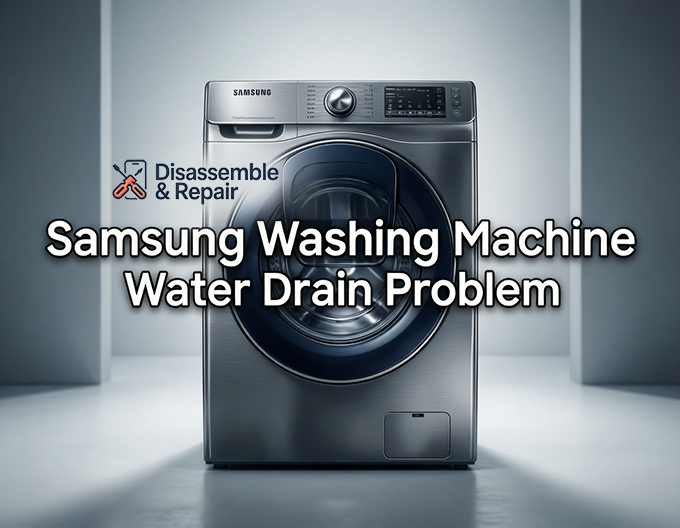
- Locate the Access Panel: On most front-load models, this is a small door located at the bottom front of the machine.
- Drain the Water: Before removing the filter, you must empty the drum. Locate the emergency drain tube (a small black rubber hose next to the filter). Place a shallow basin underneath, pull the cap off the tube, and allow the water to drain completely.
- Clean the Filter: Once drained, unscrew the drain filter cap by turning it counter-clockwise. Remove the filter and rinse it under warm water. Remove any lint or objects trapped inside the housing.
2. Inspect the Drain Hose
If the filter is clean, the blockage may be further down the line. The drain hose carries wastewater from the pump to your home’s drain pipe.
- Check for Kinks: Pull the washer forward and ensure the hose is not bent, kinked, or crushed behind the machine.
- Verify Height: The hose must be installed at the correct height (typically between 18 and 35 inches). If it is too low, water may siphon out; if too high, the pump may struggle to push water out.
- Check for Clogs: Disconnect the hose and run water through it to ensure it is clear of obstructions.
3. Diagnose the Drain Pump and Impeller
The drain pump is the mechanical heart of the drainage system. If the motor runs but water does not move, or if the pump is silent, it may be faulty.
- Inspect the Pump Impeller: With the debris filter removed, look inside the housing. You should see the pump impeller (small plastic blades). Use a flashlight to check for debris wrapped around the shaft, such as hair or rubber bands. The impeller should spin with some magnetic resistance but should not be stuck.
- Electrical Test: If the impeller moves freely but the pump won’t run, the motor windings may have failed. A multimeter can be used to check for continuity across the pump’s terminals. Infinite resistance indicates a “open” circuit and a need for replacement.
4. Check the Check Valve
A frequently overlooked component is the check valve. Located at the discharge port of the drain pump, this rubber flapper ensures that dirty water does not flow back into the drum after the cycle ends.
- Symptoms of Failure: If you notice standing water in the drum hours after a cycle has finished, or if the clothes smell musty despite being washed, the check valve may be stuck open or torn.
- Replacement: This part prevents backflow. If it is damaged, it must be replaced to prevent dirty water from re-entering the machine from the drain hose.
5. Test the Pressure Switch
The pressure switch (or water level sensor) monitors the water level in the drum. It communicates with the control board via a small air tube.
- The Issue: If the pressure switch is faulty or the air tube is clogged with sediment, the machine may “think” it is empty when it is full, preventing the drain cycle from activating. Conversely, it might think it is full when empty, causing the pump to run dry.
- Troubleshooting: Inspect the pressure switch hose for cracks or blockages. Ensure the connections are tight.
6. The Main Control Board
If all mechanical components (pump, hose, filter) are functioning correctly and the wiring is intact, the issue may lie with the main control board. This electronic brain sends the voltage signal to the drain pump.
If the board fails to send 120V to the pump during the drain cycle, the pump will never activate. Diagnosing a board failure is complex and typically requires a professional voltage test while the machine is live. If the board is confirmed dead, it will need to be replaced.
Summary of Safety Precautions
- Always unplug the machine before accessing internal components like the pump or control board.
- Handle with care: Water drained via the emergency tube may be scalding hot if the previous cycle was a sanitize wash.
- Water Management: Keep towels handy, as residual water will almost always spill when removing the drain filter cap.
By methodically checking the debris filter, drain hose, pump impeller, and sensors, you can resolve the majority of drainage issues without the need for a service call. However, if the problem points toward the main control board or internal wiring, consulting a professional technician is recommended to ensure a safe and proper repair.
Frequently Asked Questions
What do the Samsung error codes 5C and 5E mean?
These codes indicate that the washing machine has failed to drain water within a specific timeframe. While older models may display this as “SE,” both codes point to the same issue: a blockage in the drainage path, a mechanical failure of the pump, or a sensor error.
How do I safely empty the water from the drum if the machine won’t drain?
To drain the water manually, locate the access panel at the bottom front of the machine. Use the small black emergency drain tube found next to the debris filter. Place a shallow container underneath, remove the tube’s cap, and allow the water to flow out completely before attempting to unscrew the main filter.
What is the debris filter and where is it located?
The debris filter is a protective component designed to catch lint, coins, and other small objects before they reach the drain pump. In most front-load Samsung washers, it is located behind a small access door at the bottom front of the unit. Regular cleaning of this filter is essential to prevent drainage failures.
Why is there standing water in my washer long after the cycle has finished?
If water reappears in the drum after a successful cycle, the problem is likely a faulty check valve. This rubber flapper is located at the pump’s discharge port and is responsible for preventing wastewater from flowing back into the machine from the drain hose. If it is torn or stuck open, dirty water can re-enter the drum.
Read more Samsung washer drum not spinning
When should I stop troubleshooting and call a professional?
You should consider calling a professional technician if you have cleared all blockages and the drain pump still fails to activate, or if you suspect a failure in the main control board. Diagnosing electrical issues or replacing the “electronic brain” of the machine involves complex voltage testing that is best handled by an expert.