
It is an incredibly frustrating experience when you load your laundry, press start, and realize your Samsung washer door lock keeps clicking without ever initiating the cycle. This repetitive clicking sound is a clear indicator that the appliance is attempting to engage the safety mechanism but failing to secure the door, which prevents the washing machine from filling with water or spinning. In this professional guide, we will analyze the technical reasons behind this malfunction, identify the specific components involved, and provide a step-by-step approach to diagnosing and resolving the issue.
Understanding the Mechanics of the Door Lock
To effectively troubleshoot, one must first understand how the locking mechanism functions. When you press the Cycle start button, the Electronic control module sends a voltage signal to the door lock assembly. Inside this assembly, there is a Solenoid switch—an electromagnetic component designed to push a locking pin into place.
The clicking noise you hear is the audible result of the solenoid energizing and attempting to slide the bolt, but failing to keep it latched. The system detects this failure and retries repeatedly, resulting in the continuous clicking sound. If the lock cannot engage after several attempts, the machine will usually halt the operation to prevent water leakage or injury, often displaying a specific error code on the display panel.
Read more Samsung washing machine SUD error
Why Your Samsung Washer Door Lock Keeps Clicking
There are several root causes for this specific symptom. While the noise originates from the lock itself, the actual failure can stem from mechanical obstructions, electrical faults, or component degradation.
1. Defective Door Lock Assembly
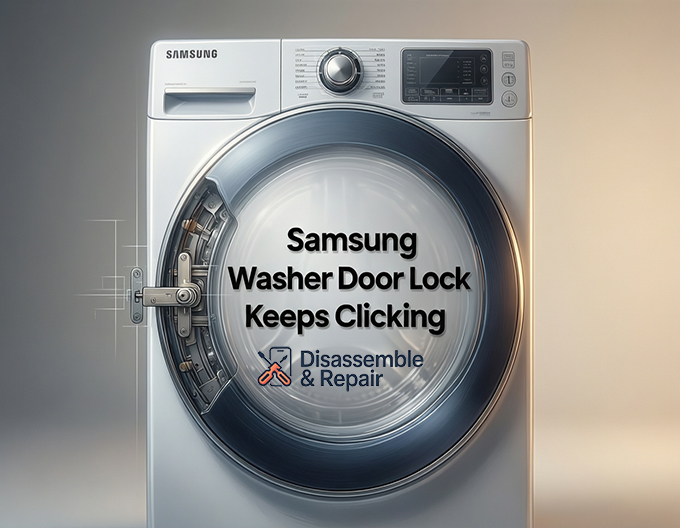
The most common culprit is a failed Door lock assembly. This component contains the solenoid, the locking pin, and a wax motor or bi-metal strip in older models. Over time, the plastic housing can warp, or the internal electrical contacts can burn out. If the assembly is mechanically broken, the solenoid may fire (click), but the pin physically cannot slide into the locked position.
2. Misaligned Door Latch Striker
The Door latch striker is the hook or plastic piece attached to the door itself that inserts into the lock assembly. If the door hinges are sagging or the striker is bent, it will not align perfectly with the lock opening. Consequently, the locking pin hits the side of the striker rather than sliding through the designated hole. This misalignment causes the system to reject the lock attempt, leading to the repetitive clicking loop.
3. Electrical Continuity and Wire Harness Issues
Vibrations during the spin cycle can loosen connections over time. A compromised Wire harness connection between the lock assembly and the main control board can cause intermittent voltage drops. If the wire harness is damaged or the pins are corroded, the lock might receive enough power to click but not enough to maintain the locked state.
4. Control Board Malfunction
In rarer cases, the issue lies with the Washing machine control board. This printed circuit board acts as the brain of the appliance. If the relays on the board are failing, they may send erratic signals to the lock. If the board does not receive the “closed” signal confirmation from the Washer door switch, it will cycle the voltage again, causing the clicking.
Identifying Error Codes
Samsung washers are equipped with self-diagnostic systems. When the door fails to lock, you will frequently see Error code dC, dE, or door. The “dC” code specifically stands for “Door Circuit” or “Door Check,” indicating that the unit believes the door is open or unlocked while the cycle is attempting to start. Recognizing this code confirms that the problem is localized to the door system rather than the motor or water inlet valves.
Step-by-Step Diagnostic and Repair Procedure
Before performing any diagnostics, ensure you disconnect the power to the washer to avoid electrical shock. Front-load washer repair requires patience and attention to detail.
Step 1: Check Door Gasket Alignment and Obstructions
Begin with the simplest check. Inspect the Door gasket alignment. The large rubber bellow (gasket) sealing the door can sometimes warp or trap clothing. If a piece of fabric is caught between the glass and the gasket, or if the gasket is pushing back against the door too hard, the door cannot close fully.
- Clean the gasket and the glass.
- Ensure no clothes are protruding.
- Push the door firmly shut and try the Cycle start button again.
Step 2: Inspect the Door Latch Striker
Open the door and inspect the Door latch striker.
- Check for cracks or missing pieces.
- Tighten the screws holding the striker to the door.
- Lift up slightly on the door while closing it to see if correcting a potential hinge sag stops the clicking. If lifting the door fixes the issue, you likely need to adjust the hinges or replace the striker rather than the lock assembly.
Step 3: Accessing the Door Lock Assembly
If the external checks fail, you must access the internal components.
Read more Samsung washing machine UB error
- Manual Door Release: If the door is stuck locked while clicking, look for the Manual door release. This is usually a small tab or pull-string located near the drain pump filter door at the bottom front of the washer. Pulling this gently should disengage the lock.
- Remove the Clamp: Open the door and locate the spring clamp holding the door gasket to the front panel. Use needle-nose pliers to remove the spring.
- Peel Back the Gasket: Peel the rubber gasket back to reveal the door lock assembly mounted to the front panel.
- Unscrew: Remove the screws securing the lock assembly from the front.
Step 4: Testing the Components
With the lock assembly accessible, you can perform electrical tests.
- Inspect Wiring: Check the Wire harness connection for any signs of burning or loose wires. Reseat the connector firmly.
- Multimeter Test: Use a multimeter to check the continuity of the Washer door switch and solenoid. You are looking for a closed circuit when the switch is manually activated. If the solenoid reads infinite resistance (open loop), the internal coil is burnt out, and the assembly must be replaced.
Step 5: Replacing the Door Lock Assembly
If the diagnostic points to a faulty lock:
- Disconnect the wire harness from the old assembly.
- Connect the new Door lock assembly.
- Position it inside the front panel and secure it with screws.
- Reattach the wire spring clamp around the gasket (this can be difficult and may require a second pair of hands).
- Restore power and run a test cycle.
Advanced Troubleshooting: The Control Board
If you have replaced the door lock and checked the striker, yet the Samsung washer door lock keeps clicking, the fault likely lies within the Electronic control module or the main Washing machine control board.
Locate the main PCB (usually found under the top panel of the washer). Inspect the board for:
- Bulging capacitors.
- Burn marks near the door lock relays.
- Loose connectors.
If the board is sending a fluctuating voltage, it will not keep the solenoid engaged. Replacing the control board is significantly more expensive than the lock assembly, so it is vital to rule out all mechanical possibilities first.
Preventive Maintenance
To prevent future occurrences of door lock failure:
- Gentle Handling: Do not slam the washer door. The Door latch striker is plastic and can brittle over time.
- Clean the Gasket: Regularly wipe down the rubber gasket to ensure proper Door gasket alignment. Buildup can cause the door to sit unevenly.
- Don’t Overstuff: Overloading the washer presses laundry against the door glass, putting outward pressure on the lock mechanism during the cycle.
Conclusion
A Samsung washer that constantly clicks is signaling a disconnect between the mechanical locking action and the electronic verification system. By systematically checking the Door latch striker, clearing obstructions near the Door gasket alignment, and testing the Door lock assembly, you can often resolve the issue without a full appliance replacement. However, if the problem persists after these hardware checks, the issue may reside in the Washing machine control board, requiring a more advanced repair. Addressing these issues promptly will prevent damage to the Wire harness connection and ensure your appliance returns to full functionality.
Frequently Asked Questions
What do the error codes dC or dE mean on my Samsung washer?
These codes are specifically related to the door circuit. When your washer clicks and displays “dC,” “dE,” or “door,” it indicates that the electronic control module cannot confirm that the door is securely locked. This prevents the cycle from starting as a safety precaution to avoid leaks or mechanical damage.
Why does my washer click several times and then stop without starting?
The clicking sound is the solenoid switch inside the door lock assembly attempting to push the locking pin into the striker. If the pin is blocked by a misaligned striker or if the internal components are worn out, the solenoid will retry several times before the system times out and throws an error code.
How can I open the door if it is stuck and continues to click?
If the door remains locked during a malfunction, do not force it open. Most Samsung front-load washers feature a manual door release. This is typically a small plastic tab or pull-string located behind the access panel for the drain pump filter at the bottom front of the machine. Gently pulling this tab will manually disengage the locking pin.
Is it possible to fix the clicking issue without replacing the door lock assembly?
Yes, in some cases. Before buying parts, check if the door latch striker is loose or if the door hinges have sagged, causing misalignment. Additionally, ensure that the rubber door gasket is clean and not obstructing the door from closing completely. If the door isn’t sitting flush against the frame, the lock won’t be able to engage.
How do I know if the problem is the door lock or the main control board?
The best way to distinguish between the two is by using a multimeter to test the door lock assembly for electrical continuity. If the lock assembly tests fine and the wire harness is secure, but the clicking persists with a new lock, the issue is likely a failing relay on the electronic control module which is sending inconsistent voltage to the solenoid.