
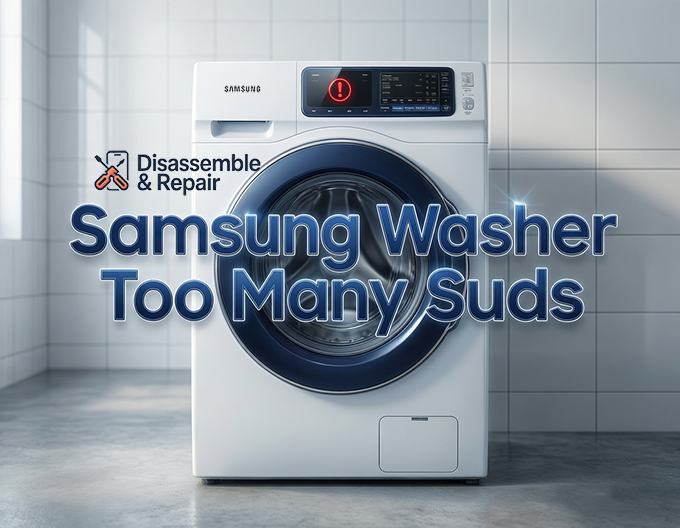
If you are seeing a “SUD” or “5UD” error code on your display, you are likely dealing with a Samsung washer too many suds issue that has halted your laundry cycle. This common problem occurs when the machine detects an excessive foaming condition that prevents proper draining and spinning, effectively putting your appliance into a protective state. While frustrating, this issue is rarely a sign of a mechanical failure and can usually be resolved with adjustments to your laundry habits and routine maintenance.
This comprehensive guide will explain why your Samsung washer creates excessive suds, how to clear the immediate error, and the steps required to prevent it from happening again.
What Does the Sud Error Code Mean?
When your Samsung washer displays “SUD,” “5UD,” “Sd,” or “Xd,” it indicates that the pressure switch—a sensor responsible for monitoring water levels—has detected an inability to drain water effectively due to foam. Unlike water, foam is filled with air and does not drain easily. The washer enters a suds lock mode, pausing the cycle to allow the bubbles to dissipate naturally.
Read more Samsung washing machine SUD error
The duration of this pause can vary significantly. In minor cases, the washer may resume operation after a few minutes. In severe cases of excessive foaming, the machine may remain locked for an hour or more until the sensors determine it is safe to attempt draining again.
Why Is My Samsung Washer Too Many Suds?
Understanding the root cause is the first step toward a permanent fix. The “Samsung washing machine too many suds” error is almost exclusively caused by user error regarding detergent use or maintenance oversight.
1. Using Non-HE Detergent
Modern front load washer models are designed as High-Efficiency (HE) machines. They use significantly less water than traditional top-loaders. Because of this, they require HE detergent, which is non-sudsing and formulated to lift soil without creating a mountain of bubbles.
If you use a non-HE detergent, even in small amounts, it will create a volume of suds that the low-water system cannot handle. The agitation of the drum turns the standard soap into a thick foam that triggers the pressure switch, instantly stopping the machine.
2. Incorrect Load Size and Detergent Ratio
A common misconception is that more detergent equals cleaner clothes. This is false, especially for HE machines. Using too much detergent for a small load size is a primary trigger for suds errors.
If you are washing a small load but fill the dispenser to the “Max” line, the concentration of soap to water will be too high. Conversely, washing bulky items like towels with too much soap can trap suds in the fabric, making it difficult for the rinse cycle to wash them away.
3. Clogged Drain Pump Filter
The drain pump filter (often called a debris filter) traps lint, coins, and buttons to protect the pump. If this filter becomes clogged, water cannot exit the drum efficiently. When soapy water is agitated but cannot drain, it whips into a froth, leading to the “Samsung washer too many suds” alert. A restricted drainage system mimics the symptoms of over-soaping because the water level sensor reads the backlogged pressure as foam.
Immediate Solutions to Clear the Suds
If your machine is currently stuck with a blinking error code, follow these steps to clear the suds lock and rescue your laundry.
Step 1: Wait and Watch
The simplest fix is patience. The washer is programmed to wait for the suds to burst. If the error code appears, do not immediately force the door open. Let the machine sit for 15-20 minutes. If the foam level drops sufficiently, the washer may automatically resume the rinse cycle to flush out the remaining residue.
Step 2: The White Vinegar Method
If the suds are stubborn and the machine refuses to drain, white vinegar is a potent anti-foaming agent.
- Pause the washer or turn it off.
- If the door unlocks, pour approximately one cup of white vinegar directly into the drum or through the detergent dispenser.
- The acidity of the vinegar breaks down the alkaline soap bubbles almost instantly.
- Run a “Rinse + Spin” cycle to flush the mixture out of the drum.
Step 3: Manual Draining
If the machine is completely unresponsive, you may need to manually drain the water to reset the pressure switch.
- Locate the debris filter access panel (usually at the bottom front of the washer).
- Place a shallow pan and towels on the floor.
- Use the small emergency drain hose to slowly empty the water.
- Once drained, the sensor should reset, allowing you to open the door and remove the soapy clothes.
Prevention and Maintenance
To ensure you never face the “Samsung washer too many suds” issue again, adopt these maintenance practices.
Clean the Drain Pump Filter Regularly
A clogged filter is a silent contributor to sudsing issues. You should clean the drain pump filter at least once a month.
- Open the access panel.
- Drain residual water using the emergency hose.
- Unscrew the debris filter by turning it counter-clockwise.
- Remove any lint or foreign objects and rinse the filter under warm water.
- Reinsert the filter and ensure it is tightened securely to prevent leaks.
Switch to High-Efficiency Habits
Strictly adhere to the use of HE detergent. Look for the “hE” symbol on the bottle. Furthermore, pay close attention to the quantity. For a normal load in a front load washer, you typically only need about two tablespoons of liquid detergent. If you have soft water, you may need even less, as soft water creates suds more easily than hard water.
Run a Self-Clean Cycle
Over time, detergent residue builds up in the drum and the drainage hoses. This residue can re-foam during subsequent cycles. Run your washer’s “Self Clean” or “Pure Cycle” once a month using a commercial washer cleaner or a cup of bleach (without clothes) to strip away this buildup.
Advanced Troubleshooting: The Pressure Switch
If you have switched to HE detergent, cleaned your filter, and reduced your soap usage, but still encounter the error, the issue might be technical. The pressure switch (or water level sensor) can sometimes become clogged with sediment or fail electrically.
If the hose connecting the drum to the pressure switch is obstructed by gunk, the switch might “think” there is high pressure (interpreted as suds) even when the drum is empty. In this scenario, disconnecting the small pressure hose and blowing through it can sometimes clear the obstruction. However, if the sensor itself is faulty, it will need to be replaced by a professional technician.
Read more Samsung washing machine UB error
Summary
The “Samsung washer too many suds” error is a protective mechanism, not a disaster. It is almost always a signal that the machine is struggling to manage the amount of soap relative to the water level. By ensuring you use the correct amount of HE detergent, keeping your drain pump filter clear of debris, and utilizing white vinegar for emergency defoaming, you can keep your appliance running efficiently.
Always remember that modern front load washers rely on a precise balance of chemistry and mechanics. treating the machine with care and avoiding the temptation to “add a little extra soap” will prevent excessive foaming and ensure your clothes come out clean and residue-free every time.
Read more Samsung washing machine IE error
Frequently Asked Questions
What do the SUD or 5UD error codes mean on my Samsung washer?
These codes indicate that the washer’s pressure switch has detected an excessive amount of foam that is preventing the machine from draining water. When this happens, the washer enters a “suds lock” mode, pausing the cycle to allow the bubbles to dissipate before attempting to drain and spin again.
Can I clear the suds faster if the machine is stuck?
Yes. If the suds are not disappearing on their own, you can add approximately one cup of white vinegar to the drum or detergent dispenser. The acidity of the vinegar acts as an anti-foaming agent to break down the soap bubbles. Afterward, run a “Rinse + Spin” cycle to flush out the remaining residue.
Why am I getting a suds error even though I use HE detergent?
Using HE detergent is necessary, but the quantity also matters. You may be using too much soap for the specific load size, or you may have soft water, which produces suds more easily. Additionally, if your drain pump filter is clogged, it can cause soapy water to back up and froth, triggering the error even with “correct” soap amounts.
How often should I perform maintenance to prevent sudsing issues?
To keep your washer running efficiently, you should clean the drain pump filter (located behind the small panel at the bottom front) at least once a month. You should also run a “Self Clean” or “Pure Cycle” monthly with a washer cleaner or bleach to remove detergent residue that builds up inside the drum and hoses.
What should I do if the error persists after I’ve reduced my detergent use?
If you have already switched to smaller amounts of HE detergent and cleaned your filter, there may be a technical issue with the pressure switch or its connecting hose. Sometimes the hose becomes blocked with gunk, causing the sensor to falsely detect suds. If cleaning the system doesn’t work, a professional technician may need to inspect or replace the water level sensor.