
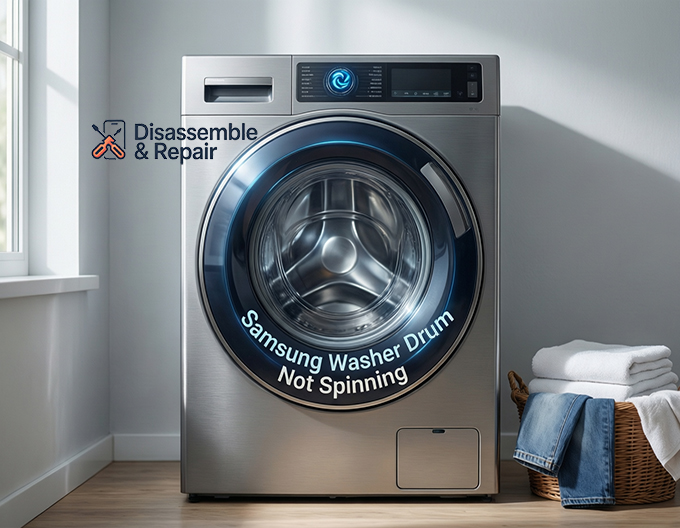
There are few household inconveniences more frustrating than opening your laundry appliance to find soaking wet clothes because the cycle failed to complete, leaving you with a Samsung washer drum not spinning. While Samsung appliances are renowned for their technological integration and reliability, a Samsung washer drum not spinning is a common issue that can stem from a variety of mechanical, electrical, or user-error sources.
As a complex piece of machinery, a modern washing machine relies on a synchronized effort between sensors, motors, and control boards to execute a high-speed spin. When one link in this chain breaks, the safety protocols engage, and the drum remains stationary. This guide serves as a technical deep-dive into the components responsible for drum movement, helping you identify whether the problem requires a simple reset or a professional repair.
Initial Diagnostics: Interpreting the Symptoms
Before dismantling the machine, it is vital to observe exactly how the failure occurs. Does the washer fill and agitate but fail to spin? does it hum without moving? Or is the drum completely silent?
The behavior of the appliance during the attempted Spin cycle provides critical clues. For instance, if the machine pumps water out but fails to ramp up the RPMs, the issue is likely mechanical or sensor-related. If water remains in the tub, the safety interlocks are preventing the spin to avoid flooding.
Furthermore, pay close attention to the digital display. Samsung washers are equipped with sophisticated diagnostic software that displays Error codes when a fault is detected. Codes such as UE (Unbalanced Load), 3E (Motor Defect), or SE/5E (Drain Issue) can immediately narrow down the search area.
Primary Causes for a Samsung Washer Drum Not Spinning
To effectively troubleshoot, we must examine the specific components—or “entities”—that drive the mechanical rotation of the drum. Below is a detailed breakdown of the potential failure points.
1. The Door Latch Assembly
Safety is paramount in modern appliances. The Door latch assembly does more than just keep the door closed; it completes an electrical circuit that signals the Motor control board that it is safe to operate.
Read more Samsung washer stuck on wash cycle
If the latch is physically broken or the internal switch has failed electrically, the control board will prevent the drum from spinning, even if the motor is perfectly functional. In many cases, you will hear a distinct “click” when the lock engages. If this sound is absent, or if the “Door Lock” light on the dashboard does not illuminate, the assembly likely needs replacement.
2. Drainage System Failures
A safety feature common to all front-load and top-load washers is that the Spin cycle will not initiate if the water level sensor detects water in the tub. Spinning a drum full of water puts immense strain on the bearings and motor.
The Drain pump is responsible for evacuating water before the high-speed spin begins. If the pump is clogged with debris (coins, lint, small socks) or if the impeller is broken, water will remain in the unit. Consequently, the drum will remain stationary. Listening for the hum of the pump can confirm if it is trying to operate. If the pump is silent or making a grinding noise, it is the primary suspect.
3. Drive Belt Issues (Front Loaders)
Many standard front-load Samsung washers utilize a traditional motor-and-pulley system. The Drive belt connects the motor to the drum pulley. Over time, this belt can stretch, glaze, or snap completely.
- Snapped Belt: The motor will run, and you may hear it whirring, but the drum will not move.
- Loose Belt: The drum may turn during the wash cycle (agitation) but will slip and fail to reach the high speeds required for spinning heavy wet clothes.
Inspecting the belt requires removing the rear access panel. If the belt is intact but loose, it may be slipping. If it is broken, it is an inexpensive and straightforward repair.
Read more Samsung washer dryer not drying clothes
4. Direct Drive Motor Failure (Rotor and Stator)
Higher-end Samsung models often feature a Direct Drive system, eliminating the belt. Instead, a Rotor and stator assembly is attached directly to the rear of the tub. The Stator creates a magnetic field that forces the Rotor (which contains permanent magnets) to spin.
- Rotor Issues: The plastic teeth on the rotor that grip the drive shaft can strip out, or the magnets can crack.
- Stator Issues: The copper windings can become damaged or shorted.
If there is damage here, the machine may shudder or display a motor error code (like 3E). Visual inspection usually reveals cracks or burn marks on the coils.
5. The Hall Sensor (Rotor Position Sensor)
Integral to the Direct Drive system is the Hall sensor. This small electronic component monitors the position and speed of the rotor. It sends real-time data to the Motor control board to ensure the motor spins at the correct speed and direction.
Read more Samsung eco bubble washing machine not starting
If the Hall sensor fails, the control board loses its “eyes” on the motor. It cannot verify if the drum is spinning or at what speed. Usually, the washer will attempt to spin, jerk slightly, and then stop abruptly, often throwing an error code. This is a common failure point in Samsung washers that appear to have power but refuse to rotate.
6. Motor Control Board Malfunction
The Motor control board is the brain of the operation. It regulates the voltage sent to the Drive motor and processes input from sensors. If a power surge occurs or a component on the board burns out, it may fail to send the necessary voltage to the motor.
Diagnosing a bad control board is difficult and is usually done by a process of elimination. If the motor, capacitor, and sensors test fine, the board is likely the culprit.
7. Spider Arm Assembly Breakdown
In front-load washers, the Spider arm assembly is a three-pronged metal bracket attached to the back of the inner drum. It connects the drum to the drive shaft.
Due to a phenomenon called galvanic corrosion (often exacerbated by mixing stainless steel drums with aluminum spiders and detergent residue), the spider arm can corrode and crack. When this happens, the drum loses stability.
- Symptoms: You will often hear a loud banging noise during agitation.
- The Result: Under a heavy load, the broken arm cannot support the torque, and the drum will not spin, or it will wobble violently until the cycle is aborted.
8. Worn Tub Bearings
The Tub bearings support the drive shaft and allow the drum to spin smoothly. If the water seal fails, water seeps into the bearings, washing away the grease and causing them to rust.
Seized bearings create massive physical resistance. Even a powerful Drive motor may be unable to overcome this friction to spin the drum at high speeds. A tell-tale sign of bearing failure is a sound akin to a jet engine taking off during the spin cycle, usually preceding the total failure of the drum to spin.
9. Pressure Switch Malfunction
The Pressure switch (or water level switch) relies on air pressure in a small tube to determine how much water is in the drum. If the tube is clogged with “gunk” or the switch itself is stuck in the “Full” position, the machine will think it is still full of water. As mentioned earlier, the machine will not enter a spin mode if it believes water is present, locking the system out to prevent damage.
Read more Samsung washer won’t turn on
Step-by-Step Troubleshooting Procedure
If you are facing a Samsung washer drum not spinning, follow this logical path to identify the issue safely.
Step 1: The Master Reset
Sometimes, the computer simply needs a reboot.
- Unplug the washer for 60 seconds.
- Plug it back in and attempt a “Spin Only” cycle with no clothes in the drum.
- If it spins empty, the issue may be load-related or a worn belt that slips under weight.
Step 2: Check for Error Codes
Consult your manual regarding any codes displayed.
- UE / Ub: Unbalanced load. The washer creates a safety stop to prevent walking. Redistribute the laundry.
- nd / 5E / SE: Not Draining. Check the debris filter.
Step 3: Inspect the Drain Pump Filter
Located on the front bottom corner of most Samsung washers, the debris filter catches coins, buttons, and lint.
- Open the small access door.
- Drain residual water using the small emergency drain hose.
- Unscrew the filter. If it is clogged, the Drain pump cannot function, and the spin cycle will be inhibited. Clean it and retest.
Step 4: Verify Door Lock
Close the door and start a cycle. Listen for the “click.” Pull gently on the door to ensure it is locked. If it opens, the Door latch assembly needs replacement.
Step 5: Rear Access Inspection (Advanced)
Warning: Always unplug the machine before removing panels.
- Remove the rear panel.
- Belt Check: Verify the Drive belt is on the pulleys and has tension.
- Rotor Check: If it is a direct drive, ensure the bolt holding the Rotor and stator is tight. wiggle the rotor to check for play in the Tub bearings.
- Wiring: Check for loose wire harnesses connected to the motor and Hall sensor. Vibration can sometimes shake these loose.
When to Call a Professional
While checking a filter or redistributing a load is within the realm of the average homeowner, certain repairs require specialized tools and expertise.
You should consider hiring a certified appliance technician if:
- Bearing Replacement: Replacing Tub bearings requires completely disassembling the entire machine, splitting the outer tub, and pressing out old bearings. It is labor-intensive and difficult.
- Electrical Diagnosis: Testing the Motor control board or live voltage at the Drive motor carries a risk of electrocution if not done correctly with the proper multimeter.
- Spider Arm Replacement: Like the bearings, accessing the Spider arm assembly requires a full teardown.
Conclusion
A Samsung washer drum not spinning interrupts the flow of your household, but it rarely signals the end of the appliance’s life. By systematically checking the drainage, ensuring the Door latch assembly is secure, and verifying the integrity of the Drive belt or Rotor and stator, you can often isolate the problem.
Whether the culprit is a simple clogged Drain pump or a failed Hall sensor, understanding the interaction between these entities allows you to make an informed decision between a DIY fix and a professional repair. Regular maintenance, such as cleaning the filter and avoiding overloading the machine, remains the best defense against these mechanical failures.
Frequently Asked Questions
What do the error codes on my Samsung washer mean?
Samsung washers use specific codes to help diagnose spinning issues. Common codes include UE or Ub for an unbalanced load, 3E for a motor defect, and 5E, SE, or nd for drainage problems. Checking these codes first can quickly narrow down whether you have a simple load issue or a mechanical failure.
Why is my washer draining properly but still refusing to spin?
If the water has been successfully removed but the drum won’t rotate, the problem is likely mechanical or sensor-based. In front-load models, this often points to a snapped or loose drive belt. In Direct Drive models, it could indicate a faulty Hall sensor (rotor position sensor) or a damaged door latch assembly that is failing to signal the motor that it is safe to begin the cycle.
How does a clogged drain filter prevent the drum from spinning?
Samsung washers are designed with a safety feature that prevents the spin cycle from starting if the water level sensor detects water in the tub. If the drain pump filter is clogged with lint, coins, or debris, the machine cannot evacuate the water. Because spinning a heavy, water-filled drum can damage the motor and bearings, the system will lock out the spin function until the water is drained.
Can a simple reset fix a washer that won’t spin?
Yes, a “Master Reset” can sometimes resolve minor electronic glitches. Unplug the washer from the power source for at least 60 seconds to allow the capacitors to discharge. After plugging it back in, attempt to run a “Spin Only” cycle with an empty drum. if it spins while empty, the previous issue may have been caused by an unbalanced load or a software error.
When should I hire a professional instead of attempting a DIY repair?
While cleaning a filter or replacing a belt is manageable for many owners, you should call a professional for issues involving tub bearings, the spider arm assembly, or the motor control board. These repairs require specialized tools, electrical testing with a multimeter, or a complete disassembly of the appliance, which can be difficult and hazardous to perform without training.