
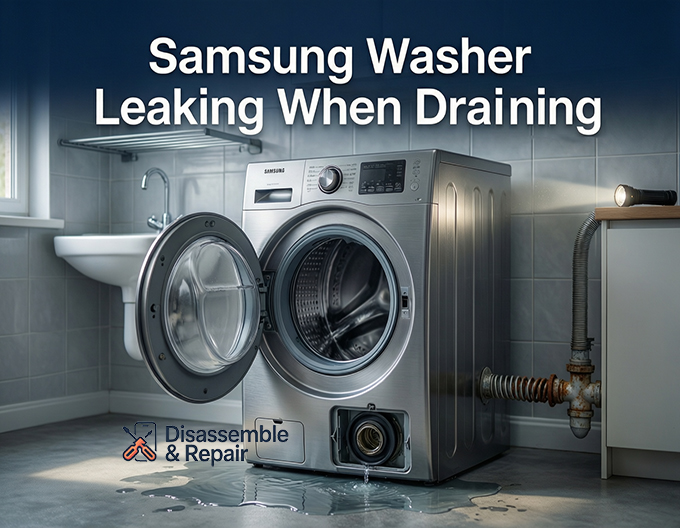
Is your Samsung washer leaking when draining water, leaving a messy puddle on your laundry room floor? This specific issue often points to a failure in the components responsible for expelling water, rather than filling it.
A leak that occurs strictly during the drain cycle narrows down the culprit to the drainage system—specifically the drain pump, hoses, or filters. If ignored, this can lead to water damage, mold growth, and persistent error codes like 5E.
Read more Samsung washing machine DC error
Below is a comprehensive guide to diagnosing and fixing a Samsung front load washer (and top loaders) that leaks during the drain cycle.
Why Is Your Samsung Washer Leaking When Draining?
Leaks during the drain cycle are almost always caused by a breach in the path the water takes as it exits the drum. Unlike fill leaks, which happen immediately, these leaks appear towards the end of the wash cycle.
The most common points of failure include:
- The Drain Pump Assembly: Cracks in the pump housing or a worn seal.
- The Debris Filter: Improper installation or damaged O-rings.
- Hoses: Punctures or loose connections in the drain hose or tub-to-pump hose.
- Clamps: Rusted or loose hose clamps that fail under pressure.
Safety First
Before you begin troubleshooting, ensure you follow these safety protocols:
- Power Down: Unplug the machine from the wall outlet to avoid electric shock.
- Water Supply: Turn off the hot and cold water valves.
- Emergency Drain: Use the emergency drain tube (usually located near the debris filter) to empty the remaining water into a shallow pan.
Troubleshooting the Debris Filter and Pump Motor Filter
For many Samsung front load washer owners, the leak is often user-error or a simple maintenance oversight located at the front bottom of the machine.
1. Inspect the Debris Filter Housing
The debris filter (also known as the pump motor filter) traps coins, lint, and buttons. If this filter is not tightened correctly after cleaning, water will pour out during the drain cycle.
- Open the small access door at the bottom front of the washer.
- Check if the black drain cap on the emergency drain hose is secure.
- Unscrew the debris filter and inspect the rubber O-ring. If the O-ring is torn or flattened, it cannot create a watertight seal, causing leaks.
- Clean the filter threads and the housing. Debris lodged in the threads can prevent the filter from screwing in flush.
- Fix: Hand-tighten the filter until it stops. Do not use tools, as pliers can crack the plastic cap.
2. Check for External Damage
Pull the washer forward and inspect the gray drain hose. Look for:
- Cracks or pinholes: These often appear near the clamps or where the hose bends.
- Kinks: A kinked hose increases pressure, which can blow out weak seals.
- Installation Depth: Ensure the hose is not inserted more than 6-8 inches into the standpipe. If inserted too deeply, it can siphon water back or create back-pressure leaks.
3. Verify Hose Clamps
Follow the drain hose to where it connects to the back of the washer. Ensure the hose clamps securing it are tight. Samsung washers typically use spring clamps; if these lose tension or rust, the connection will weep water when the pump activates.
Read more Samsung washing machine 5E error
4. Diagnosing a Cracked Pump Housing
The drain pump is responsible for forcing water out of the drum. Over time, foreign objects (like coins or screws) that bypass the filter can enter the pump and crack the plastic housing.
- Locate the pump at the bottom of the machine.
- Run your hand (carefully) along the bottom of the pump housing to feel for moisture.
- The Fix: If the pump housing is cracked, you cannot patch it. The entire drain pump assembly must be replaced to stop the leak.
5. Check the Tub-to-Pump Hose
The tub-to-pump hose is a thick, accordion-style rubber hose connecting the bottom of the outer tub to the drain pump.
- This hose collects all the heavy debris. Squeeze the hose to feel for blockages.
- Inspect the connection points. The spring clamps here can slide out of position due to vibration.
- Look for chafing. Sometimes this hose rubs against the cabinet or shock absorbers, creating a hole that only leaks when the tub is full and draining.
6. The Link Between Leaks and Error 5E
Error code 5E indicates the machine cannot drain water quickly enough. While this is usually a clog, it can cause leaks indirectly.
- Back Pressure: If the drainage system is partially clogged, the pump works harder, increasing pressure in the hoses. Weak points in the hose or loose clamps may burst or drip under this excess pressure.
- Water Level Sensor: If the washer fails to drain, the water level sensor (pressure switch) may detect an overfill situation. If the sensor tube is damaged or disconnected, the machine may try to force draining while simultaneously not registering the correct water level, leading to erratic pump behavior and potential overflow leaks.
7. Inspect the Check Valve
Some Samsung models feature a check valve (a flap or ball valve) inside the discharge hose system to prevent waste water from flowing back into the drum.
- If this valve gets stuck open or the seal around it fails, water can leak from the connection point during the high-pressure drain phase.
- Disassemble the discharge bellows (the rubber section connected to the drain pump) and clean the check valve. If the rubber is brittle, replace the valve or the hose assembly.
8. Testing the Repair
Once you have identified the source—whether it was a loose debris filter, a cracked drain pump, or a split drain hose—and performed the repair:
- Dry the floor and the inside of the washer cabinet completely.
- Reconnect the power and water.
- Run a “Rinse & Spin” cycle. This is the fastest way to test the drainage system without running a full wash.
- Watch the repaired area closely with a flashlight as the pump engages.
Conclusion
A Samsung washer leaking when draining is rarely a sign that the machine is dead; it is usually a cry for maintenance. By systematically checking the “easy” external components like the drain hose and debris filter before moving to the internal drain pump assembly, you can save hundreds of dollars in repair fees.
Always keep your pump motor filter clean and check your hose clamps annually to prevent future puddles. If you spot a crack in the pump or a tear in the tub-to-pump hose, replace the part immediately to keep your laundry room dry and your Samsung washer running efficiently.
Frequently Asked Questions
Why does my Samsung washer only leak at the end of the cycle?
A leak that occurs specifically at the end of a cycle indicates a problem with the drainage system. Since the drain pump only activates after the wash or rinse phases, the water is likely escaping from a component used to expel water, such as the drain hose, the pump housing, or the debris filter.
Read more Samsung washing machine not washing
How do I know if the debris filter is the source of the leak?
If the leak is coming from the bottom front of your machine, the debris filter is the most likely culprit. Check to see if the filter is loose, if the threads are blocked by lint or coins, or if the rubber O-ring is cracked or flattened. Always hand-tighten the filter, as using tools can crack the plastic and cause more leaking.
What does the 5E error code have to do with water on the floor?
The 5E (or SE) error code means the washer is having trouble draining. While this is often caused by a clog, the blockage creates back-pressure within the drainage system. This extra pressure can force water out of weak hose connections or aged clamps, leading to a leak while the machine struggles to empty.
Can I patch a hole in the drain hose or a crack in the pump?
It is not recommended to patch these components. The drainage system operates under significant pressure and vibration. Temporary fixes like tape or sealant usually fail quickly. For a reliable repair, a cracked drain pump or a punctured hose should be replaced entirely.
How deep should the drain hose be placed in the standpipe?
The drain hose should only be inserted 6 to 8 inches into the home’s standpipe. If it is pushed in too far, it can cause a siphoning effect or create back-pressure that leads to leaks at the connection points or error codes during the drain cycle.