
Discovering that your laundry is still damp after a full cycle can be a source of significant frustration for any homeowner. If you are currently dealing with a Samsung washer dryer not drying clothes, it is essential to understand that this issue often stems from a specific set of mechanical or maintenance-related variables. As a sophisticated appliance that combines washing and drying functions into a single unit, the troubleshooting process requires a systematic approach to identify whether the fault lies in user settings, airflow restrictions, or component failure.
This guide will walk you through the technical aspects of your appliance, utilizing professional insights to help you resolve the issue efficiently.
Understanding the Condensing Technology
Before diving into repairs, it is vital to understand how your machine operates. Unlike a standard standalone dryer that uses an exhaust vent to pump hot, moist air outside, most Samsung washer-dryer combos utilize condensing technology.
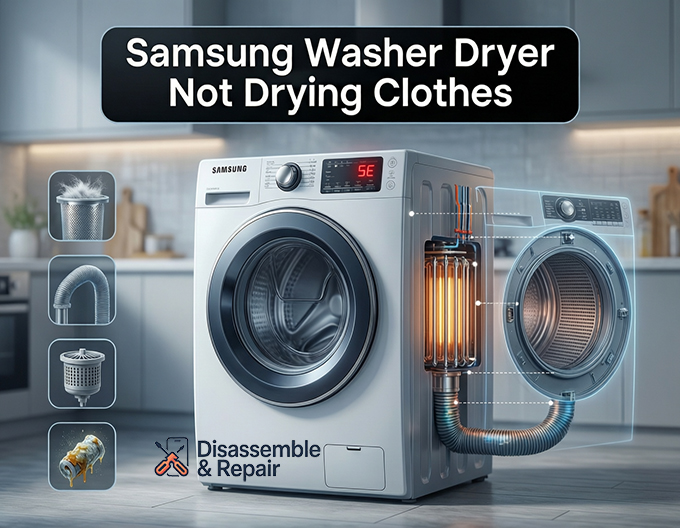
In a condensing system, the machine recycles air. It heats air to absorb moisture from the clothes, then passes that air through a condenser. Here, the air is cooled down, causing the moisture to condense into water, which is then pumped out through the drainage hose. Because this process is more complex than standard venting, there are more points where the process can fail, leading to poor drying performance.
Read more Samsung washing machine NF error
Common Reasons Your Samsung Washer Dryer Not Drying Clothes
There are several factors ranging from simple maintenance oversights to complex electrical failures that can prevent your unit from functioning correctly. We will categorize these into usage issues, maintenance requirements, and hardware failures.
1. The Issue of Drum Capacity and Overloading
One of the most frequent causes of a Samsung washer dryer not drying clothes is simply overloading the drum. It is a common misconception that the washing capacity matches the drying capacity.
- The Rule of Thumb: In a combo unit, the drum capacity for drying is typically half of the washing capacity.
- The Physics: Clothes need room to tumble so that warm air can circulate through the fabric. If the drum is packed tight, air cannot reach the center of the load.
- The Fix: If you have washed a full load, remove half of the wet laundry before starting the drying cycle.
2. Drainage and Condenser Blockages
Since condensing dryers rely on extracting water and pumping it out, drainage is critical. If the water cannot escape, the air remains humid, and the clothes will stay wet.
- Drainage Hose: Check the drainage hose for kinks or bends. If the hose is obstructed, the condensed water will back up into the machine. Additionally, ensure the drain height is correct according to the manual; if it is too low, water may siphon back in.
- The Condenser: Over time, lint and debris can accumulate in the condensing chamber. Unlike standalone dryers with a large lint screen, washer-dryers often rely on a “wash-down” system to clear lint. If this fails, the condenser becomes clogged with wet fluff, halting the drying process.
3. Clogged Lint Filters and Airflow
While many combos do not have a traditional slide-out filter, they still have filtration systems that require attention.
- Debris Filter: Located at the bottom front of the machine, the debris filter catches coins, buttons, and large clumps of lint. If this is clogged, the water pump cannot remove the condensate, leading to damp clothes.
- Air Ducts: If your model does utilize an exhaust vent (rare for combos but possible), ensure it is free of lint buildup. A blocked vent creates a fire hazard and trips the thermal fuse.
4. Moisture Sensor Malfunctions
Modern Samsung units utilize a moisture sensor to determine when the laundry is dry. These consist of two metal bars usually located near the door rim inside the drum.
When the machine is on a “Sensor Dry” setting, it measures the conductivity of the clothes. Wet clothes conduct electricity; dry clothes do not. Over time, dryer sheets and fabric softeners can leave a waxy invisible residue on these sensors. This coating insulates the bars, tricking the control board into thinking the clothes are dry, causing the cycle to end prematurely.
Solution: Wipe the sensors with a clean cloth and a little rubbing alcohol or vinegar to remove the residue.
Read more Samsung washer keeps stopping on spin cycle
Mechanical and Electrical Component Failures
If you have verified that the load size is correct and the drainage is clear, you may be facing a hardware failure.
Heating Element Issues
The heating element is the component responsible for warming the air inside the drum. If this part burns out or breaks, the drum will spin, but the air will remain cold.
Read more Samsung washing machine 3E2 error
To diagnose this, run a short timed dry cycle. If the glass door remains cold to the touch throughout the cycle, the heating element is a primary suspect. This component often fails due to age or overheating caused by airflow restrictions.
Thermostat and Thermal Fuse
Safety components play a huge role in the operation of the heating element.
- Thermostat: This device regulates the temperature. If a cycling thermostat fails, it may cut the heat off too early or not turn it on at all.
- Thermal Fuse: This is a safety backup. If the dryer overheats (often due to a clogged lint filter or vent), the thermal fuse will blow to prevent a fire. Once blown, the electricity to the heating element is cut permanently until the fuse is replaced.
The Control Board
The control board is the brain of the appliance. It sends voltage to the motor, heater, and pump. If the board has a short circuit or a blown relay, it may fail to send the necessary power to the heating element even if all other components are functioning. Diagnosing a control board failure is usually done by a process of elimination after testing the heater and thermostats.
Decoding Samsung Error Codes
Samsung washers are equipped with self-diagnosis systems. If the machine detects a fault, it will often display an error code. Understanding these codes can help pinpoint why the machine is not drying.
- dE / dC (Door Error): The door is not latched properly. The dryer will not start if the safety switch is not engaged.
- HE / HC (Heating Error): This indicates the heating element is getting too hot or not heating at all. This points directly to the heater, thermostat, or thermistor.
- FE (Fan Error): The drying fan is not working. This fan is essential for circulating air through the condenser.
- 5E / SE (Drain Error): The machine is not draining water. If the water from the wash cycle or the condensation process isn’t removed, the clothes cannot dry.
Step-by-Step Troubleshooting Checklist
If you are facing a situation where your Samsung washer dryer not drying clothes is disrupting your routine, follow this professional checklist:
- Check the Settings: Ensure you have not selected “Air Fluff” or a non-heated cycle. Switch to “Time Dry” to bypass the moisture sensors and test if heat is being produced.
- Reduce the Load: Take out half the clothes. Ensure the items are similar in fabric weight (e.g., do not mix heavy towels with light synthetics).
- Clean the Filters: Open the bottom flap and clean the debris filter. If you have an accessible lint filter, clean that as well.
- Inspect Drainage: Listen to the machine. Can you hear the pump running? Ensure the drainage hose is not bent behind the machine.
- Clean the Sensors: Locate the moisture sensor bars and scrub them gently to remove softener buildup.
- Power Cycle: Sometimes the control board experiences a glitch. Unplug the machine for 60 seconds and plug it back in to reset the system.
When to Call a Professional
While many maintenance tasks can be performed by the user, dealing with internal electrical components carries risks. If you suspect the issue lies with the heating element, thermal fuse, or control board, it is advisable to contact a certified Samsung technician. These repairs require a multimeter to test for continuity and involve disassembling the cabinet of the washer-dryer.
Conclusion
A Samsung washer-dryer combo is a marvel of efficiency when working correctly, but the complexity of the condensing drying process means there are several potential points of failure. By ensuring you are not exceeding the drum capacity, maintaining the drainage hose, and keeping the moisture sensor clean, you can resolve the majority of drying issues. However, if the machine remains cold, a failure in the heating system is likely the culprit. Regular maintenance is the key to longevity, ensuring your appliance handles the drying cycle effectively for years to come.
Frequently Asked Questions
Why can’t I dry a full load of laundry in my Samsung washer dryer?
In combo units, the drying capacity is typically only half of the washing capacity. Clothes require extra space in the drum for hot air to circulate effectively. If the drum is packed too tightly, the air cannot reach the center of the load, leaving the middle items damp. For best results, remove half of the wet laundry before starting the drying cycle.
How do I fix a machine that stops the drying cycle too early?
This is often caused by residue on the moisture sensors. Over time, fabric softeners and dryer sheets leave a thin, waxy coating on the metal sensor bars located near the door rim. This coating tricks the control board into thinking the clothes are dry. To fix this, wipe the sensor bars with a clean cloth and a small amount of rubbing alcohol or vinegar.
What should I check if my washer dryer is not producing any heat?
First, ensure you are not using a non-heated cycle like “Air Fluff.” If you run a “Time Dry” cycle and the glass door remains cold to the touch, the heating element may have burned out, or a thermal fuse may have blown. A blown thermal fuse often occurs if the machine’s airflow is restricted by a clogged filter or vent.
What do the 5E or SE error codes mean in relation to drying?
The 5E or SE codes indicate a drainage error. Because Samsung washer-dryer combos use condensing technology, they must be able to pump out the water they extract from your clothes. If the debris filter at the bottom front of the machine is clogged or the drainage hose is kinked, the water cannot escape, and the clothes will remain wet.