

When your appliance fails to maintain the correct temperature or exhibits strange behaviors, effective Whirlpool Refrigerator Troubleshooting is the critical first step toward a solution. By systematically diagnosing the components, you can often avoid the high cost of a professional service call and restore your unit to working order. This guide provides a professional, deep dive into the common issues affecting Whirlpool models and the specific entities responsible for proper operation.
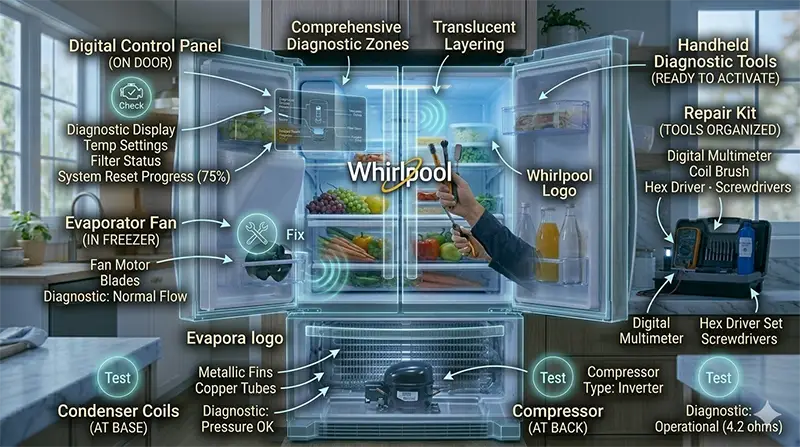
Essential Safety and Diagnostic Tools
Before attempting any repairs, safety must be your priority. Always unplug the refrigerator from the electrical outlet before disassembling any panels or touching internal components. Capacitors can hold a charge even when power is disconnected, so proceed with caution.
To properly diagnose electrical faults, a multimeter is an indispensable tool. You will use this device to test for continuity (a closed electrical circuit) and proper voltage at various connection points. Visual inspection is helpful, but a multimeter provides the definitive data needed to confirm if a part has failed.
Step-by-Step Whirlpool Refrigerator Troubleshooting
This section breaks down the most frequent problems by symptom, guiding you toward the likely culprit.
Problem 1: Refrigerator Is Not Cooling
If your refrigerator is running but not getting cold, or if the freezer is cold but the fresh food compartment is warm, several components could be at fault.
Read more whirlpool refrigerator door alarm
1. Inspect the Condenser Coils
The most common cause of poor cooling is dirty condenser coils. These coils are usually located at the bottom or back of the fridge and are responsible for dissipating heat removed from the interior. If they are covered in dust or pet hair, the system cannot release heat efficiently, causing the compressor to work overtime.
- Solution: Remove the kick plate or pull the fridge away from the wall. Use a specialized coil brush and a vacuum to clean the debris.
2. Check the Evaporator Fan Motor
The evaporator fan motor draws air over the cooling coils and circulates it throughout the freezer and refrigerator compartments. If you hear a loud noise coming from the freezer area, or if the fan is not spinning freely, the motor may be defective.
- Test: Open the freezer door and manually activate the door switch. If the fan does not run, or if it runs noisily, it likely needs replacement. You can also test the motor windings for continuity using your multimeter.
3. Test the Start Relay
If you hear the compressor click on and then shut off shortly after (a condition known as short-cycling), or if the compressor never starts, the start relay might be the issue. This small device, mounted on the side of the compressor, helps jump-start the motor windings.
Read more whirlpool french door refrigerator problems
- Test: Remove the relay and shake it. If it rattles like a maraca, the internal mechanism is shattered and it must be replaced. If it does not rattle, test it for continuity between the terminals.
4. Examine the Compressor
The compressor is the heart of the refrigeration cycle, compressing the refrigerant and circulating it through the coils. If the condenser coils are clean, the fans are working, and the start relay is functional, but the fridge remains warm, the compressor itself may be faulty.
- Note: Compressor replacement involves handling refrigerant and brazing, which requires a licensed professional. However, you can use a multimeter to check the pins on the side of the compressor for an open circuit or a ground fault (short to the case) to confirm failure.
Problem 2: Temperature Fluctuation and Frost Buildup
Inconsistent temperatures often point to airflow issues or failures in the automatic defrost system.
1. Verify the Door Gasket
A torn or loose door gasket allows warm, humid air to enter the refrigerator. This moisture condenses and freezes, causing frost buildup and forcing the appliance to work harder to maintain temperature.
Read more whirlpool refrigerator thermostat adjustment
- Test: Place a dollar bill between the door and the cabinet and close it. If you can pull the bill out without resistance, the seal is weak. Clean the gasket with warm soapy water; if it remains deformed or brittle, it requires replacement.
2. Troubleshoot the Defrost System
Modern refrigerators have an auto-defrost cycle. If the defrost timer fails, the system may get stuck in the cooling mode (causing ice buildup on the evaporator coils) or the defrost mode (causing all food to melt).
- Diagnosis: If you see a thick sheet of frost on the back wall of the freezer, the defrost heater is likely not turning on. Locate the defrost timer (often in the control console or kick plate). You can manually advance the dial with a screwdriver to force a defrost cycle. If the heater turns on, the timer is the likely failure point.
3. Check the Thermostat
The thermostat (or temperature control thermostat) monitors the temperature inside the cabinet and signals the compressor to run. If this part fails, it may not send voltage to the cooling system, or it may send it continuously, causing things to freeze in the fresh food section.
- Test: Turn the thermostat from the lowest to the highest setting. You should hear a “click.” If there is no click and the fridge isn’t running, test the thermostat for continuity.
Problem 3: Ice and Water Dispenser Issues
Whirlpool refrigerators are renowned for their ice and water features, but these are frequent points of failure.
1. Inspect the Water Filter
A clogged water filter is the leading cause of low water pressure and small or hollow ice cubes. Manufacturers recommend replacing the filter every six months.
- Solution: If water flow is slow, remove the old filter and install the bypass plug (if provided). If the flow improves, the filter was the restriction.
2. Diagnose the Ice Maker
If the ice maker is not producing ice, ensure the bail arm is in the down position. If the unit is receiving water and the freezer is at the correct temperature (below 10 degrees Fahrenheit), the ice maker module itself may be defective.
- Advanced Check: Inspect the mold for ice. If ice is present but not ejecting, the motor or heating element within the assembly may have failed.
Problem 4: Electronic and Control Failures
Newer models rely heavily on digital electronics rather than mechanical timers.
1. Interpret Error Codes
When the system detects a fault, the digital display may show error codes. These alphanumeric indicators (e.g., PO, E1, flashing lights) correspond to specific problems in the service manual.
- Action: Do not ignore these codes. Refer to your technical sheet to decode them. They can pinpoint issues with thermistors, fans, or keypad failures immediately.
2. Assess the Control Board
The main electronic control board acts as the brain of the refrigerator, governing the compressor, fans, and defrost cycle. If you have ruled out the mechanical components (fans, compressor, relay) and the fridge exhibits erratic behavior—such as lights flashing, completely dead interface, or random cooling—the control board may have damaged solder joints or burnt relays.
- Visual Inspection: Look for burn marks or swollen capacitors on the board. While board-level repair is difficult, replacing the entire board is a standard repair procedure.
Preventative Maintenance
To minimize the need for future Whirlpool Refrigerator Troubleshooting, establish a routine maintenance schedule.
- Clean Condenser Coils: Perform this every six months to keep the compressor running efficiently.
- Replace Water Filter: Stick to the six-month schedule to prevent mineral buildup in the lines.
- Check Seals: Regularly wipe down the door gasket to ensure it remains pliable and seals tightly.
- Listen: Pay attention to the sounds your fridge makes. A buzzing evaporator fan motor or a clicking start relay are early warning signs that allow you to order parts before a total breakdown.
Conclusion
Successfully repairing a Whirlpool refrigerator requires patience and a systematic approach to identifying the root cause. By isolating the problem to specific entities—whether it is a clogged water filter, a faulty start relay, or a frozen evaporator fan motor—you can effect precise repairs. Always utilize a multimeter to verify your hypothesis before purchasing parts. While many of these repairs are suitable for DIY enthusiasts, issues involving the sealed system (compressor and refrigerant) should always be handled by a certified technician to ensure safety and compliance with environmental regulations.
Frequently Asked Questions
Why is my refrigerator running but failing to stay cold?
The most common cause for this issue is dirty condenser coils, which prevent the system from dissipating heat efficiently. You should also check the evaporator fan motor; if it is making a loud noise or not spinning, it cannot circulate cold air. Finally, a faulty start relay might be preventing the compressor from staying on long enough to cool the unit.
How often should I perform maintenance on my Whirlpool refrigerator?
To keep your appliance running efficiently, you should clean the condenser coils and replace the water filter every six months. Additionally, you should regularly wipe down the door gaskets with warm, soapy water to ensure a tight seal and prevent frost buildup.
What does it mean if I hear a clicking sound and the compressor won’t start?
A clicking sound usually indicates that the start relay is failing. This small device helps jump-start the compressor. You can test it by removing it and shaking it; if it rattles like a maraca, the internal components are broken and the relay must be replaced.
Why is there a thick layer of frost building up on the back wall of my freezer?
This typically points to a failure in the automatic defrost system. It is often caused by a defective defrost timer that has become stuck in the cooling mode, or a faulty defrost heater. If the door gasket is torn or loose, it can also cause frost by allowing warm, humid air to enter the compartment.
When should I call a professional instead of attempting a DIY repair?
While most component replacements like fans, filters, and relays can be done at home, any issue involving the “sealed system” requires a professional. This includes replacing the compressor or handling refrigerant. These tasks require specialized tools, brazing, and licensing to ensure safety and environmental compliance.
Read more whirlpool refrigerator not cooling