

Finding a puddle on your kitchen floor can be frustrating, especially when it stems from your Whirlpool Refrigerator Water Leaking. This common issue not only creates a slip hazard but can also damage your flooring and indicate underlying problems with your appliance’s components.
Common Reasons for a Whirlpool Refrigerator Water Leaking
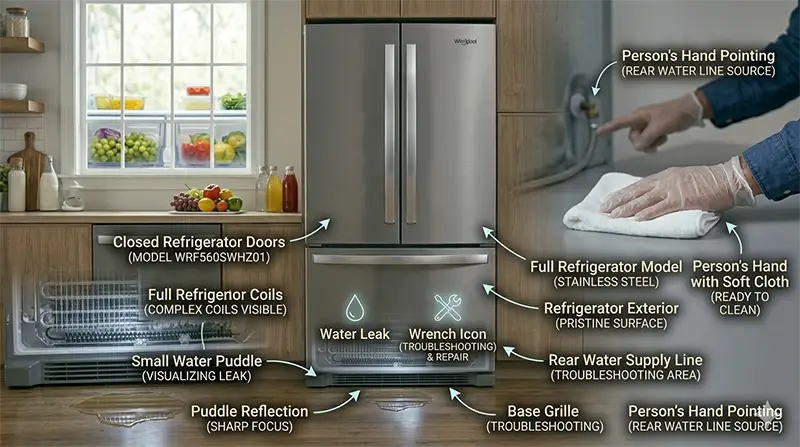
Water leaks in Whirlpool refrigerators typically originate from a few specific areas. By systematically checking these components, you can often identify the culprit without needing a professional service call. The most frequent causes involve the defrost system, the water supply connection, or the filtration system.
Read more whirlpool refrigerator ice maker not working
The following sections will guide you through inspecting critical parts like the defrost drain, water filter housing, and inlet valve to stop the leak at its source.
Troubleshooting the Defrost Drain and Drain Tube
One of the most common reasons for water pooling inside the refrigerator or on the floor is a clogged defrost drain. During the defrost cycle, melted frost from the evaporator coils is supposed to flow down a drain tube into a pan underneath the fridge.
If this drain becomes blocked by food particles or ice, the water has nowhere to go but back up into the fridge.
- The Fix: Locate the drain hole, typically found at the back of the freezer or refrigerator compartment. You may need to remove a panel to access it. If it is frozen over, use hot water to melt the ice. Once clear, you can use a turkey baster to flush hot water and a mild cleaning solution down the tube to ensure it flows freely.
Issues with the Water Filter Housing and EveryDrop Filter
If the leak is coming from inside the fresh food compartment or directly underneath the fridge door, inspect your filtration system. The water filter housing can develop cracks over time due to water pressure or accidental impact.
Read more whirlpool refrigerator temperature too high
Additionally, if you recently replaced your cartridge with an EveryDrop filter, it may not be seated correctly.
- Check the O-rings: Ensure the rubber O-rings on the filter are intact and not twisted. A missing or damaged O-ring is a primary cause of slow drips.
- Verify Installation: Remove and reinstall the filter, pushing it in firmly until it clicks or locks. If the housing itself is cracked, the entire assembly will need replacement.
Water Supply Line and Inlet Valve Leaks
Pull the refrigerator away from the wall to inspect the back. A leak here is often due to the water supply line or the inlet valve. The water supply line connects your home’s plumbing to the fridge, and the inlet valve controls the flow of water to the dispenser and ice maker.
Inspect the connection points for moisture. The plastic tubing can become brittle and crack, or the fittings may simply be loose. The solenoid valve (part of the inlet valve assembly) can also fail, staying partially open and causing leaks. If you see water dripping from the valve itself, the component is likely defective and requires replacement.
Inspecting the Drain Pan and Condensation
Beneath the refrigerator sits the drain pan. Its job is to catch water from the defrost cycle, where the compressor’s heat eventually evaporates it. However, if the pan is cracked, or if there is excessive water flow, it can overflow onto the floor.
Condensation is another factor that can fill the pan too quickly. If your kitchen is extremely humid or the refrigerator door is left open frequently, the system produces more water than the pan can handle. Slide the pan out (if your model allows) and check it for cracks or holes.
Read more whirlpool refrigerator door seal cleaning
Door Gasket and Ice Maker Problems
Sometimes, the leak is caused by warm air entering the fridge. Inspect the door gasket—the rubber seal around the door perimeter. If the gasket is torn, dirty, or worn out, warm air enters and creates excess moisture, leading to water buildup that eventually drips out.
Finally, check the ice maker. If the fill tube is misaligned, water meant for the ice mold might splash into the freezer bin or down the back of the compartment. A frozen or stuck ice chute can also cause ice to melt and leak out through the dispenser area.
Prevention and Maintenance
To prevent your Whirlpool Refrigerator Water Leaking in the future, perform regular maintenance. Clean the door gaskets with warm soapy water to maintain a tight seal, change your EveryDrop filter every six months, and periodically check the drain tube for debris. addressing small drips early can save you from costly repairs and water damage later.
Frequently Asked Questions
Why is water pooling at the bottom of my Whirlpool refrigerator?
The most common cause of internal pooling is a clogged defrost drain. When food particles or ice block the drain hole, water from the defrost cycle cannot flow down the drain tube to the pan. Instead, it backs up and leaks into the refrigerator or freezer compartments.
What should I check if my EveryDrop water filter is leaking?
If you notice a leak near the filter, first ensure the cartridge is pushed in firmly until it clicks or locks. Next, inspect the rubber O-rings on the filter to ensure they are not twisted or damaged. If the leak persists despite a proper installation, the water filter housing may be cracked and require replacement.
How does a damaged door gasket cause water to leak onto the floor?
A torn, dirty, or worn door gasket allows warm, humid air to enter the refrigerator. This creates excessive condensation inside the unit. The moisture buildup can exceed the capacity of the drain pan or drip directly from the door frame onto your kitchen floor.
What are the signs of a faulty water inlet valve?
If you pull your refrigerator away from the wall and see water dripping from the back, the inlet valve or the supply line may be the issue. A defective solenoid valve might stay partially open, or the plastic tubing may have become brittle and cracked over time, leading to a persistent drip.
How can I prevent my Whirlpool refrigerator from leaking in the future?
Regular maintenance is key. You should change your EveryDrop filter every six months, wipe down door gaskets with warm soapy water to ensure a tight seal, and periodically flush the defrost drain with hot water to prevent clogs from forming.