

Discovering that your perishables are warm and your Whirlpool refrigerator temperature too high is a frustrating experience for any homeowner. Whether the issue is isolated to the fresh food compartment or affects the freezer as well, identifying the root cause quickly is essential to prevent food spoilage and costly repairs.
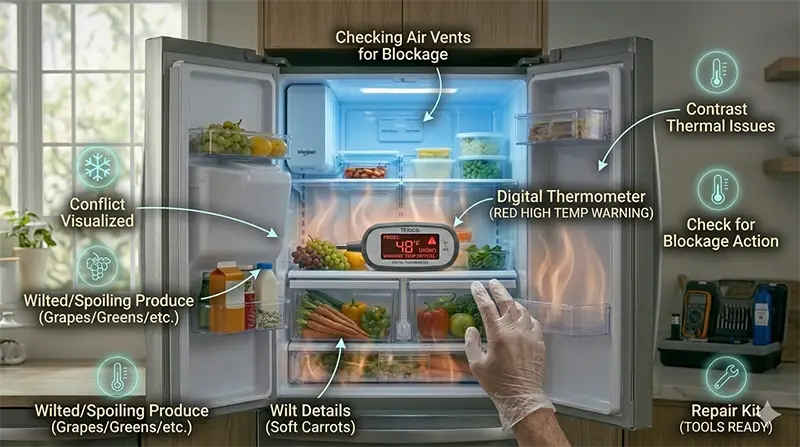
As a leading appliance brand, Whirlpool refrigerators rely on a complex interplay of mechanical and electronic components to maintain an optimal climate. When one link in this chain fails—be it a simple seal or a complex circuit board—the cooling efficiency drops significantly. This guide will walk you through the professional diagnostic process, utilizing industry-standard terminology and troubleshooting methods to restore your appliance to peak performance.
Initial Assessment: Airflow and Environment
Before dismantling the unit to check internal components, a Senior SEO Specialist recommends investigating external factors and airflow dynamics. Often, the problem is not a mechanical failure but a restriction preventing the appliance from breathing.
Check for Airflow Blockage
Proper air circulation is the lifeblood of any refrigeration system. If you have overpacked the shelves, particularly near the air vents, you may have inadvertently created an airflow blockage. The cold air generated in the freezer needs to travel into the fresh food section through specific vents. If boxes or containers obstruct these pathways, the fridge will feel warm while the freezer remains cold. Ensure there is at least an inch of space between food items and the back and side walls to facilitate circulation.
Inspect the Door Gasket
The door gasket is the magnetic rubber seal that lines the perimeter of your refrigerator door. Its primary function is to lock cold air in and keep ambient heat out. Over time, gaskets can crack, tear, or lose their magnetism. If warm kitchen air constantly leaks into the compartment, the compressor cannot keep up, resulting in a temperature rise.
- Test: Place a dollar bill between the door and the frame and close it. If you can pull the bill out without resistance, the seal is defective and requires replacement.
Diagnosing a Whirlpool Refrigerator Temperature Too High
If external checks do not resolve the issue, you must look into the internal mechanical systems. This section breaks down the most common hardware failures associated with a Whirlpool refrigerator temperature too high.
1. Dirty Condenser Coils
The condenser coils are typically located at the bottom or back of the refrigerator. Their job is to dissipate the heat removed from inside the fridge into the surrounding room. If these coils become coated in dust, pet hair, or debris, they cannot release heat efficiently. Consequently, the compressor has to run longer and harder, yet the internal temperature will still rise.
Read more whirlpool refrigerator leveling instructions
- Solution: Disconnect power and use a refrigerator coil brush and vacuum to clean the coils thoroughly. This should be done every six months.
2. Malfunctioning Evaporator Fan Motor
The evaporator fan motor is responsible for drawing air over the cooling coils and circulating it throughout the freezer and refrigerator compartments. If this motor fails or becomes noisy, cold air will not circulate, causing the fridge to warm up while the freezer might stay relatively cold (or also warm up, depending on the severity).
- Diagnosis: Open the freezer door and manually activate the door switch. Listen for the fan humming. If there is no sound, or if the fan blade is not spinning freely, the motor likely needs replacement.
3. Issues with the Air Damper Control
The air damper control is a mechanical or motorized flap that opens and closes to regulate the amount of cold air flowing from the freezer into the fresh food compartment. If the damper is stuck closed, no cold air will enter the fridge, leading to high temperatures. Conversely, if stuck open, your food might freeze.
- Diagnosis: Locate the damper between the two compartments. If the fridge is warm but the freezer is cold, inspect the damper to see if it allows airflow. A broken motor or blocked linkage usually requires a replacement of the damper assembly.
Advanced Component Troubleshooting
When the issue persists after checking fans and airflow, you must investigate the sealed system and electronic controls. These steps often require a multimeter for continuity testing.
Read more whirlpool refrigerator thermostat adjustment
The Defrost System
Modern refrigerators use an automatic defrost system to prevent ice buildup on the evaporator coils. This system consists of a defrost heater, a defrost thermostat (or bi-metal), and a defrost timer or control board.
If any part of this system fails, frost will accumulate on the evaporator coils. Eventually, the ice becomes so thick that airflow is completely blocked.
- Symptoms: You will see a heavy frost pattern on the back wall of the freezer.
- Testing: Check the defrost heater and thermostat for continuity. If the heater does not have continuity, it is burned out and needs replacing.
Thermistor and Temperature Sensor
The thermistor (or temperature sensor) is a small device that monitors the air temperature inside the cabinet. It changes its electrical resistance based on the temperature, sending a signal to the main control board to turn the compressor on or off.
If the thermistor is faulty, it may signal to the board that the fridge is cold enough when it is actually warm.
- Testing: You can test a thermistor with a multimeter. You will need the technical sheet for your specific Whirlpool model to know the correct resistance (Ohms) at specific temperatures. If the reading is off by a significant margin, the sensor is defective.
Compressor and Start Relay
The compressor is the heart of the refrigerator, pumping refrigerant through the system. If the compressor hums but shuts off quickly (short-cycling) or doesn’t run at all, the temperature will rise rapidly.
Often, the compressor itself is fine, but the start relay (which helps kickstart the compressor) has failed.
- Diagnosis: Unplug the fridge and remove the start relay from the side of the compressor. Shake it; if it rattles, it is likely broken. If the start relay is good and the compressor still won’t run or runs hot without cooling, the compressor itself may be faulty, which typically requires a licensed professional to replace due to refrigerant handling.
Main Control Board
If you have verified that the compressor, fans, sensors, and defrost system are all functioning correctly, the issue may lie with the main control board. This is the “brain” of the appliance. If the board fails to send voltage to the compressor or fans, the unit will not cool.
- Note: Control boards are expensive and less likely to fail than mechanical parts. Only replace this after ruling out all other entities like the thermistor or start relay.
Summary of Troubleshooting Steps
To efficiently tackle a Whirlpool refrigerator temperature too high, follow this logical order of operations:
- Safety First: Always unplug the unit before touching internal components.
- Clean: Vacuum the condenser coils.
- Inspect: Check the door gasket for leaks and ensure there is no airflow blockage inside.
- Listen: Verify the evaporator fan motor is running in the freezer.
- Examine: Look for frost buildup indicating a defrost system failure or issues with the evaporator coils.
- Test: Use a multimeter to check the start relay, thermistor, and temperature sensor.
- Evaluate: Check the air damper control for mechanical movement.
- Replace: If all else checks out, consider the main control board.
When to Call a Professional
While many of these repairs are accessible to DIY enthusiasts, dealing with the sealed system (refrigerant leaks or compressor replacement) requires EPA certification and specialized tools. If you suspect a refrigerant leak (indicated by an oily residue on the floor or coils and a compressor that runs constantly without cooling), contact a certified Whirlpool technician immediately.
By systematically isolating these entities—from the condenser coils to the main control board—you can accurately diagnose why your Whirlpool refrigerator is failing to keep your food safe. Regular maintenance, such as cleaning coils and checking seals, is the best prevention against future temperature fluctuations.
Frequently Asked Questions
How can I tell if my refrigerator door seal is failing?
You can perform a simple “dollar bill test.” Place a dollar bill against the frame and close the door on it. If you can pull the bill out without any resistance, the magnetic gasket is no longer creating an airtight seal. This allows warm air to leak into the compartment, causing the temperature to rise.
Why is my refrigerator warm even though the freezer is still cold?
This issue is commonly caused by an airflow blockage or a faulty air damper control. Ensure that food containers are not blocking the vents that allow cold air to travel from the freezer into the fresh food section. If the vents are clear, the air damper—the motorized flap that regulates air passage—may be stuck in the closed position.
How often should I clean the condenser coils on my Whirlpool refrigerator?
It is recommended to clean the condenser coils at least every six months. If you have pets that shed, you may need to clean them more frequently. Dust and hair buildup prevent the coils from dissipating heat, which forces the compressor to work harder and reduces cooling efficiency.
What are the signs of a failing defrost system?
The most visible sign of a defrost system failure is a heavy accumulation of frost or ice on the back wall of the freezer compartment. When components like the defrost heater or thermostat fail, ice builds up on the evaporator coils and eventually blocks all airflow, leading to high temperatures in both the fridge and freezer.
Read more whirlpool refrigerator filter replacement
When should I stop troubleshooting and call a professional technician?
While many issues are fixable with basic tools, you should contact a professional if you suspect a problem with the sealed system. Signs of a sealed system issue include an oily residue on the floor or coils, or a compressor that runs continuously without any cooling. Handling refrigerant or replacing a compressor requires specialized certification and tools.