

Is your Whirlpool refrigerator compressor not working, leaving your groceries at risk of spoiling in a warm cabinet? This specific failure is one of the most critical issues a homeowner can face, as the compressor serves as the heart of the cooling cycle. When this component fails to start or run efficiently, the entire appliance becomes little more than an insulated box. While the prospect of a broken compressor is daunting, the root cause is often an inexpensive peripheral part rather than the motor itself.
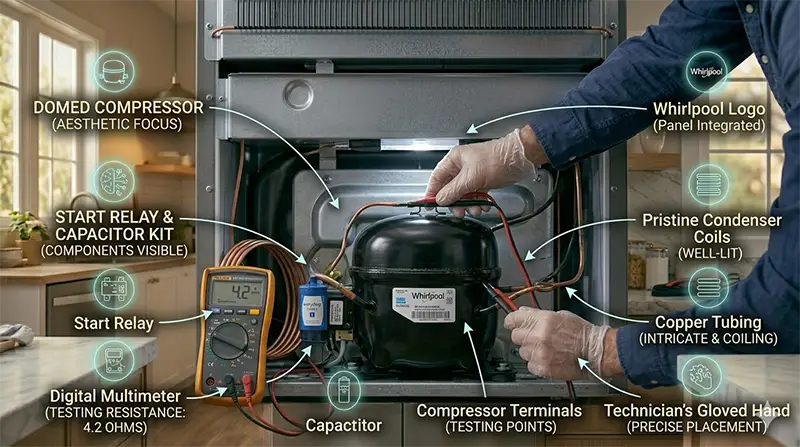
In this comprehensive guide, we will analyze the electrical and mechanical systems that drive your Whirlpool unit. From simple maintenance tasks involving Condenser Coils to advanced electrical testing with a Multimeter, we will cover the necessary steps to diagnose and potentially resolve the issue.
Read more whirlpool refrigerator black stainless steel
Initial Diagnostics: Listening and Observing
Before dismantling the appliance, you must gather sensory data. The behavior of the refrigerator often points directly to the failed component.
Read more whirlpool vs samsung refrigerator
The Significance of a Clicking Sound
One of the most telling symptoms of a compressor issue is a distinct Clicking Sound coming from the rear of the unit. This sound usually occurs every few minutes. It indicates that the compressor is trying to start but is being forced to shut down immediately. This is almost exclusively caused by a failure in the start components or a Thermal Overload situation where the compressor is overheating and safety mechanisms are engaging to prevent a fire or permanent motor damage.
Fan Operation Verification
To isolate the problem, listen for the fans. If you can hear the Evaporator Fan Motor running inside the freezer compartment (the fan that circulates cold air), but the refrigerator is warm and the compressor is silent, you have confirmed that power is reaching the unit. This specific combination—fans running but compressor off—narrows the diagnosis strictly to the compressor circuit or the Temperature Control Board.
Why Is Your Whirlpool Refrigerator Compressor Not Working?
There are several distinct reasons why a compressor may fail to engage. We will move from the easiest maintenance fixes to more complex component replacements.
1. Dirty Condenser Coils
Before testing electrical components, inspect the mechanical environment. The Condenser Coils, located either at the bottom or the back of the fridge, are responsible for dissipating the heat removed from the fridge interior.
If these coils are coated in a thick layer of dust, pet hair, or grease, the system cannot release heat. This causes the compressor to run hotter and harder than designed. Eventually, the Thermal Overload mechanism will trip, cutting power to the compressor to save it. Simply vacuuming these coils can sometimes resolve the “Whirlpool refrigerator compressor not working” issue immediately by allowing the system to cool down and reset.
2. Failure of the Start Relay
The Start Relay is a small device mounted to the side of the compressor. Its job is to provide the initial electrical boost required to get the compressor motor spinning. If the relay burns out or the internal mechanism shatters, the compressor will hum or click but never actually start.
Diagnostic Tip: When you remove the start relay, give it a gentle shake. If it rattles like a maraca, the internal solenoid or disc is broken, and the part must be replaced.
3. Defective Start Capacitor
Working in tandem with the relay is the Capacitor. This component stores a charge to provide torque during the startup phase. If the capacitor is swollen, leaking, or electrically dead, the compressor may struggle to start or fail completely. Without the extra energy surge from the capacitor, the compressor motor cannot overcome its resting inertia.
Electrical Testing Steps
If cleaning the coils did not help, you must proceed to electrical testing. You will need a digital Multimeter to perform these tests safely and accurately.
Safety Warning: Always unplug the refrigerator before accessing the back panel or touching any electrical components. Capacitors can hold a charge even when power is disconnected; handle them with extreme caution.
Testing the Start Components
- Access: Remove the rear panel of the refrigerator to expose the compressor.
- Removal: Unclip the Start Relay and Capacitor from the compressor terminals.
- Continuity Test: Set your Multimeter to the continuity setting (often indicated by a sound wave icon).
- Probe: Touch the probes to the terminals of the start relay. If there is no continuity (the meter reads “OL” or infinite), the relay is dead. For the capacitor, you may need a meter capable of measuring microfarads, but a basic continuity check can sometimes reveal a short.
Testing the Overload Protector
The Overload Protector is a safety switch that breaks the circuit if the compressor draws too much current or gets too hot.
- Locate the overload protector (often attached to the relay or the compressor pins).
- Perform a Continuity Test across its terminals.
- If the part is at room temperature and shows no continuity, the protector has permanently failed and is cutting power to the compressor unnecessarily.
Testing the Compressor Windings
If the start components test fine, the issue might be internal to the compressor.
- Identify the three pins on the compressor: Common, Start, and Run.
- Measure resistance between each pair of pins.
- If you read “OL” (Open Loop) between any pins, or if you find continuity between a pin and the copper casing of the compressor (a ground fault), the compressor is internally damaged.
Advanced Control Failures
If the compressor, relay, and overload protector are functional, the issue may stem from the “brain” of the refrigerator.
Temperature Control Board
The Temperature Control Board monitors the internal temperature and sends voltage to the compressor when cooling is needed. If the relays on this board fail, or if the board sustains logic damage from a power surge, it may stop sending power to the cooling system.
To test this, you would check for voltage output at the board’s compressor, usually labeled “COMP” or similar. If the board has power coming in but sends zero voltage out to the compressor despite the fridge being warm, the board requires replacement.
The Sealed System and Refrigerant Issues
If your compressor is running (vibrating and humming) but the refrigerator remains warm, the issue is likely not electrical but mechanical within the Sealed System.
Refrigerant Leaks or Blockages
The compressor pushes Refrigerant through the evaporator and condenser coils. If there is a leak, the system loses pressure. Without adequate refrigerant, the compressor runs continuously but creates no cooling effect. Alternatively, a blockage in the system can prevent the flow of gas.
Note: Diagnosing sealed system issues requires EPA certification and specialized gauges to read high and low-side pressures. You cannot perform a Continuity Test or use a Multimeter to fix a refrigerant leak.
When to Consult a Professional
While replacing a Start Relay or Capacitor is a standard DIY task for those comfortable with appliances, certain symptoms indicate a terminal failure that requires professional intervention:
- Locked Rotor: The compressor hums loudly for a few seconds, draws massive amperage, and clicks off, even with new start components. This means the internal piston is seized.
- Sealed System Failure: As mentioned, issues involving Refrigerant or the evaporator require a licensed technician to braze, vacuum, and recharge the system.
- Code Violations: Opening the sealed system without certification can violate environmental regulations regarding refrigerant handling.
Maintenance to Prevent Recurrence
Once you have resolved the immediate issue of the Whirlpool refrigerator compressor not working, preventative maintenance is key to longevity.
- Clean Condenser Coils: Vacuum these every six months. This is the single most effective way to prevent Thermal Overload.
- Check Door Gaskets: Ensure the doors seal tightly. Air leaks force the compressor to run 24/7, wearing it out prematurely.
- Listen to your Fridge: Pay attention to the cycle times. If the fridge runs for hours without stopping, investigate immediately before the compressor burns out.
Conclusion
Facing a Whirlpool refrigerator compressor not working scenario is stressful, but it does not always signal the need for a new appliance. By systematically checking the Condenser Coils, listening for the Clicking Sound, and using a Multimeter to inspect the Start Relay, Capacitor, and Overload Protector, you can often identify a low-cost repair. However, if the diagnosis points toward the Sealed System or internal motor seizure, professional assessment is the safest route. Regular maintenance and prompt attention to strange noises will ensure your Whirlpool refrigerator operates efficiently for years to come.
Read more best whirlpool refrigerator models
Frequently Asked Questions
How can I tell if the problem is the start relay or the compressor itself?
The easiest way to check the start relay is the “shake test.” Remove the relay from the side of the compressor and give it a gentle shake; if it rattles like a maraca, the internal components are shattered and the relay must be replaced. If the relay does not rattle and tests positive for continuity with a multimeter, but the compressor still hums and clicks off, the compressor motor is likely seized or electrically damaged.
Why is my refrigerator fan running if the compressor isn’t working?
In many Whirlpool models, the evaporator fan motor and the compressor operate on separate circuits or in parallel. When the temperature control board calls for cooling, it sends power to both components. If the fan is blowing but the compressor is silent or clicking, it confirms that the refrigerator has power and the thermostat is working, narrowing the fault specifically to the compressor’s start components or the motor itself.
What does a recurring clicking sound from the back of the fridge mean?
A clicking sound every few minutes is a classic symptom of a compressor struggling to start. This sound is produced by the thermal overload protector. When the compressor fails to turn over—either due to a bad start relay or a seized motor—it draws excessive current and generates heat. The overload protector clicks “off” to cut power and prevent a fire, then clicks back “on” once it cools down to try again.
Can I repair a refrigerant leak or a sealed system issue myself?
No. While homeowners can easily clean condenser coils or replace a start relay, any repair involving the sealed system (refrigerant, evaporator coils, or the compressor internal mechanics) requires specialized gauges, welding equipment, and EPA certification. If your compressor is running and vibrating but the unit provides no cooling, you should consult a licensed professional to handle the refrigerant safely.
How often should I clean my condenser coils to prevent compressor failure?
You should vacuum your condenser coils at least every six months, or more frequently if you have shedding pets. Dust and pet hair buildup prevent the coils from dissipating heat, which forces the compressor to run hotter and longer. This extra strain is the leading cause of thermal overload failure and can significantly shorten the lifespan of your appliance.