

Whirlpool Refrigerator Condenser Coils Cleaning: A Professional Maintenance Guide
Ensuring peak performance for your kitchen appliances usually starts with regular Whirlpool refrigerator condenser coils cleaning. This fundamental maintenance task is often overlooked by homeowners, yet it serves as the cornerstone for preserving the longevity and efficiency of your cooling unit. When dust and debris accumulate on these vital components, the entire system must work significantly harder to maintain safe temperatures, leading to increased wear and higher utility costs.
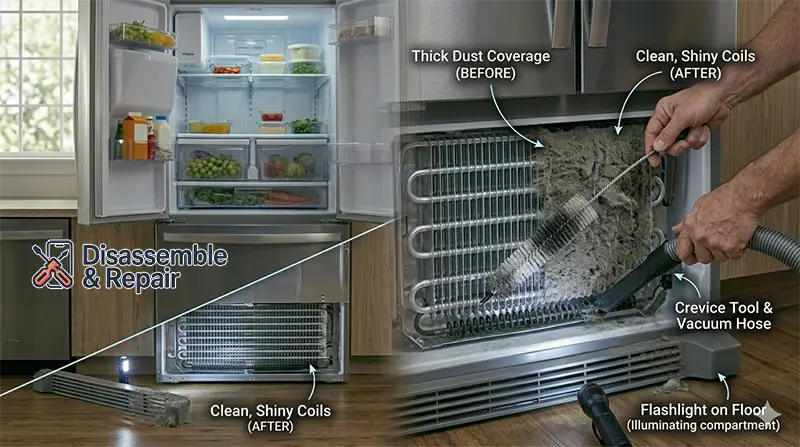
As a Senior SEO Specialist and appliance maintenance advocate, I have compiled this comprehensive guide to help you understand the mechanics of your refrigerator, the risks of neglect, and the precise steps required to clean your condenser coils effectively.
Understanding the Role of Condenser Coils
To appreciate why cleaning is necessary, one must understand the basic thermodynamics of refrigeration. Your refrigerator does not simply “make things cold”; it removes heat from the interior compartment and releases it into the surrounding room.
The compressor acts as the heart of this system, pumping refrigerant through the coils. The condenser coils are responsible for heat dissipation. When the refrigerant carries heat away from your food, it travels to these coils where the heat is released into the air.
Read more whirlpool refrigerator water dispenser cleaning
However, significant dust buildup acts as an insulator. When the coils are coated in a thick layer of dust, pet hair, and kitchen grease, the heat cannot escape efficiently. This forces the compressor to run for longer cycles and at higher temperatures to achieve the same cooling capacity.
Signs Your Whirlpool Refrigerator Needs Maintenance
Before diving into the cleaning process, it is helpful to recognize the symptoms of dirty coils. If you notice any of the following issues, it is likely time to perform refrigerator maintenance:
Read more whirlpool refrigerator shelves replacement
- The Refrigerator Runs Constantly: If you hear the hum of the motor running without pause, the system is struggling to reach the set temperature.
- Warm Base or Cabinet: If the exterior of the fridge feels uncomfortably hot to the touch, heat dissipation is failing.
- Rising Energy Bills: A sudden spike in electricity usage often points to an appliance losing energy efficiency.
- Food Spoilage: If the internal temperature fluctuates, milk and produce may spoil faster than usual.
Step-by-Step Whirlpool Refrigerator Condenser Coils Cleaning
Performing a Whirlpool refrigerator condenser coils cleaning is a straightforward process, but it requires precision and the right tools. Follow this detailed protocol to ensure safety and effectiveness.
Necessary Tools and Preparation
Before you begin, gather the following items to ensure a thorough job:
- A specific coil brush (long, flexible, and bristled).
- A vacuum cleaner with a crevice tool or vacuum cleaner attachment.
- A flashlight.
- A dust mask (recommended for those with allergies).
- A floor mat or towel to protect your flooring.
Safety Warning: Always unplug your refrigerator before cleaning to eliminate the risk of electrical shock and to prevent moving parts, such as the condenser fan motor, from activating while your hands are near them.
Read more whirlpool refrigerator water filter reset
Read more whirlpool refrigerator user manual pdf
Step 1: Locate the Condenser Coils
On most modern Whirlpool models, the condenser coils are located at the bottom of the unit. You will typically find them behind a base grille or kick plate located at the very bottom front of the refrigerator.
- Open both refrigerator doors to relieve tension on the grille.
- Gently pull the top of the base grille forward, or depress the tabs on the top to release it.
- Set the grille aside for separate cleaning.
- Note: On some older models, coils may be mounted on the back of the unit. If the back is flat, the coils are underneath.
Step 2: Initial Vacuuming
Once the grille is removed, use your flashlight to inspect the area. You will likely see a significant amount of grey dust and lint.
Read more whirlpool refrigerator shelves replacement
- Attach the narrow vacuum cleaner attachment to your vacuum hose.
- Run the vacuum along the floor in front of the fridge and partially underneath to remove loose debris.
- Vacuum the front face of the condenser coils to remove the surface layer of dust buildup.
Step 3: Agitating the Dust
The vacuum alone cannot reach the debris impacted deep within the coil structure. This is where the coil brush becomes essential.
Read more whirlpool vs lg refrigerator
- Insert the long coil brush into the gaps between the coils.
- Use a gentle back-and-forth motion to scrub the sides of the coils. Be careful not to bend the fins or disconnect any wiring.
- Push the brush as far back as it will go to reach the rear coils.
- Rotate the brush to grab clumps of dust and pull them outward.
Step 4: Secondary Vacuuming
As you dislodge dust with the brush, it will fall onto the floor or float in the air.
Read more whirlpool refrigerator energy consumption
- Switch back to the vacuum cleaner.
- Vacuum the area again to capture the dust you just loosened.
- Alternate between the brush and the vacuum until the coils appear clean and metallic rather than fuzzy and grey.
Step 5: Cleaning the Fan and Grille
While you are working in this area, check the condenser fan motor blade if it is visible and accessible. Dust on the fan blades can unbalance them and reduce airflow.
- Gently brush the fan blades if accessible.
- Take the base grille or kick plate you removed earlier to a sink.
- Wash it with warm, soapy water to remove kitchen grease and dust.
- Dry it thoroughly before reattaching.
Step 6: Reassembly and Restart
- Snap the base grille back into place. Listen for the “click” to ensure it is secure.
- Plug the refrigerator back into the power outlet.
- Push the refrigerator back into position if you moved it.
The Impact on Energy Efficiency and Longevity
Regularly performing a Whirlpool refrigerator condenser coils cleaning has immediate and long-term benefits.
Read more whirlpool vs samsung refrigerator
From an energy efficiency standpoint, clean coils allow the refrigerant to cool down faster. This means the compressor runs for shorter intervals. According to various energy studies, a refrigerator with dirty coils can use up to 25% more energy than one with clean coils. Over the course of a year, this translates to tangible savings on your electricity bill.
Furthermore, heat is the enemy of mechanical components. The compressor is the most expensive part of your refrigerator to replace. By facilitating proper heat dissipation, you are essentially lowering the operating temperature of the compressor, extending its lifespan by years.
Troubleshooting: When to Call a Professional
While cleaning coils is a DIY-friendly task, certain situations require the expertise of a professional appliance technician.
- Oily Residue: If you notice an oily residue on the coils during cleaning, this may indicate a refrigerant leak. Do not attempt to clean this with water; call a technician immediately.
- Loud Noises: If the cleaning does not resolve loud humming or clicking sounds, the compressor or the condenser fan motor may have already sustained damage.
- Ice Buildup: If you see ice forming on the condenser coils (which should be warm, not freezing), there is a malfunction in the sealed system.
- Inaccessibility: Some built-in or high-end Whirlpool models have coils that are difficult to access without disassembly. In these cases, it is safer to hire a professional to avoid voiding your warranty.
Recommended Maintenance Schedule
To maintain optimal cooling capacity, how often should you clean the coils?
- Standard Household: Every 6 to 12 months.
- Households with Pets: Every 3 to 6 months. Pet hair—particularly from shedding dogs and cats—is notorious for clogging condenser coils rapidly.
- Dusty Environments: If you live in a particularly dusty area or near construction, inspect the coils every 3 months.
Conclusion
Your refrigerator is likely the hardest-working appliance in your home, operating 24 hours a day, 365 days a year. Because it runs continuously, it requires consistent care to function correctly. The process of Whirlpool refrigerator condenser coils cleaning is a small investment of time—roughly 20 minutes—that yields high returns in the form of lower energy bills, food safety, and appliance longevity.
Read more whirlpool refrigerator temperature control settings
By utilizing the proper tools like a coil brush and vacuum cleaner attachment, and paying attention to the base grille and surrounding areas, you ensure that the compressor does not have to fight through a blanket of dust buildup. Make this task a regular part of your home maintenance calendar, and your Whirlpool refrigerator will continue to serve your household efficiently for years to come.
Frequently Asked Questions
How often should I clean my Whirlpool refrigerator condenser coils?
For most households, cleaning the coils every 6 to 12 months is sufficient. However, if you have pets that shed hair or if your home is located in a particularly dusty area, you should perform this maintenance every 3 to 6 months to ensure the unit remains energy efficient.
Where can I find the condenser coils on my Whirlpool refrigerator?
On most modern models, the coils are located at the bottom of the unit behind the base grille or kick plate. You can access them by gently pulling the grille forward or releasing the tabs. On some older models, the coils may be mounted on the back of the refrigerator.
Do I really need to unplug the refrigerator before cleaning the coils?
Yes, for safety reasons you must always unplug the refrigerator before beginning. This prevents the risk of electrical shock and ensures that the condenser fan motor does not turn on while you are working near the blades or internal wiring.
What happens if I never clean the condenser coils?
If coils are left uncleaned, dust and grease create an insulating layer that prevents heat from escaping. This forces the compressor to work harder and run longer cycles, which leads to significantly higher energy bills, poor cooling performance, and eventually a premature mechanical failure of the compressor.
What are the signs that my refrigerator coils need immediate cleaning?
If you notice your refrigerator is running constantly without pausing, the exterior cabinet feels warm to the touch, or your energy bills have spiked unexpectedly, it is likely that the coils are clogged with debris. Another major warning sign is food, such as milk or produce, spoiling faster than its expiration date.