

Whirlpool Refrigerator Door Not Closing Properly
Troubleshooting Guide: Whirlpool Refrigerator Door Not Closing Properly
Dealing with a Whirlpool refrigerator door not closing properly can be a source of significant frustration and potential energy waste. If you ignore a door that fails to seal shut, you risk spoiled food, increased electricity bills, and excessive strain on your appliance’s compressor. This guide provides a comprehensive, professional approach to diagnosing and fixing the issue, ensuring your refrigerator operates efficiently.
Why Is Your Whirlpool Refrigerator Door Not Closing Properly?
When a refrigerator door refuses to shut tight, the problem usually stems from one of four main areas: physical obstructions, leveling issues, gasket failure, or hardware malfunction. A Whirlpool refrigerator door not closing properly is rarely a sign of a catastrophic failure but rather an indication that a specific component requires adjustment or replacement. By systematically checking the refrigerator door gasket, alignment, and leveling legs, you can often resolve the issue without calling a professional technician.
Read more whirlpool refrigerator ice maker not working
1. Check for Internal Obstructions
Before grabbing your toolbox, perform a visual inspection of the interior. In many cases, the root cause is a misaligned bin or a protruding food item.
- Shelves and Bins: Ensure all shelves are pushed back completely. A door bin that isn’t fully seated can hit a shelf, preventing the door from latching.
- Crisper Drawers: If a crisper drawer is slightly askew or not on its track, it can protrude just enough to block the door.
- Overloading: Large items on the door shelves can hit items on the main shelves.
Inspecting the Refrigerator Door Gasket
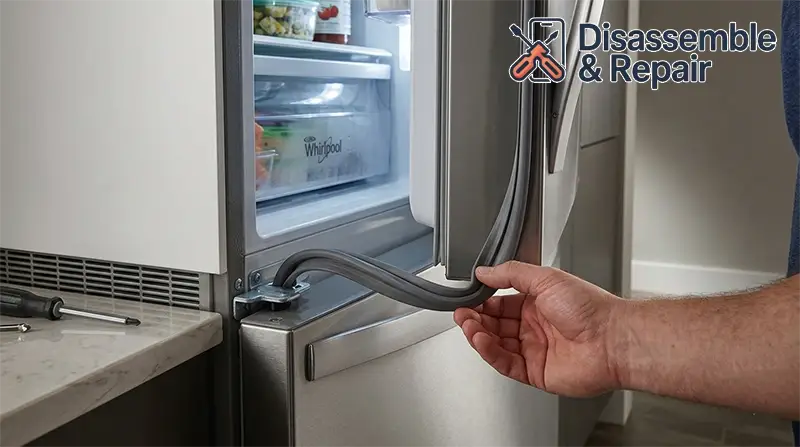
The refrigerator door gasket (also known as the magnetic door seal) is the rubber strip that runs around the perimeter of the door. Its job is to create an airtight seal against the main cabinet. Over time, this component can become dirty, torn, or demagnetized.
Cleaning the Gasket
Sticky spills can cause the gasket to pull away from the frame or bunch up when the door closes.
- Mix a solution of warm water and mild dish soap.
- Clean the entire length of the gasket and the metal surface of the cabinet where it touches.
- Inspect the folds of the gasket for crumbs or debris that might break the seal.
Checking for Damage
Inspect the gasket for cracks, tears, or warping. A twisted gasket is a common issue.
- Visual Check: Look for any gaps where light shines through when the door is closed.
- The Dollar Bill Test: Close the door on a dollar bill. Pull it out slowly. You should feel resistance. If the bill slides out easily, the magnetic door seal is weak or the door is misaligned, and the gasket may need replacement.
- Fixing Warps: If the gasket is simply bent (common in new fridges or after moving), you can often reshape it by heating the area with a hair dryer on a low setting and manually smoothing it out.
Leveling Your Whirlpool Refrigerator
If your refrigerator is not level, gravity cannot help the heavy doors swing shut. Proper refrigerator leveling is critical for the door swing and the proper operation of the cooling system.
Adjusting the Leveling Legs
Your Whirlpool unit sits on leveling legs (or rollers with adjustable braking feet) located at the front bottom corners behind the base grille.
Read more whirlpool refrigerator organize interior
- Remove the Grille: Open both doors and gently pull the bottom grille toward you to release it.
- Locate the Legs: You will see a leveling screw on each side.
- Adjust the Tilt: Use a 1/4” hex driver or a flat-blade screwdriver.
- Turn the screw to the right (clockwise) to lower the leveling leg, which raises the front of the refrigerator.
- Turn the screw to the left (counter-clockwise) to raise the leg, lowering the refrigerator.
- Ideal Tilt: The refrigerator should not be perfectly level from front to back. It should tilt back slightly—roughly a quarter to a half-inch higher at the front than the back. This slight angle allows gravity to gently pull the door closed when it is left ajar.
Correcting Door Alignment
Even if the fridge is level, the doors themselves might be misaligned, causing them to drag against each other or the cabinet. This is particularly common in a French door refrigerator or a side-by-side refrigerator.
Vertical Alignment
If one door is lower than the other, the central seal (on French door models) or the locking mechanism may not engage.
- Locate the Alignment Screw: Look at the bottom hinge of the refrigerator door. There is typically an alignment screw located inside the hinge pin.
- Adjust the Height: Using a 1/8” hex key (Allen wrench), turn the screw.
- Turn clockwise to raise the door.
- Turn counter-clockwise to lower the door.
- Check the Gap: Ensure the gap between the doors and the top of the unit is even.
Inspecting Hardware: Cam Risers and Hinges
If leveling and alignment don’t solve the problem, the issue likely lies with the hardware that controls the door’s movement.
The Closing Cam Kit
Most Whirlpool refrigerators use a closing cam kit (or cam riser) on the bottom hinge. This plastic device acts as a ramp. When you open the door, the door rides up the ramp. When you let go, gravity pulls the door down the ramp to the closed position.
- Symptoms of Failure: If the door stays in the position where you left it or makes a loud “clunk” or “crack” noise when opening/closing, the cam is likely broken or worn smooth.
- Inspection: Lift the door off the hinge (requires removing the top hinge cover and screws). Inspect the plastic cams on the hinge and the bottom of the door. If they are cracked or worn flat, they must be replaced.
Door Hinges
Bent door hinges are less common but can occur if a heavy weight (like a child) has hung on the door.
- Check if the door looks tilted relative to the main cabinet frame.
- If the hinge pin is bent, the door will never seal correctly.
- Replacing a hinge requires a socket set and a helper to hold the door, but it is a straightforward repair.
Addressing Condensation and Frost Buildup
A door that doesn’t close properly allows warm, humid air to enter the cold environment of the fridge or freezer. This leads to condensation on the door mullion (the strip between French doors) and frost buildup inside the freezer.
- Frost Buildup: If you see ice crystals forming near the door opening, it confirms an air leak. This ice can physically block the door from closing fully, creating a vicious cycle. You must defrost the unit or chip away the ice carefully before the door will seal again.
- Condensation: Moisture on the gasket or the front of the fridge indicates that the warm room air is meeting the cold internal air. This is a clear signal that the magnetic door seal is failing or the door alignment is off.
Step-by-Step Summary for Resolution
To summarize, follow this workflow to fix a Whirlpool refrigerator door that won’t close:
- Clear Obstructions: Rearrange food and ensure bins are flush.
- Clean and Check Gasket: Wipe down the seal and perform the dollar bill test.
- Level the Unit: Adjust the leveling legs so the front is slightly higher than the back.
- Align the Doors: Use the adjustment screws on the bottom hinge to square up the doors.
- Inspect Cams: Check the cam riser on the bottom hinge for wear and install a closing cam kit if necessary.
- Clear Ice: Remove any frost buildup that might be obstructing the seal.
By methodically addressing these areas—from the refrigerator leveling to the condition of the door hinges—you can restore your appliance to perfect working order, ensuring your food stays fresh and your energy bills stay low.
Read more whirlpool refrigerator installation guide
Frequently Asked Questions
Why does my refrigerator need to be tilted slightly backward?
Proper refrigerator leveling requires the front of the unit to be approximately 1/4 to 1/2 inch higher than the back. This slight backward tilt uses gravity to help the doors swing shut and stay sealed. If the unit is perfectly level or leaning forward, the doors may hang open or fail to latch properly.
How can I test if my door gasket is still working correctly?
You can perform the “dollar bill test.” Place a dollar bill against the refrigerator frame, close the door on it, and pull. If you feel resistance, the magnetic seal is working. If the bill slides out easily or falls, the gasket is either dirty, damaged, or demagnetized and may need to be cleaned or replaced.
What causes a loud cracking or clicking noise when I open the door?
This sound usually indicates a broken or worn-out closing cam kit (also known as a cam riser). These plastic components are located on the bottom hinge and are designed to help the door glide shut. When they crack or wear flat, they lose their ability to lift the door, often resulting in a “clunking” sound and a door that stays ajar.
Can ice buildup actually prevent the door from closing?
Yes. If a seal is already slightly compromised, warm air enters the freezer and creates frost. This frost can accumulate near the door frame or on the drawers, eventually forming a physical barrier that prevents the door from making contact with the magnetic frame. You must clear the frost buildup before the door can seal properly again.