
Finding the correct Comfee Washer Filter Location is the first step toward resolving drainage issues and keeping your laundry smelling fresh. Whether you own a compact portable unit or a standard front-loader, knowing where to find and clean this component is essential for routine maintenance.
As a Senior SEO Specialist and appliance maintenance expert, I have compiled this comprehensive guide to help you locate, remove, and clean the filters in various Comfee washing machine models. Regular attention to these filters prevents the dreaded OE error code and ensures your machine operates at peak efficiency.
Why the washer filter matters
Before locating the filter, it is important to understand its function. The debris filter (often called a drain pump filter in front-loaders or a lint trap in top-loaders) acts as a kidney for your washing machine. It catches coins, buttons, lint, hair, and other foreign objects that separate from your clothes during the wash cycle.
If this filter becomes clogged, your machine cannot drain water effectively. This leads to standing water in the drum, unpleasant odors, and the display of the OE error code, which signifies a water outlet error. Regular maintenance cleaning of this filter protects the drain pump from damage and extends the lifespan of your appliance.
Comfee washer filter location by model type
Comfee manufactures different types of washing machines, and the filter placement varies significantly between them. Identifying your specific model type is crucial.
1. Front-Loading washers
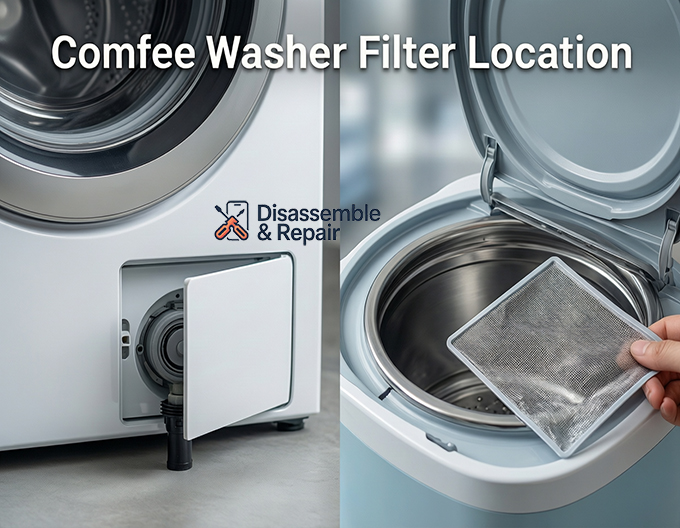
On a standard front-loading washer, the Comfee Washer Filter Location is almost always at the bottom of the machine.
- Look for the Service Panel: Direct your attention to the bottom right-hand corner of the machine’s front face. You will see a small square or rectangular door, known as the service panel or access door.
- Behind the Panel: Opening this panel reveals the pump cover (usually a round knob) and often a small emergency drain tube. The drain pump filter is housed directly behind this round knob.
2. Portable washing machines (Top-Loading)
If you own a portable washing machine (often the 0.9, 1.6, or 2.1 cu. ft. models), the setup is different. These machines typically do not have a user-accessible drain pump filter at the bottom.
- Inside the Drum: Open the lid and look inside the stainless steel or plastic tub.
- The Lint Trap: You will likely find a mesh lint trap attached to the side wall of the drum. It usually looks like a small rectangular plastic grid or a mesh bag clipped into the wall.
- Agitator Filter: In some older or specific top-load models, the filter might be located inside the center agitator (if present), though side-wall mesh filters are more common in modern Comfee portables.
Step-by-Step Guide: Cleaning the front-loader drain pump filter
If you have a front-loader, follow these steps to perform a deep clean of the drain pump filter.
- Safety First: Unplug the washing machine and turn off the water supply.
- Open the Service Panel: Use a flathead screwdriver or a coin to gently pry open the service panel at the bottom right corner.
- Drain Residual Water:
- Locate the small black emergency drain tube next to the filter housing.
- Place a shallow tray or bowl underneath it.
- Pull the tube out, remove the plug, and let the excess water drain into your container. This prevents a flood when you unscrew the main filter.
- Remove the Filter: Once drained, recap the tube and push it back. Now, grip the round pump cover and turn it counter-clockwise (left).
- Clean the Debris: Pull the filter assembly out. Remove any lint, coins, or sludge accumulated on the screen. Rinse it thoroughly under warm running water.
- Check the Housing: Use a flashlight to look inside the filter housing. Ensure no debris is stuck in the impeller area at the back.
- Reassemble: Insert the clean filter back into the housing. Screw the cover clockwise until it is tight and secure to prevent leaks. Close the service panel.
Step-by-Step Guide: Cleaning the portable washer lint trap
For portable washing machine owners, the process is simpler but requires more frequency.
- Locate the Filter: Find the lint trap on the inner wall of the washing tub.
- Remove the Trap: Press down on the top clip or tab of the filter frame and pull it outward. It should snap out easily.
- Clean the Mesh: Open the filter case (if applicable) and remove the collected lint. Turn the mesh inside out and rinse it under water to remove biofilm and detergent residue.
- Reinstall: Snap the filter back into its slot on the drum wall until you hear a click. Ensure it is flush with the wall to prevent it from snagging clothes during the spin cycle.
Troubleshooting the OE error code
The OE error code is the most common indicator that you have ignored the Comfee Washer Filter Location for too long. This code means the washer is unable to drain water.
If you see this code:
- Check the Filter: Immediately check the drain pump filter (front load) or lint trap (portable) for severe blockages.
- Inspect the Drain Hose: Ensure the drain hose at the back of the machine is not kinked, crushed, or frozen. A kinked hose mimics a clogged filter.
- Verify Drain Height: For portable washers, ensure the drain hose is not elevated too high (unless it has a built-in pump) or lying too flat if it relies on gravity.
- Listen to the Pump: If the filter is clean and the hose is straight, but the machine still won’t drain, the drain pump itself may be faulty.
Recommended maintenance schedule
To avoid emergencies and error codes, integrate filter cleaning into your routine:
- Portable Washers: Clean the internal lint trap after every 2-3 wash cycles. Because these machines are smaller, the filter fills up faster.
- Front-Loading Washers: Clean the drain pump filter once a month. If you wash heavily soiled items or pet bedding, increase this to every two weeks.
- General Maintenance: Once a month, run a “Tub Clean” cycle (if available) or a hot water cycle with vinegar to dissolve soap scum that might bypass the debris filter.
Conclusion
Knowing the exact Comfee Washer Filter Location saves you time, money, and the frustration of dealing with a machine that won’t drain. Whether you are snapping out a lint trap from a portable unit or unscrewing the pump cover on a front-loader, regular cleaning is the key to appliance longevity. By keeping these filters clear of debris, you ensure your Comfee washer runs smoothly, efficiently, and error-free for years to come.