
Comprehensive Guide to Troubleshooting a Comfee Washer Leaking Water
Dealing with a Comfee Washer Leaking Water can be a frustrating experience for any homeowner, often occurring at the most inconvenient times. Identifying the root cause of a Comfee Washer Leaking Water quickly is essential to prevent structural damage to your flooring and the potential growth of hazardous mold.
While Comfee appliances are known for their efficiency and compact designs, like any mechanical system, they are susceptible to wear and tear. Whether you own a front-load washer or a top-loading washing machine, understanding the common failure points will help you diagnose the issue and determine if a DIY fix is possible or if professional intervention is required.
Identifying the Source of Your Comfee Washer Leaking Water
Before diving into repairs, you must pinpoint exactly where the water is originating. A leak during the fill cycle suggests a different problem than a leak during the spin or drain cycle.
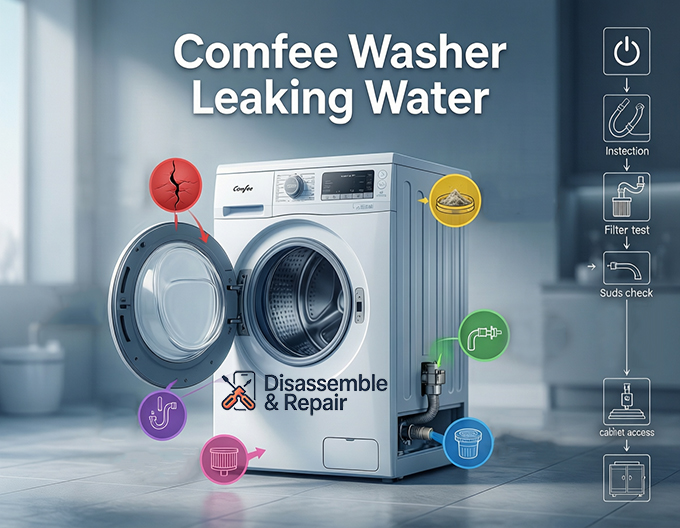
Common Leak Locations and Their Meaning
- Front of the Machine: Usually indicates a problem with the door gasket, the detergent dispenser, or a clogged drain pump filter.
- Back of the Machine: Often points toward the water inlet valve or the drain hose connections.
- Underneath the Machine: This can signify a cracked washer tub, a failing drain pump, or loose internal hose clamps.
By observing when and where the puddle forms, you can narrow down which of the following components is the culprit.
Inspecting External Hose Connections
The most common cause of a leak is often the simplest to fix: the external hoses. These are the primary conduits for water entering and exiting the machine.
The Water Inlet Valve
The water inlet valve is where the hot and cold water hoses connect to the back of the appliance. Over time, the threaded ports can crack, or the internal solenoids can fail, preventing the valve from closing completely. If you notice water dripping from the back even when the machine is off, the water inlet valve is likely the issue. Ensure the hose fittings are tight and that the rubber washers inside the hose ends haven’t perished.
The Drain Hose
The drain hose is responsible for carrying wastewater away. If this hose is not inserted correctly into the standpipe, or if it has developed a small pinhole leak due to vibration against the wall, you will see significant water pooling during the drain cycle. Additionally, ensure the drain hose is not “siphoning”—a condition where the hose is pushed too far into the standpipe, causing the washer tub to fill and drain simultaneously, often leading to an overflow.
Maintenance of the Door Gasket and Detergent Dispenser
If you are using a front-load washer, the door seal is a critical component for water retention.
Inspecting the Door Gasket
The door gasket (or bellows) is the large rubber seal that prevents water from escaping the drum. Small items like coins, hairpins, or even accumulated lint can puncture the rubber or prevent the door from sealing flush. Over time, detergent residue can also cause the rubber to become brittle. Check the folds of the gasket for any visible tears or debris that might be breaking the vacuum seal.
Cleaning the Detergent Dispenser
It is surprisingly common for a leak to originate from the detergent dispenser drawer. If you use too much soap or if the water pressure is exceptionally high, the dispenser can overflow. Furthermore, if the “syphon” part of the dispenser is clogged with dried fabric softener, water may back up and run down the front of the machine. Regularly removing and rinsing the dispenser drawer is a vital part of Comfee washer maintenance.
Internal Components and Mechanical Failures
If the exterior of the machine appears dry but water is pooling underneath, the problem is likely internal.
The Drain Pump Filter
Most Comfee washers feature a drain pump filter located at the bottom front of the unit (behind a small access door). This filter catches debris like buttons and lint before they reach the pump. If the filter is not screwed in tightly or if the O-ring is damaged, it will cause a steady leak. However, a completely clogged filter can also cause pressure to build up, forcing water out of the internal hose clamps.
Checking Internal Hose Clamps
Inside the machine, several hoses connect the tub to the pump and the dispenser to the tub. These are held in place by internal hose clamps. Constant vibration during the high-speed spin cycle can cause these clamps to loosen or the hoses to rub against the metal frame, leading to abrasions. Accessing these usually requires removing the top or back panel of the washer.
The Pressure Switch and Water Level
The pressure switch (also known as a water level sensor) tells the machine when to stop filling. If the air tube connected to the pressure switch is clogged or leaking, the switch won’t receive the correct signal. This results in the washer tub overfilling, leading to a massive leak through the top or the overflow vents.
User Habits and Environmental Factors
Sometimes, the machine isn’t “broken” in the traditional sense; rather, it is reacting to how it is being used.
Managing Excess Suds
Using non-HE (High Efficiency) detergent in a modern Comfee washer is a recipe for disaster. Non-HE soap creates excess suds that the machine cannot easily rinse away. These suds can build up and leak out of the rear air vent or the detergent drawer. If you see foam along with the water, you are likely using too much detergent or the wrong type.
Leveling Legs and Vibration
If your washer is not level, it will vibrate excessively. This movement doesn’t just make noise; it puts mechanical stress on every connection. Ensure the leveling legs are adjusted so that the machine does not “walk” or rock during operation. Use a spirit level on the top of the machine to verify it is perfectly flat from front to back and side to side.
Addressing Issues Specific to Top-Loading Washing Machine Models
In a top-loading washing machine, leaks often occur during the agitation phase. If the washer tub is off-balance, water can splash over the rim of the inner tub and leak down into the base of the cabinet. This is frequently caused by washing heavy items like rugs or comforters that clump to one side. Always ensure your load is distributed evenly around the agitator or the wash plate.
Furthermore, top-loaders have a tub seal located at the bottom of the outer tub where the drive shaft enters. If this seal fails, water will drip directly onto the motor and drive belt, which can be a costly repair. If you see rusty water marks or hear a loud “roaring” sound during the spin cycle, the tub seal and bearings likely need replacement.
Step-by-Step Troubleshooting Checklist
If you are currently facing a Comfee Washer Leaking Water, follow this sequence to isolate the fault:
- Power Down: Always unplug the machine before inspecting internal parts.
- Check Hoses: Verify the water inlet valve connections are hand-tight and the drain hose is secure.
- Clean the Filter: Open the drain pump filter access panel, drain the residual water into a shallow tray, and clean the filter of all debris.
- Inspect the Seal: Wipe down the door gasket and look for nicks or debris.
- Test for Suds: Run a cycle with no clothes and no detergent. If the leaking stops, you have been using too much soap.
- Level the Unit: Adjust the leveling legs to minimize vibration.
- Open the Cabinet: If the leak persists, remove the panels to inspect internal hose clamps and the washer tub for cracks.
When to Call a Professional
While many issues like a clogged filter or a loose hose are simple DIY tasks, some problems require specialized tools. If the leak is coming from the washer tub itself (a crack in the plastic) or if the pressure switch has failed electronically, it may be time to contact an appliance repair technician. Attempting to replace internal bearings or the main tub seal without the proper equipment can lead to further damage to the drive system.
Preventive Maintenance Tips
To prevent a Comfee Washer Leaking Water in the future, adopt these best practices:
- Use HE Detergent: Only use detergent marked with the “HE” symbol and follow the manufacturer’s recommended amount.
- Monthly Cleaning: Run a “Tub Clean” cycle with a specialized cleaner or a cup of white vinegar to remove scale and residue.
- Check Hoses Annually: Replace rubber inlet hoses every 5 years with stainless steel braided hoses, which are much less likely to burst.
- Don’t Overload: Overloading puts immense strain on the tub seal and leveling legs, increasing the risk of leaks.
By staying proactive with maintenance and addressing minor drips immediately, you can extend the lifespan of your Comfee appliance and keep your laundry room dry and safe. Understanding the mechanics of your washer allows you to tackle a Comfee Washer Leaking Water with confidence and precision.
Frequently Asked Questions
Why is water leaking from the front of my Comfee washer?
If the leak is appearing at the front, it is typically caused by a compromised door gasket, a clogged detergent dispenser, or a loose drain pump filter. Inspect the rubber door seal for any trapped debris or tears, and ensure the detergent drawer is not blocked by dried soap or fabric softener.
What should I do if I see soap suds leaking out with the water?
Seeing foam indicates that you are likely using too much detergent or the wrong type. Comfee washers are designed for High Efficiency (HE) detergent. Using non-HE soap creates excessive suds that can overflow through the detergent drawer or the rear air vents. To fix this, run a cycle without clothes or soap to clear the residue.
How can I prevent my external hoses from bursting or leaking?
You should perform an annual inspection of both the water inlet and drain hoses to check for cracks, pinholes, or loose fittings. To minimize the risk of a major leak, it is recommended to replace standard rubber inlet hoses with stainless steel braided hoses every five years.
Why is my top-loading washer leaking during the agitation phase?
In top-loading models, leaks during agitation often occur if the machine is not level or if the load is unbalanced. This causes water to splash over the rim of the tub. Ensure the leveling legs are adjusted properly and distribute heavy items like rugs or comforters evenly around the drum.
When is it necessary to call a professional for a washer leak?
While simple issues like a clogged filter or loose external hose can be fixed at home, you should call a technician if the leak is coming from a cracked internal tub, a failed pressure switch, or the tub seal. If you notice rusty water or hear a loud roaring noise during the spin cycle, the internal bearings likely need professional replacement.