
Troubleshooting and Repairing a Comfee Washer Making Loud Noise
Is your Comfee washer making loud noise during the wash or spin cycle, disrupting the peace in your home? This common issue can range from a rhythmic thumping to a high-pitched squeal, often indicating a specific mechanical failure or a simple setup error. While Comfee washing machines are known for their compact efficiency, like all appliances, they rely on a complex system of moving parts that can wear down over time. Identifying the source of the sound is the first step toward restoring your machine to its quiet operation.
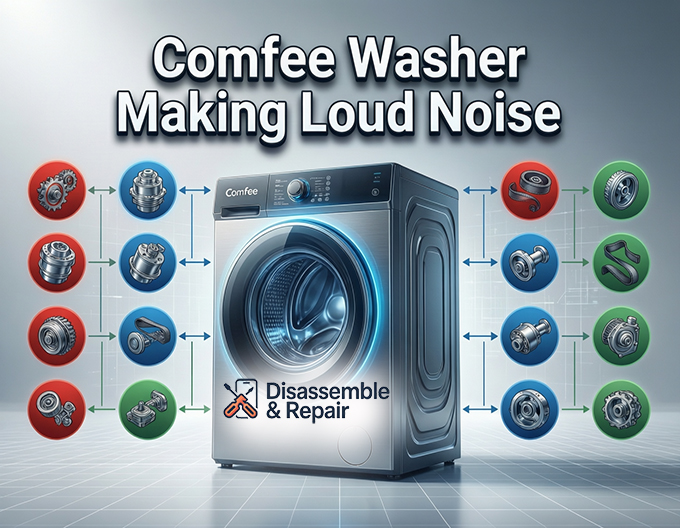
This guide details the twelve most common components and issues responsible for these disturbances. By systematically checking these areas, you can diagnose whether a simple adjustment is needed or if a part replacement is required.
Why Is Your Comfee Washer Making Loud Noise?
The most frequent complaints regarding a Comfee washer making loud noise stem from stability issues or wear and tear on the suspension system. However, the specific type of sound—banging, grinding, or squeaking—can point you directly to the culprit.
1. Unbalanced Load
Before disassembling your machine, always check for an unbalanced load. This is the single most common cause of violent shaking and loud banging, especially in the compact and portable models Comfee manufactures.
- The Issue: When heavy items like wet towels or jeans clump on one side of the drum, the centrifugal force generated during the spin cycle creates an uneven rotation.
- The Fix: Pause the cycle and manually redistribute the clothing evenly around the drum. For bulky items, it is often better to wash them in smaller batches to maintain balance.
2. Leveling Legs
If the load is balanced but the banging persists, inspect the leveling legs.
- The Issue: If the washer is not perfectly flat on the floor, it will rock back and forth, causing the feet to hammer against the ground. This vibration can amplify internal mechanical noises.
- The Fix: Place a bubble level on top of the machine. Adjust the threaded leveling legs at the bottom corners of the washer until the bubble is centered. Ensure the locking nuts are tightened against the frame to prevent them from shifting during operation.
3. Suspension Rods
For top-loading Comfee washers, the tub is supported by suspension rods.
- The Issue: These rods act as springs to dampen the movement of the tub. Over time, they can lose their tension or detach. If your washer hits the sides of the cabinet violently even with a balanced load, the suspension rods have likely failed.
- The Fix: Press down on the tub. It should rebound smoothly and settle. If it bounces excessively like a pogo stick, the rods need replacement.
4. Shock Absorbers
If you own a front-loading Comfee model, it uses shock absorbers instead of suspension rods to manage tub movement.
- The Issue: These components are attached between the outer tub and the base frame. When they wear out, the tub will bang against the cabinet during high-speed spins, creating a loud knocking sound.
- The Fix: Inspect the shock absorbers for fluid leaks or physical damage. If the shock absorbers move too freely without resistance, they must be replaced to prevent damage to the tub and other internal components.
Mechanical Grinding and Squealing Noises
If the noise is metallic, grinding, or high-pitched, the problem likely lies within the drive system or water extraction components.
5. Tub Bearings
A roaring or jet-engine sound that gets louder as the spin speed increases is the hallmark of failed tub bearings.
- The Issue: The tub bearings allow the inner tub to spin smoothly within the outer tub. If the water seal fails, water can rust the bearings, causing them to grind.
- The Fix: This is a complex repair that involves disassembling the entire machine. To confirm, open the door and spin the drum by hand. If it feels rough or makes a growling noise, the bearings are shot. In many cases, replacing the entire outer tub assembly is required.
6. Drive Belt
A high-pitched squeal during agitation or spinning often points to the drive belt.
- The Issue: The belt connects the drive motor to the transmission or drum. Over time, it can dry out, crack, or become loose. A loose belt will slip on the pulleys, creating a burning smell and a loud screeching noise.
- The Fix: Remove the back or bottom panel to inspect the belt. If it appears frayed, cracked, or has too much slack, replace it with an OEM Comfee part to ensure proper tension.
7. Drive Pulley
Closely related to the belt is the drive pulley.
- The Issue: The pulley is attached to the drum shaft or motor shaft. If the mounting nut works itself loose, the pulley can wobble and rattle. In some cases, a worn pulley can accumulate grease and dirt, causing the belt to slip and squeal.
- The Fix: Inspect the pulley for signs of wear or distortion. Tighten the mounting nut if it is loose. If the surface where the belt rides is damaged, the pulley must be replaced.
8. Drain Pump
A grinding or gravel-like noise that occurs only when water is leaving the machine indicates a problem with the drain pump.
- The Issue: Small objects like coins, buttons, or lint can bypass the filter and get stuck in the pump’s impeller. Alternatively, the pump motor bearings themselves may be worn out.
- The Fix: Access the drain pump (usually behind a lower front panel or at the back) and check for obstructions. If the impeller is clear but the pump remains noisy during the drain cycle, the pump motor is likely defective and requires replacement.
Issues Specific to Drive Systems
Depending on whether your Comfee washer is a direct drive or belt-driven model, different components transfer power from the motor to the wash drum.
9. Drive Motor
The drive motor is the heart of the washing machine.
- The Issue: While less common than belt issues, the internal bearings of the motor can fail, causing a loud humming or buzzing noise. If the motor runs but the machine makes a loud buzzing sound without spinning, the motor might be seized or have a bad start capacitor.
- The Fix: Remove the belt (if applicable) and run the motor in isolation. If the noise persists, the motor itself is the source and needs to be replaced.
10. Drive Coupling
On some direct-drive models, a drive coupling connects the motor directly to the transmission.
- The Issue: This component is often made of plastic and rubber and is designed to break if the washer is overloaded, protecting the motor. When the coupling fails, the motor will run, but the agitator or drum may not move, often accompanied by a vibrating or rattling noise.
- The Fix: Inspect the coupling for broken plastic forks or a worn rubber isolator. This is a relatively inexpensive part to replace and can save the machine from more serious damage.
11. Agitator Cogs
If you have a top-loading Comfee washer with a dual-action agitator, check the agitator cogs (also known as “dogs”).
- The Issue: These small plastic cams allow the top part of the agitator to ratchet in one direction to push clothes down to the bottom of the wash basket. If they wear out, the top of the agitator will not move efficiently, and you may hear a clicking or grinding sound during the wash cycle.
- The Fix: Remove the agitator cap and inspect the cogs. If the teeth are worn smooth or broken, the cog kit can be replaced easily without removing the entire agitator.
12. Spin Cycle Considerations
The spin cycle is the most physically demanding phase for your washer, and it is when most noises become apparent.
- The Diagnosis: Listen closely to when the noise starts.
- Start of spin: Clanking or clicking often indicates a loose drive pulley or a worn clutch assembly.
- High speed: Constant roaring suggests tub bearings, while rhythmic banging usually points to suspension rods or shock absorbers.
- Intermittent noise: If the noise comes and goes, check for loose debris trapped between the inner and outer tubs.
Conclusion
Diagnosing a Comfee washer making loud noise requires patience and a systematic approach. Start with the simplest solutions: ensure the machine is level and the load is balanced. If the noise persists, proceed to inspect the suspension components like rods and shock absorbers before diving into the mechanical drive systems. Whether it is a worn drive belt, a clogged drain pump, or failing tub bearings, identifying the correct part will save you time and money. Always remember to unplug your appliance before attempting any repairs to ensure your safety.
Frequently Asked Questions
What should I check first if my Comfee washer starts making a loud banging noise?
The most common cause of loud banging is an unbalanced load. When heavy items like towels or jeans clump on one side of the drum, they create uneven centrifugal force. Pause the cycle and manually redistribute the clothing. If the banging persists with a balanced load, you should check if the leveling legs are properly adjusted and locked against the floor.
Why does my washing machine sound like a jet engine during the spin cycle?
A loud roaring or “jet-engine” sound that intensifies as the spin speed increases is a classic sign of failed tub bearings. This usually happens when a water seal fails, causing the bearings to rust and grind. You can test this by spinning the drum by hand while the machine is off; if it feels rough or makes a growling noise, the bearings likely need to be replaced.
What causes a high-pitched squeal during operation?
A high-pitched squealing noise typically points to a problem with the drive belt. Over time, the belt can become loose, dry, or cracked, causing it to slip on the pulleys. If you notice a squeal combined with a burning smell, inspect the belt for wear and ensure it has the proper tension.
Why is my washer making a grinding noise only when the water is draining?
If the grinding or gravel-like noise only occurs during the drain portion of the cycle, the issue is likely located in the drain pump. Small objects such as coins, buttons, or debris can get trapped in the pump’s impeller. If the impeller is clear of obstructions but the noise continues, the drain pump motor may be worn out and require replacement.
How can I tell if the suspension system is failing in my top-loading Comfee washer?
You can test the suspension rods by pressing down firmly on the wash tub and letting go. A healthy suspension system should allow the tub to rebound and settle quickly. If the tub bounces up and down multiple times like a pogo stick, the rods have likely lost their tension and can no longer dampen the vibration, leading to loud banging during the spin cycle.