
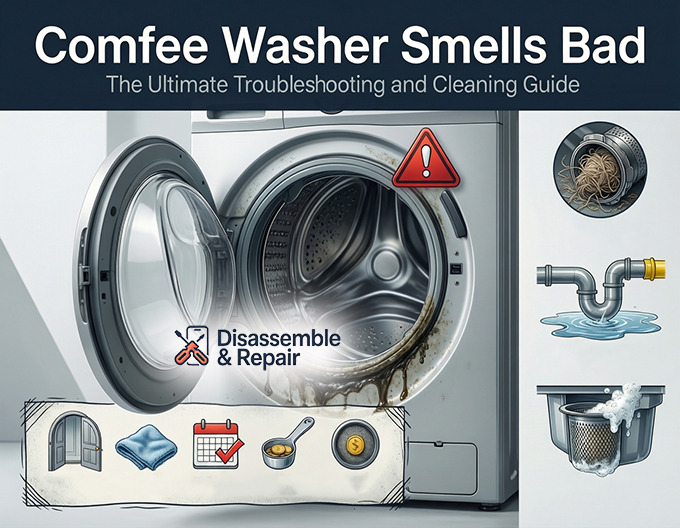
Comfee Washer Smells Bad: The Ultimate Troubleshooting and Cleaning Guide
If your Comfee Washer Smells Bad, it can turn the refreshing scent of clean laundry into a musty, unpleasant experience. Whether you own a compact portable washing machine or a standard front-loading unit, foul odors are a common issue caused by moisture, residue, and bacterial growth. Ignoring these smells often leads to mold spores transferring to your clothes, potentially causing skin irritation and allergic reactions.
This comprehensive guide will walk you through professional methods to eliminate odors, targeting the root causes like biofilm, mildew, and stagnant water. By following these steps, you can restore your appliance to peak performance and ensure your laundry comes out smelling fresh every time.
Why Your Comfee Washer Smells Bad
Before diving into the cleaning solutions, it is crucial to understand why the odor exists. Unlike traditional top-loaders that use massive amounts of water, modern high-efficiency and portable Comfee models use less water. While this is great for the environment, it often leads to:
- Detergent Buildup: Excess soap does not rinse away completely, leaving a slimy residue known as soap scum. This scum traps dirt and skin cells, creating a food source for bacteria.
- Biofilm and Mildew: In the dark, damp environment of a washer, biofilm forms on the inner drum and hoses. This slime layer protects bacteria and mold growth, which releases the characteristic “rotten egg” or musty smell.
- Stagnant Water: In portable units, water may not drain completely from the bottom of the tub or the drain hose, leading to bacterial breeding in sitting water.
- Rubber Gasket Issues: The watertight seal on front-loaders is a prime location for black mold to hide, especially if water pools in the bottom fold.
Immediate Fix: The White Vinegar and Baking Soda Deep Clean
If you need a powerful, natural solution to neutralize odors immediately, this two-step method attacks both alkaline and acidic buildups.
Step 1: The Acid Wash
White vinegar is a natural disinfectant and deodorizer that breaks down mineral deposits and soap scum.
- Empty the washer completely.
- Pour two cups of white vinegar directly into the drum (or the detergent dispenser if your model allows).
- Select the hottest cycle available. On many Comfee units, this might be the “Heavy” or “Bulky” setting if a specific sanitary cycle isn’t available.
- Let the cycle run. The acidity will cut through the biofilm and kill mildew spores.
Step 2: The Alkaline Scrub
Once the vinegar cycle is complete, baking soda will help scrub away loosened grime and neutralize any lingering acidic odors.
- Sprinkle half a cup of baking soda directly into the drum.
- Run another hot cycle (or a short “Quick Wash” with hot water).
- Once finished, wipe the inside of the drum with a microfiber cloth to remove any white residue.
Using the Comfee Drum Clean Cycle
Many modern Comfee washers come equipped with a specific Drum Clean cycle. This program is designed to heat water to high temperatures (often around 90°C or 194°F) and use high-speed spinning to flush out the system.
- Check your manual: Look for the “Tub Clean” or “Drum Clean” button on your control panel.
- No detergent needed: This cycle is often most effective without clothes or detergent. However, adding a specialized washing machine cleaner tablet can enhance the results.
- Frequency: It is recommended to run this cycle once a month to prevent the “Comfee Washer Smells Bad” issue from returning.
Critical Maintenance: The Drain Pump Filter
One of the most overlooked causes of odor is a clogged drain pump filter. This component catches lint, coins, hair, and other debris. When it gets clogged, water drains slowly, leaving dirty, stagnant water behind.
How to Clean the Drain Pump Filter
- Locate the Filter: On front-loading Comfee models, this is usually a small door at the bottom right corner of the machine.
- Prepare for Water: Place a shallow tray or an old towel beneath the door. When you open the filter, residual water will spill out.
- Open and Drain: Open the access door. If there is a small emergency drain hose, pull it out and uncork it to let the water drain into your tray.
- Unscrew the Filter: Turn the round filter cap counter-clockwise to unscrew it.
- Remove Debris: Pull the filter out. You will likely find a buildup of wet lint, slime, and hair. This rotting material is often the source of the smell.
- Wash and Replace: Rinse the filter under hot running water. Use an old toothbrush to scrub away any slime. Screw it back in tightly and close the access door.
Note: If you have a top-loading portable washing machine, your unit may rely on a gravity drain or an internal lint filter mesh inside the tub. Remove and clean this mesh after every few washes.
Targeting the Rubber Gasket and Door Seal
For front-loading owners, the rubber gasket is the “danger zone” for mold. Water often pools in the bottom fold of the seal after a wash cycle, creating a perfect habitat for black mold.
- Inspect the Seal: Gently pull back the folds of the rubber gasket. Look for dark spots or a slimy coating.
- The Cleaning Paste: Mix a solution of 50% water and 50% white vinegar. For stubborn black mold, you may need a weak bleach solution (do not mix bleach with vinegar).
- Scrub: Dip a cloth or a soft-bristled brush into your solution and scrub the inside of the seal vigorously. Pay close attention to the drainage holes at the bottom of the gasket to ensure they are not blocked.
- Wipe Dry: After scrubbing, use a dry cloth to wipe the rubber completely dry.
Special Care for Comfee Portable Washing Machines
Portable washers are convenient, but they are prone to unique odor issues due to their manual nature and storage habits.
Managing Stagnant Water
Portable units are often moved to a closet or corner after use. If the drain hose is not fully emptied, water sits in the “U” bend of the hose, becoming fetid over time.
- Gravity Drain Tip: When you finish washing, lay the drain hose flat on the floor (towards a floor drain) or into a bucket at a low level to ensure every drop of water exits the machine.
- Leave the Lid Open: Never close the lid of a portable washer immediately after use. Air circulation is vital to dry out the moisture that leads to biofilm.
Detergent Usage in Portables
Portable washers require significantly less detergent than standard machines.
- Use HE Detergent: Ensure you are using High-Efficiency (HE) detergent, which produces fewer suds.
- Measure Correctly: For a small portable load, you often only need a tablespoon of detergent. Excess suds that cannot be rinsed away will coat the internal mechanisms and rot, causing the bad smell.
Prevention: How to Keep Your Washer Fresh
Once you have successfully banished the odor, follow these rules to ensure the Comfee Washer Smells Bad problem does not recur.
1. The “Open Door” Policy
After every load, leave the door or lid ajar. This allows moisture to evaporate, denying mold the damp environment it needs to grow.
2. Wipe Down After Use
Keep a small towel nearby to quickly wipe down the rubber gasket and the inside of the door glass after your final load of the day.
3. Monthly Maintenance Washes
Set a reminder to run the Drum Clean cycle or a hot vinegar cycle once every 30 days. This proactive step prevents biofilm from establishing a foothold.
4. Monitor Detergent Quantities
Modern detergents are highly concentrated. Using too much does not make clothes cleaner; it only creates soap scum. Follow the manufacturer’s guidelines strictly, especially for soft water areas where less soap is needed.
5. Check Pockets
Coins and debris can block the drain pump, leading to slow drainage and smells. always check pockets before loading the machine.
By methodically cleaning the drum, filter, and gasket, and adhering to strict moisture control habits, you can extend the life of your Comfee appliance and ensure your laundry always smells its best.
Frequently Asked Questions
How often should I clean my Comfee washing machine to prevent odors?
You should perform a deep clean once a month. This includes running the dedicated “Drum Clean” cycle or a hot water cycle with white vinegar. Regular maintenance prevents the buildup of biofilm and soap scum that causes unpleasant smells.
Why does my laundry still smell musty even after a wash cycle?
If your washer has a buildup of mold or bacteria, these spores can transfer to your clothes during the wash. The smell is usually caused by residue in the rubber gasket, a clogged drain pump filter, or stagnant water trapped in the hoses. Following a deep cleaning protocol will resolve this.
Can I use regular detergent in my Comfee portable washer?
It is highly recommended to use High-Efficiency (HE) detergent. Portable washers use much less water than standard machines; regular detergent can create excessive suds that don’t rinse away, leading to slimy residue and bacterial growth inside the drum.
Is it safe to use bleach to clean the rubber gasket?
Yes, a weak bleach solution is effective for removing stubborn black mold from the rubber seal. However, you must never mix bleach with vinegar, as this creates toxic chlorine gas. If you have recently run a vinegar cleaning cycle, ensure the machine is thoroughly rinsed before using any bleach-based products.
Where is the drain pump filter located on a Comfee washer?
On most front-loading Comfee models, the filter is located behind a small access door at the bottom right-hand corner of the front panel. For portable top-loading models, you should check the internal lint mesh inside the tub and ensure the external drain hose is fully emptied after each use.