
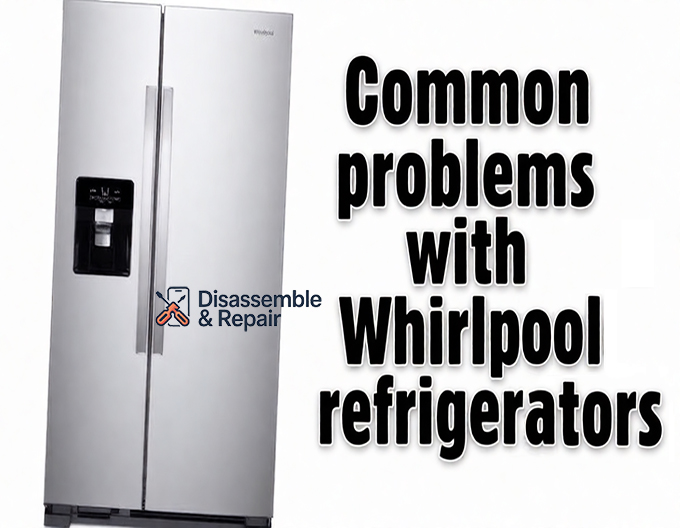
Whirlpool is a household name synonymous with reliability, yet even the most durable appliances experience wear and tear over time. Common problems with Whirlpool refrigerators can range from minor temperature fluctuations to complex mechanical failures that require professional attention. Understanding these issues is the first step toward maintaining the longevity of your appliance and preventing food spoilage.
This guide details the technical failures associated with Whirlpool models, offering professional insight into the symptoms and potential solutions for each component.
Common problems with Whirlpool refrigerators
While Whirlpool units are engineered for performance, specific systems are prone to failure due to age, usage patterns, or component fatigue. Diagnosing common problems with Whirlpool refrigerators often begins with identifying which subsystem—cooling, defrost, or electrical—is malfunctioning. This section breaks down the critical components that most frequently require service.
Compressor and Sealed System Leaks
The compressor is the heart of your refrigerator’s cooling cycle, responsible for circulating refrigerant throughout the unit. A failing compressor often presents itself with audible warning signs. You may hear a distinct clicking sound, known as “hard starting,” which indicates the start relay is struggling to engage the motor. If the compressor runs continuously but the fridge remains warm, or if it hums loudly without starting, it is likely reaching the end of its lifespan.
More insidious are sealed system leaks. These occur when the refrigerant (freon) escapes through minute cracks in the copper or aluminum tubing. A hallmark symptom of a leak is an “ice ball” forming in one corner of the evaporator coils, while the rest of the coil remains bare. This uneven frost pattern confirms that the system lacks sufficient pressure to cool the entire unit. Sealed system repairs are complex and typically require a licensed technician to braze the leak and recharge the refrigerant.
Malfunctions in the Defrost System
A refrigerator that feels warm or a freezer that is overly frosty often suffers from a breakdown in the defrost cycle. The evaporator coils, located behind the rear panel of the freezer, absorb heat from inside the unit. Over time, humidity turns into frost on these coils.
The defrost heater is designed to melt this accumulated frost periodically. If the heater fails, ice will build up until it completely blocks the airflow, causing the refrigerator compartment to warm up while the freezer remains cold. This issue is frequently misdiagnosed as a bad compressor. Closely related to this is the thermistor, a sensor that monitors the temperature of the coils. If the thermistor provides resistance readings that are out of spec, the control board will not know when to initiate the defrost cycle, leading to the same ice buildup.
Temperature Control Unit and Airflow
Precise cooling relies on the temperature control unit (thermostat) and proper airflow. If your food is freezing in the fresh food section or spoiling due to heat, the control thermostat may be sending erratic signals to the compressor.
Airflow is equally critical. The condenser fan motor, located near the compressor at the bottom rear of the fridge, pulls air through the condenser coils to dissipate heat. If this motor fails or the blades become obstructed by dust, the compressor will overheat and shut down on thermal overload. Regular cleaning of the condenser area is essential to prevent premature motor failure.
Ice Maker and Water Dispenser Complications
For many users, the convenience of a French door model lies in its external water and ice dispenser. However, this is also one of the most service-heavy features.
Water Inlet Valve Failures
The water inlet valve is an electrically operated solenoid that opens to allow water into the ice maker and dispenser. When this part fails, you may encounter several symptoms:
- No water or ice: The valve solenoid may be burnt out, preventing it from opening.
- Leaking: If the valve gets stuck in the “open” position due to sediment buildup, it can cause the ice maker to overfill and leak water into the freezer.
- Small or hollow ice cubes: This indicates the valve is not opening fully, restricting water flow.
Ice Maker Module Issues
The ice maker assembly itself is a complex mechanical device with a motor, ejector arms, and a heating element (mold heater). If the ice maker module fails, it may stop harvesting ice entirely. A common issue in French door models involves the ice room temperature; if the seal on the ice box is poor, warm air enters, melting the ice slightly. This semi-melted ice then refreezes into a solid block, jamming the auger and potentially damaging the drive motor.
Electrical Failures and Error Codes
Modern Whirlpool refrigerators are managed by a central control board, which acts as the “brain” of the appliance. It coordinates the compressor, fans, and defrost cycle. When the control board malfunctions, the symptoms can be erratic—lights flashing, fans pulsing on and off, or the unit becoming completely unresponsive.
Deciphering Error Codes
To aid in troubleshooting, Whirlpool refrigerators are equipped with self-diagnostic systems that display error codes on the user interface. Understanding these codes can save significant diagnostic time:
- E0 or 01: Often relates to an issue with the ice maker or the bi-metal thermostat in the ice bin.
- E1 or E2: Typically points to a thermistor fault. E1 usually indicates an open or shorted refrigerator sensor, while E2 refers to the freezer sensor.
- E5: Indicates a defrost sensor failure, suggesting the system cannot accurately detect when the evaporator coils are clear of frost.
- SY CE or CF: These are communication errors, signaling that the user interface on the door has lost contact with the main control board. This often requires checking the wiring harness at the door hinge, a common stress point in French door models.
Troubleshooting Specific Models
French Door Model Challenges
The French door model architecture introduces unique challenges, particularly regarding moisture control. A frequent complaint is water pooling under the crisper drawers. This is usually caused by a clogged defrost drain line. When the defrost heater melts the ice, the water must drain into a pan beneath the fridge. If debris blocks the drain, the water backs up and leaks into the fresh food compartment.
Another issue specific to these models is the mullion heater on the vertical door flap. If this small heater fails, condensation will form between the doors, eventually causing mold or moisture damage to the door seals.
Professional Maintenance and Repair
While some issues like cleaning a condenser fan motor or unclogging a drain can be DIY projects, others require professional intervention. Sealed system leaks and compressor replacements involve hazardous materials and require EPA certification to handle refrigerants. Similarly, diagnosing a faulty control board often requires a multimeter to test voltage outputs and resistance, which can be dangerous for the untrained.
By promptly addressing symptoms like strange noises, error codes, or temperature irregularities, you can often save a failing component before it leads to a total system breakdown. Regular maintenance, such as vacuuming the coils and changing the water filter to protect the water inlet valve, remains the best defense against these common failures.
Frequently Asked Questions
Why is my refrigerator compartment warm while the freezer remains cold?
This is often caused by a failure in the defrost system rather than the compressor. If the defrost heater or thermistor fails, frost builds up on the evaporator coils until it blocks the airflow to the refrigerator section. While the freezer stays cold, the restricted air prevents the fresh food compartment from reaching the correct temperature.
What does it mean if water is pooling under the crisper drawers?
Water pooling inside the unit is typically the result of a clogged defrost drain line. During the defrost cycle, melted ice is supposed to travel through a tube to a pan beneath the refrigerator. If this tube is blocked by debris or ice, the water backs up and leaks into the bottom of the fresh food compartment.
What should I do if my Whirlpool refrigerator displays an E1 or E2 error code?
These codes indicate a problem with the unit’s thermistors, which are sensors that monitor internal temperatures. An E1 code usually points to a fault in the refrigerator sensor, while an E2 code refers to the freezer sensor. These sensors likely need to be tested for proper resistance and replaced if they are out of specification.
Why is my ice maker producing small or hollow ice cubes?
Small or hollow cubes are generally a sign of a restricted water supply. This is most commonly caused by a failing water inlet valve that is not opening fully or a water filter that needs to be replaced. If the valve solenoid is weak, it cannot provide enough water pressure to fill the ice mold completely.
How can I tell if my refrigerator has a sealed system leak?
A primary symptom of a sealed system leak is the formation of a localized “ice ball” on one corner of the evaporator coils while the rest of the coils remain bare. This indicates that there is not enough refrigerant pressure to cool the entire coil assembly, usually requiring a professional technician to locate and repair the leak.