
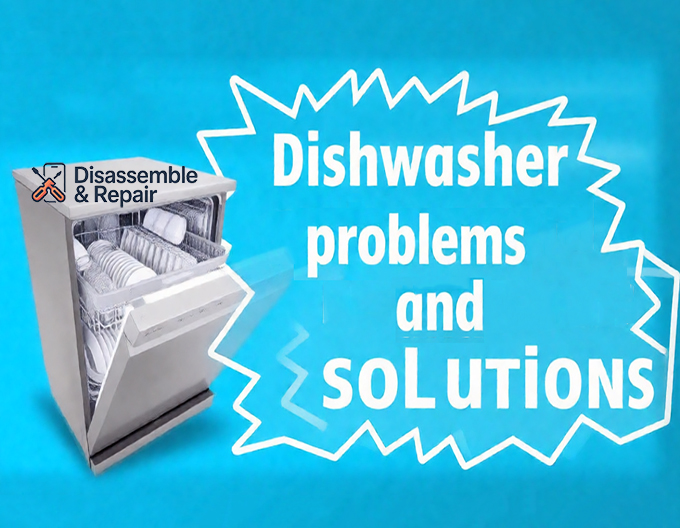
When your appliance malfunctions, understanding specific dishwasher problems and solutions can save you time and costly repair bills. A dishwasher is a complex machine relying on synchronized components to clean and sanitize your kitchenware efficiently. When one part fails, it often triggers a chain reaction of symptoms, from standing water to unwashed dishes.
This guide provides professional insights into diagnosing and fixing common issues. We will examine critical components like the drain pump, heating element, and control board to help you restore your dishwasher’s performance.
Common Dishwasher Problems and Solutions
Diagnosing a dishwasher often starts with identifying the symptom. Whether you are dealing with a leak, a drainage issue, or an error code on the display, most problems can be traced back to specific internal components.
1. The Dishwasher Will Not Drain
One of the most frequent complaints homeowners face is opening the door to find a pool of dirty water at the bottom of the tub. This issue creates unsanitary conditions and often leads to bad odors.
Potential Causes:
- Clogged Dishwasher Filter: The filter is your first line of defense against food debris. If the dishwasher filter becomes clogged with large food particles, water cannot pass through to the drain.
- Blocked Drain Hose: The drain hose carries wastewater from the appliance to your sink drain or garbage disposal. Kinks, twists, or internal blockages in this hose will prevent proper drainage.
- Faulty Drain Pump: The drain pump mechanically forces water out of the dishwasher. If the motor burns out or an object (like a piece of broken glass) jams the impeller, the pump will fail to remove water.
Solutions:
Start by locating the dishwasher filter at the bottom of the tub. Remove it according to the manufacturer’s instructions and clean it thoroughly under running water to remove a buildup of grease and debris. Next, inspect the drain hose for any visible kinks or bends behind the unit. If the hose is clear, the issue may lie with the drain pump. You can often test the pump for continuity using a multimeter or listen for a humming sound during the drain cycle, which indicates it is trying to run but is jammed.
2. Dishes Come Out Dirty or Spotted
If your plates are still covered in food residue or your glasses look cloudy after a full cycle, the wash system is likely compromised.
Potential Causes:
- Clogged Spray Arms: The spray arms rely on water pressure to spin and blast away food. If the tiny holes in the arms are blocked by seeds, lime, or debris, the water jets will be weak.
- Hard Water Deposits: Mineral buildup is a silent killer of dishwasher efficiency. Hard water deposits (limescale) can clog internal components and leave a chalky film on glassware.
- Inlet Valve Failure: The inlet valve controls the amount of water entering the tub. If this valve is restricted or failing, the dishwasher may not fill with enough water to clean effectively.
Solutions:
Remove the spray arms and inspect the holes. Use a toothpick or a small wire to clear any obstructions, ensuring water can flow freely. To combat hard water deposits, run a cleaning cycle with a commercial dishwasher cleaner or a cup of white vinegar placed on the top rack. If the problem persists, check the inlet valve. A partially clogged screen on the valve can restrict water flow, leading to poor wash performance. Finally, ensure you are using a high-quality detergent and that nothing is blocking the detergent dispenser.
3. The Dishwasher is Leaking
Water leaking onto your kitchen floor is an urgent problem that requires immediate attention to prevent flooring damage.
Potential Causes:
- Damaged Door Gasket: The door gasket creates a watertight seal around the perimeter of the door. Over time, this rubber seal can crack, become brittle, or get coated in food residue, allowing water to escape.
- Stuck Float Switch: The float switch is a safety mechanism that tells the dishwasher when the water level is high enough. If the float gets stuck in the “down” position due to debris, the machine may overfill and leak.
- Loose Connections: A loose drain hose clamp or a degraded seal on the inlet valve can also cause leaks underneath the unit.
Solutions:
Inspect the door gasket for rips, tears, or gaps. Clean it with a damp cloth to remove any buildup that might prevent a good seal; if it is damaged, it must be replaced. Next, check the float switch assembly located in the bottom of the tub. Lift the float up and down to ensure it moves freely and clicks. If it is stuck, remove any debris around it. If the leak comes from under the unit, remove the kickplate and inspect the drain hose and inlet valve connections for moisture while the machine is running.
4. Dishes Are Not Drying
Opening the dishwasher to find dripping wet dishes is frustrating, especially since the drying cycle is a standard feature.
Potential Causes:
- Failed Heating Element: The heating element is the metal ring at the bottom of the tub responsible for heating the water during the wash and the air during the drying cycle. If this burns out, drying will be ineffective.
- Lack of Rinse Aid: Rinse aid is essential for modern dishwashers. It breaks the surface tension of water, allowing it to sheet off dishes rather than forming droplets that require heat to evaporate.
- Vent Fan Failure: Some models use a fan to vent humid air; if this fails, moisture remains trapped inside.
Solutions:
First, ensure your rinse aid dispenser is full. Many users overlook this simple step, but it significantly improves drying performance. If the dispenser is full and dishes are still wet, inspect the heating element. You can visually check for blistering or breaks in the metal. For a definitive diagnosis, disconnect power to the unit and test the element’s terminals for continuity using a multimeter. If the element shows no continuity (an open circuit), it requires replacement.
5. The Dishwasher Won’t Start or Displays Errors
Electronic issues can be intimidating, but they often follow predictable patterns.
Potential Causes:
- Control Board Malfunction: The control board is the brain of the dishwasher, governing every cycle and component. Power surges or age can cause solders to fail or components to burn out.
- Door Latch Issues: If the door latch does not engage the microswitch, the control board will think the door is open and refuse to start the cycle.
- Error Codes: Modern machines display error codes (e.g., E1, F5) to point you toward specific failures, such as temperature sensor issues or drainage faults.
Solutions:
If the buttons are unresponsive, try resetting the breaker to reboot the system. If that fails, consult your manual to decipher any error codes displayed. These codes effectively tell you which component—like the drain pump or inlet valve—is acting up. If the display is dead or behaves erratically (lights flashing randomly), the control board may need to be replaced. Always inspect the board visually for burn marks or swollen capacitors before ordering a replacement.
Advanced Troubleshooting and Maintenance
Beyond the common fixes, maintaining your dishwasher ensures longevity and prevents recurring issues.
Understanding the Inlet Valve and Float Switch
The inlet valve and float switch work in tandem to manage water levels. If your dishwasher is underfilling (leading to dirty dishes) or overfilling (leading to leaks), these two are the usual suspects. A simple continuity test on the inlet valve solenoids can confirm if the electrical side is working, while checking the mechanical action of the float ensures the physical switch is engaging.
The Importance of the Dishwasher Filter
The dishwasher filter is arguably the most neglected component. A dirty filter restricts water flow to the spray pump, reducing water pressure. This creates a cycle where the machine works harder but cleans less effectively. Make it a habit to clean the filter monthly. This prevents debris from bypassing the filter and damaging the drain pump impeller.
Preventing Hard Water Damage
Hard water deposits can ruin the heating element and clog spray arms. Using a water softener or high-quality detergent with water softeners is crucial in hard water areas. Periodically checking the spray arms for rotation and blockage ensures that the calcification doesn’t seize the bearings.
Interpreting Error Codes
Never ignore error codes. They are precise diagnostic tools. For example, a code indicating a “Thermal Runaway” points directly to the heating element or thermostat, while a “Drain Error” points to the drain hose or drain pump. Keep your user manual handy or search the specific code for your model online to save hours of guessing.
Conclusion
Mastering these dishwasher problems and solutions empowers you to maintain a high-performing appliance. By systematically checking the dishwasher filter, spray arms, and drain hose, you can resolve most hygiene and drainage issues. For more technical failures involving the control board, heating element, or inlet valve, a multimeter and a methodical approach are your best tools. Regular maintenance, such as topping up rinse aid and cleaning the door gasket, will prevent many of these problems from occurring in the first place, ensuring your dishwasher runs smoothly for years to come.
Frequently Asked Questions
Why is there standing water at the bottom of my dishwasher?
Standing water is typically caused by a blockage or a mechanical failure. The most common culprits are a clogged dishwasher filter, a kinked or blocked drain hose, or a faulty drain pump. Start by cleaning the filter and inspecting the hose for any visible obstructions.
How often should I clean my dishwasher filter?
You should clean your dishwasher filter at least once a month. Regular maintenance prevents food debris and grease from building up, which ensures proper water flow to the spray arms and protects the drain pump from damage.
Why are my dishes still wet after the drying cycle is complete?
The most common reason for wet dishes is a lack of rinse aid, which is essential for helping water sheet off surfaces. If the rinse aid dispenser is full, the issue may be a failed heating element or a malfunctioning vent fan that is trapping humid air inside the tub.
What should I do if my dishwasher displays an error code?
Error codes are designed to point you toward specific component failures. Consult your user manual to decipher the code, as it will often tell you if the problem lies with the inlet valve, drain pump, or temperature sensor. If the display is unresponsive, try resetting the machine by switching off the breaker for a few minutes.
How can I remove cloudy film or spots from my glassware?
Cloudy spots are usually caused by hard water deposits or clogged spray arms. To resolve this, clean the spray arm nozzles with a toothpick and run a cleaning cycle using white vinegar or a commercial dishwasher cleaner to dissolve limescale buildup.