
Dealing with dishwasher problems not draining can be one of the most frustrating kitchen appliance failures, turning a time-saving convenience into a messy chore. Instead of sparkling clean plates, you are greeted by a pool of murky, standing water at the bottom of the tub. Before you reach for the phone to call a plumber or appliance repair technician, know that many drainage issues stem from simple maintenance oversights or minor clogs that you can resolve yourself.
This guide provides a professional, step-by-step approach to diagnosing and fixing a dishwasher that refuses to drain. We will examine every critical component, from the filter assembly to the drain pump, ensuring you have the knowledge to restore your appliance to full functionality.
Understanding the Drainage System
To effectively troubleshoot, it helps to understand how your dishwasher handles wastewater. During the drain cycle, a drain pump propels water out of the sump basin, through a check valve, and into the drain hose. This hose typically connects to your sink’s plumbing or a garbage disposal. If any part of this chain is obstructed or mechanically defective, water will remain in the tub.
Immediate Troubleshooting: Start with the Basics
Before disassembling the machine, check these common, easily accessible areas. These simple fixes resolve a significant percentage of drainage complaints.
Inspect the Filter Assembly and Sump Basin
The most frequent culprit for standing water is a clogged filter assembly. Modern dishwashers are designed to pulverize soft food, but hard particles like bones, seeds, or glass shards can accumulate.
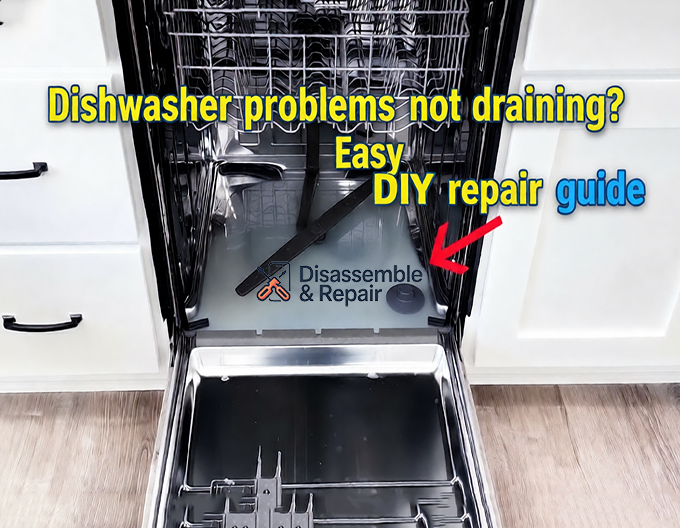
- Locate the Filter: Open the dishwasher and pull out the bottom rack. The filter is usually found in the center of the tub floor.
- Remove and Clean: Twist the filter cylinder to unlock it and lift it out. Depending on your model, there may also be a coarse mesh plate. Rinse these components under hot running water to remove all slime and food debris.
- Check the Sump: With the filter removed, look into the sump basin (the pit where the filter sits). This area should be clear. If you see water or solid debris, scoop it out with a cup or sponge.
Verify the Garbage Disposal Connection
If your dishwasher drains into a newly installed garbage disposal, the issue might be an overlooked installation step.
- The Knockout Plug: A new disposal comes with a solid plastic plug inside the dishwasher inlet port. If this plug was not removed during installation, water cannot pass through.
- Debris Blockage: Even in established setups, the disposal can become clogged with food waste. Run the disposal with plenty of water to ensure it is clear before starting the dishwasher.
Check the Air Gap
If your kitchen sink has an air gap (a small metal or plastic cylinder mounted next to the faucet), it acts as a backflow prevention device. Over time, grease and soap buildup can restrict airflow.
- Cleaning the Air Gap: Pull off the decorative silver cover and unscrew the plastic cap underneath. Use a toothpick or small bottle brush to remove any visible gunk. A blocked air gap is a classic reason for dishwasher problems not draining properly.
Diagnosing Dishwasher Problems Not Draining
If the basic checks above do not resolve the issue, you must inspect the external drainage path and internal components. This section covers the “high loop” installation, hose condition, and mechanical failures.
Inspecting the Drain Hose
The drain hose carries dirty water from the pump to the sink. Kinks, twists, or clogs in this hose will physically stop the water flow.
- Kinks: Inspect the hose where it exits the back of the dishwasher and where it enters the cabinet under the sink. A heavy item shoved under the sink can easily pinch the hose.
- The High Loop: Ensure the drain hose is looped up high under the sink counter before connecting to the drain. This “high loop” prevents dirty sink water from backflowing into the dishwasher by gravity.
- Clogs: If the hose appears clear on the outside, disconnect it from the sink or disposal (have a bucket ready). try to run a cycle or pour water through it to verify flow. A snake or a blast of hot water can sometimes dislodge internal clogs.
The Check Valve
The check valve is a small but vital component usually located near the drain pump outlet. Its job is to allow water to flow out but prevent it from coming back in.
- Symptoms of Failure: If the dishwasher drains initially but you find standing water appearing shortly after the cycle ends, the check valve may be stuck open, allowing dirty water to siphon back into the tub.
- Inspection: On many models, you can access this valve by removing the drain hose from the pump assembly. If the internal flapper is warped, missing, or stuck, the valve must be replaced.
Advanced Mechanical Troubleshooting
If the water path is clear but the dishwasher still won’t drain, the problem likely lies with the mechanical or electrical components responsible for moving the water.
Testing the Drain Pump and Impeller
The drain pump is the heart of the drainage system. It uses an drain impeller—a small plastic fan—to push water out.
- Listen for Sound: Start a drain cycle (usually by pressing “Cancel/Drain”). If you hear a low humming sound but no water moves, the pump motor might be seized, or the impeller is jammed. If you hear nothing, the pump may not be receiving power.
- Check for Obstructions: Broken glass or hard plastic can bypass the filter and jam the impeller. You may need to remove the pump (consult your manual, as this often requires removing the kick plate) to inspect the impeller housing.
- Impeller Damage: Sometimes the motor works, but the plastic fins of the drain impeller are broken or stripped. In this case, the pump runs but cannot generate enough force to move the water.
The Drain Solenoid Valve (Specific Models)
While most modern dishwashers use a dedicated drain pump, some older models (particularly certain GE series) use a single motor for washing and draining. These units rely on a solenoid valve to switch the mechanism between “wash” and “drain” modes.
- Function: When energized, the solenoid pulls a lever that opens the drain gate.
- Failure: If the solenoid burns out or the spring breaks, the gate will not open, and the water will remain in the tub even while the motor spins. If you have an older machine, check the solenoid timer and linkage near the motor assembly.
The Float Switch Assembly
The float switch is primarily a safety device designed to prevent overfilling. It consists of a float (usually a mushroom-shaped plastic dome) inside the tub and an electrical switch underneath.
- How it Affects Drainage: While its main job is to stop water intake, a stuck float switch can confuse the dishwasher’s control board. If debris jams the float in the “up” position, the machine may believe it is flooded and continuously run the drain pump (even when empty) or refuse to start a new cycle.
- Maintenance: Lift the float dome up and down. It should move freely and you should hear a distinct “click” from the switch. If it is stuck or silent, clean the stem or replace the switch.
Systematic Repair Strategy
When faced with a dishwasher full of water, follow this logical order to avoid unnecessary part replacements:
- Manual Drain: Use a cup and towel to remove the standing water. This allows you to inspect the sump and prevents spills during repair.
- Clear Debris: Clean the filter assembly and check the sump basin for foreign objects.
- Check Disposal/Plumbing: Ensure the garbage disposal is clear and the air gap is not clogged.
- Inspect Hose: Look for kinks in the drain hose or blockages at the connection point.
- Listen to Pump: Run a “Cancel” cycle to hear if the drain pump engages.
- Access Components: If the pump hums or is silent, access the bottom of the unit to inspect the drain impeller, solenoid valve (if applicable), and electrical connections.
When to Call a Professional
While many of these issues are DIY-friendly, some scenarios require professional intervention. If you have verified that the drain path is clear, the pump is mechanically sound, and the electrical connections are secure, the issue might lie in the main control board or the timer. Electronic diagnostics can be complex and may require specialized multimeters to test voltage outputs correctly.
Furthermore, if removing the dishwasher from the cabinetry is necessary to access the pump or hose, be mindful of your flooring and water connections. Improper reinstallation can lead to leaks that cause significant water damage to your kitchen subfloor.
Prevention and Maintenance
Once you have resolved the immediate drainage issue, regular maintenance is key to preventing recurrence.
- Scrape, Don’t Pre-Rinse: Modern enzymes need food to work, but large solids should always be scraped into the trash. Avoid washing labels off jars, as paper pulp is a major cause of pump clogs.
- Clean the Filter Weekly: Make it a habit to rinse the filter assembly under the tap. This prevents food debris from migrating into the pump housing.
- Monthly Cleaning Cycle: Run an empty dishwasher with a bowl of vinegar on the top rack or use a commercial dishwasher cleaner. This helps dissolve grease and mineral buildup in the drain hose and sump basin.
By understanding the roles of the drain pump, check valve, and air gap, you can confidently tackle dishwasher problems not draining. A systematic approach not only saves you money on service calls but also extends the life of your appliance, ensuring it continues to handle the dirty work for years to come.
Frequently Asked Questions
Why is there still water at the bottom of my tub after the cycle ends?
The most common cause of standing water is a clogged filter assembly or sump basin. Food debris, seeds, and small shards of glass can accumulate and block the flow of water. Additionally, if you have a recently installed garbage disposal, the “knockout plug” inside the disposal’s inlet port may still be in place, physically preventing the dishwasher from pumping water out.
How can I tell if my drain pump is failing or just clogged?
Listen to your dishwasher during the “Cancel/Drain” cycle. If you hear a low humming or growling sound but no water is moving, something like a bone or a piece of plastic may be jamming the drain impeller. If the dishwasher is completely silent during the drain phase, the pump motor may have failed or is not receiving power from the control board.
What is a “high loop” and why does my dishwasher need one?
A high loop is a specific way of installing the drain hose where it is looped up to the very top of the cabinet under the sink before connecting to the drain. This uses gravity to prevent dirty sink water from siphoning back into your clean dishwasher. If your dishwasher drains but then fills back up with dirty water, a missing high loop or a faulty check valve is usually the culprit.
How often should I clean my dishwasher filter to prevent drainage problems?
For most households, it is recommended to remove and rinse the filter assembly once a week. Regular maintenance prevents grease and food particles from migrating past the filter and into the drain pump or hose, which helps avoid the need for more complex mechanical repairs.