
Knowing how to clean Samsung detergent dispenser drawers is essential for maintaining the hygiene and performance of your laundry appliance. A neglected dispenser can quickly become a breeding ground for black mold and bacteria, which may eventually transfer to your freshly washed clothes.
As a Senior home appliance expert, I have compiled a comprehensive, professional guide to restoring your Samsung washer’s dispensing system to its optimal condition. This guide covers every component, from the release lever to the bleach compartment, ensuring a deep clean that prevents future issues.
Why Cleaning Your Dispenser is Non-Negotiable
For many owners of a Samsung front load washing machine, the detergent drawer is an “out of sight, out of mind” component. However, this damp, dark environment is the single most common failure point for hygiene in modern washers.
When soap residue accumulates, it creates a sticky biofilm. This film traps dirt, minerals from hard water, and lint. Over time, this mixture hardens and clogs the siphon tubes, preventing fabric softener and bleach from dispensing correctly. More alarmingly, this buildup provides the perfect food source for mold and mildew. If you have noticed a musty odor on your “clean” clothes or see water remaining in the compartment after a cycle, immediate manual cleaning is required.
Read more Samsung front load washer smells bad
Tools and Materials Required
Before you begin the process of how to clean Samsung detergent dispenser components, gather the following materials. Using the right tools prevents damage to the plastic release tabs and ensures you remove all detergent buildup without scratching the surface.
- Warm soapy water: Mild dish soap mixed with warm water is the safest cleaning agent for the plastic components.
- Soft brush: An old toothbrush or a specialized detail brush is necessary to scrub the tight corners and the siphon cap.
- Microfiber cloth: For wiping down the housing and drying components.
- White vinegar (optional): Highly recommended if you encounter stubborn mold or hard water deposits.
- Spray bottle: To apply the cleaning solution deep into the dispenser housing.
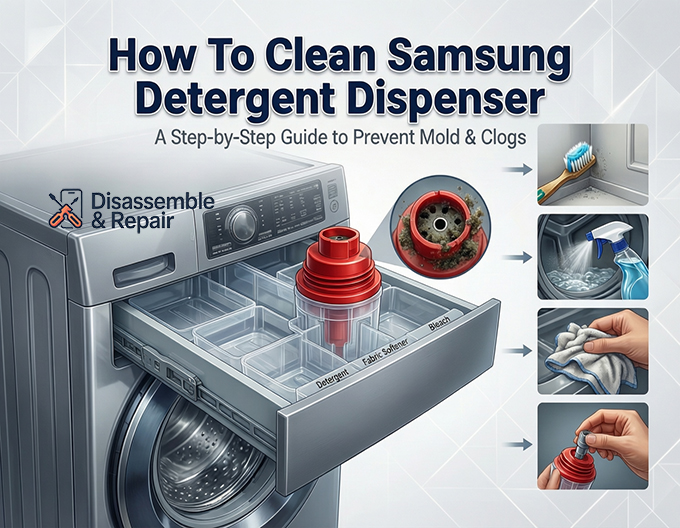
How to clean Samsung detergent dispenser: A Step-by-Step Guide
Follow this detailed procedure to thoroughly clean the dispenser system. This process applies to most Samsung front load and top load models equipped with a removable drawer.
Read more Best detergent for Samsung front load washer
Step 1: Removing the Dispenser Drawer
The first step is to remove the drawer entirely from the washing machine. This cannot be cleaned effectively while it is still inserted in the unit.
- Pull the dispenser drawer out until it stops. You will feel a natural resistance.
- Look inside the drawer, specifically between the detergent and fabric softener sections. You will see a plastic tab, known as the release lever.
- While pressing down firmly on the release lever, pull the drawer outward. It should slide out completely with minimal effort.
- Set the drawer aside in a sink or basin.
Step 2: Disassembling the Components
To reach the hidden bacteria, you must disassemble the removable parts of the drawer.
- Locate the bleach compartment and the softener insert. These are usually blue or grey plastic components nested inside the main drawer.
- Gently lift these inserts upward to remove them.
- Crucial Step: Flip the inserts over and locate the siphon cap. This is the small plastic cover that fits over the tube. It is responsible for the siphoning action that pulls liquid into the washer. Remove the siphon cap by pulling it straight off. This is the number one hiding spot for mold and mildew.
Step 3: Soaking and Scrubbing
Once disassembled, the deep cleaning begins.
- Fill your sink with warm soapy water.
- Submerge the main drawer, the inserts, and the siphon cap. Let them soak for at least 30 minutes. This softens the hardened soap residue and fabric softener clumps.
- After soaking, use your soft brush to scrub every surface. Pay special attention to:
- The underside of the drawer.
- The corners of the bleach compartment.
- The interior of the siphon tubes.
- Rinse all parts thoroughly under warm running water to ensure no cleaning agent remains.
Step 4: Cleaning the Dispenser Housing
Many users make the mistake of cleaning the drawer but ignoring the housing—the empty slot in the Samsung washing machine where the drawer slides in.
- Inspect the housing recess. You will likely see dark spots of mold or a gel-like buildup on the ceiling of the compartment.
- Spray the inside of the housing with vinegar or your soapy water mixture.
- Use the soft brush to scrub the internal nozzles (where the water shoots out) and the tracks. Detergent buildup here can block water flow, causing leaks.
- Wipe the entire cavity with a damp cloth, removing all loosened grime.
Step 5: Drying and Reassembly
Moisture is the enemy. Before putting everything back together, ensure all parts are dry.
- Wipe the dispenser drawer and its components with a dry cloth.
- Reattach the siphon cap to the inserts. Ensure they are pushed down firmly; if they are loose, the siphon mechanism will not work, and water will stay in the drawer.
- Snap the inserts back into their respective slots (bleach and softener).
- Align the drawer with the rails in the washer housing and slide it back in until you hear a click.
Addressing Stubborn Mold and Mildew
If your Samsung washer has been neglected for months, simple soap might not be enough. Mold and mildew in the dispenser are often caused by the waxy residue left behind by liquid fabric softeners.
If you see black spots that do not scrub off:
- Vinegar Soak: Instead of soapy water, soak the affected components in undiluted white vinegar for one hour. Vinegar is excellent for killing mold spores and dissolving calcium deposits.
- Bleach Solution: For white plastic parts only, you can use a diluted bleach solution (1 part bleach to 10 parts water). Warning: Do not mix bleach with vinegar, as this creates toxic gas. Thoroughly rinse the parts before reinserting them.
- Steam Cleaning: If you have a handheld steam cleaner, use it on the dispenser housing to blast away mold from hard-to-reach crevices without using harsh chemicals.
Preventing Future Detergent Buildup
Preventative maintenance is far easier than deep cleaning. By adjusting your laundry habits, you can significantly reduce the frequency of scrubbing sessions.
Use High-Efficiency (HE) Detergent
Samsung front load washers are designed to use very little water. Standard detergents produce too many suds, which stick to the walls of the dispenser drawer and encourage detergent buildup. Always use HE detergent and never exceed the “Max” fill line.
Dilute Fabric Softener
Thick, concentrated fabric softeners are the primary cause of clogs. The viscous liquid often fails to dispense completely, leaving a sticky residue that attracts mold. Consider diluting your fabric softener with a splash of warm water before pouring it into the compartment.
Air Circulation
After every wash cycle, leave the dispenser drawer slightly open. This allows air to circulate through the housing, evaporating residual moisture. If the drawer is closed immediately, the humidity remains trapped, creating the perfect incubator for bacteria.
Regular Wipe Downs
Make it a habit to pull out the drawer and give it a quick rinse under the tap every 2-3 weeks. This prevents fresh soap residue from hardening into a cement-like substance that is difficult to remove later.
Troubleshooting Common Dispenser Issues
Even after learning how to clean Samsung detergent dispenser drawers, you might encounter operational issues. Here are quick fixes for common problems:
Problem: Water remains in the fabric softener compartment.
- Cause: The siphon cap is clogged or loose.
- Fix: Remove the cap, clean the pinhole at the top, and ensure it is snapped down tightly.
Problem: Water leaks from the front of the drawer.
- Cause: High water pressure or blocked inlet nozzles in the housing.
- Fix: Scrub the ceiling of the dispenser housing with a brush to clear mineral deposits from the water jets.
Problem: The drawer is stuck.
- Cause: Hardened detergent has glued the rails.
- Fix: Pour a cup of hot water directly into the stuck drawer to dissolve the blockage before attempting to pull it out.
Conclusion
Maintaining your Samsung washer requires more than just running a self-clean cycle. The dispenser drawer is the gateway for all cleaning agents, and if it is dirty, your clothes are being washed with water passing through mold and old sludge.
By following this guide on how to clean Samsung detergent dispenser systems, you ensure that your appliance operates efficiently and your laundry remains truly clean. Remember to handle the release lever gently, clean the siphon cap regularly, and use warm soapy water to keep the plastic components fresh. A few minutes of maintenance each month will extend the life of your machine and protect your family from harmful allergens.
Frequently Asked Questions
Why is there still water or fabric softener in the drawer after a wash cycle?
This is typically caused by a clogged or improperly seated siphon cap. If the cap is covered in residue or isn’t snapped down firmly onto the tube, the vacuum effect required to pull the liquid out will fail. Remove the cap, clean it thoroughly with a soft brush, and ensure it is pushed all the way down during reassembly.
How often should I clean my Samsung detergent dispenser?
To maintain optimal hygiene, you should pull the drawer out for a quick rinse every 2 to 3 weeks. A more thorough deep clean, including scrubbing the dispenser housing and soaking the components in warm soapy water, should be performed once a month to prevent the growth of black mold and bacteria.
What is the best way to remove stubborn mold from the dispenser?
If soap and water aren’t enough, soak the removable parts in undiluted white vinegar for about an hour. Vinegar effectively kills mold spores and breaks down the waxy buildup from fabric softeners. For the housing itself, use a spray bottle filled with vinegar and scrub the area with an old toothbrush.
Can I use regular detergent instead of High-Efficiency (HE) detergent?
Samsung front-load washers are specifically designed for HE detergent. Regular detergents create excessive suds that do not rinse away easily, leading to heavy soap residue buildup in the dispenser and housing. Using HE detergent and staying below the “Max” fill line is the best way to prevent future clogs.
How do I prevent the dispenser drawer from smelling musty?
The best prevention is air circulation. After you finish your laundry for the day, leave the dispenser drawer slightly ajar rather than closing it completely. This allows the internal housing to dry out, preventing the damp, dark conditions that allow mold and mildew to thrive.