
In the modern household, major appliances represent a significant capital investment. From the refrigerator that safeguards your sustenance to the washing machine that ensures hygiene, these machines are the operational backbone of a functional home. Yet, a pervasive “throwaway culture” has led many consumers to accept premature failure as an inevitability. This assumption is fiscally imprudent. The reality is that the lifespan of household machinery is rarely dictated by the manufacturing date alone; rather, it is determined by the rigor of the maintenance protocols applied by the owner.
By adopting a proactive approach to appliance maintenance, homeowners and landlords can effectively double the operational life of their equipment. This guide provides an authoritative, step-by-step analysis of the five critical—yet often overlooked—maintenance strategies designed to maximize efficiency and prevent breakdown.

1. Master the Thermodynamics of Refrigerator Care
The refrigerator is the only appliance in the average home that runs continuously. Consequently, it is subjected to constant mechanical stress. The most common cause of catastrophic refrigerator failure is not a manufacturing defect, but rather the overheating of the compressor. This component is the heart of the cooling system, and its longevity is directly tied to airflow.
The Critical Role of Condenser Coils
Condenser coils are responsible for dissipating the heat removed from the interior of the fridge. When these coils are coated in dust, pet hair, and debris, they lose their ability to release heat efficiently. This forces the compressor to run longer and hotter to achieve the same internal temperature.
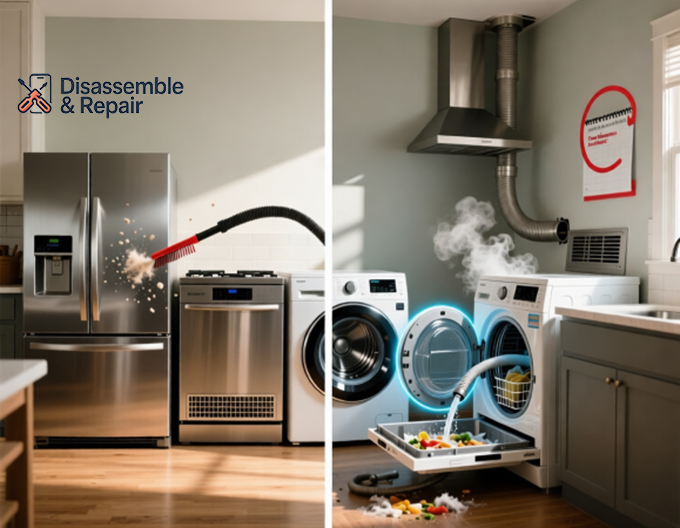
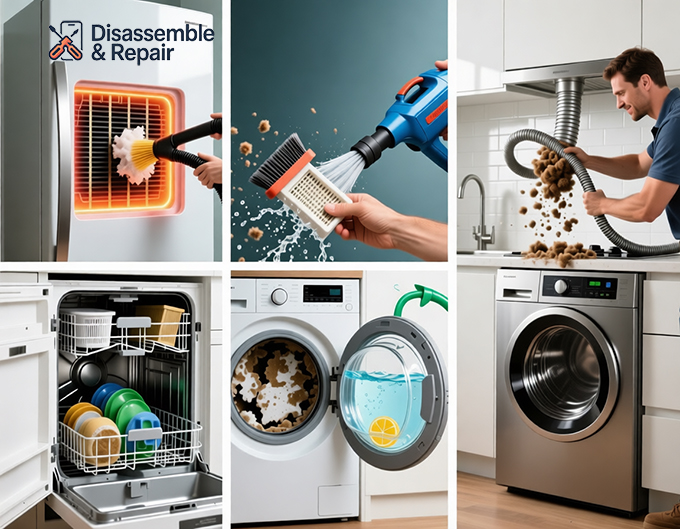
To implement proper refrigerator care, one must clean these coils every six months. For households with pets, quarterly cleaning is advisable. Use a specialized coil brush and a vacuum to remove the insulating layer of dust. By ensuring the coils are free of obstruction, you reduce the thermal load on the compressor, thereby preventing burnout and significantly extending the unit’s service life.
2. Elevate Efficiency with Strategic Dishwasher Tips
A dishwasher is often viewed as a self-cleaning entity, yet this misconception leads to the accumulation of organic matter and mineral deposits that can cripple the machine. The functionality of a dishwasher relies on water pressure and drainage. When either is compromised, the pump motor faces excessive strain.
The Filtration System Protocol
Modern dishwashers are equipped with manual filters designed to trap food particles. If these filters are not regularly cleared, they become clogged, restricting water flow and fostering bacterial growth.
One of the most essential dishwasher tips is to manually extract and clean the filter trap located at the bottom of the tub once a month. Rinse it under hot water to remove debris. Furthermore, inspect the spray arms for blockages. Mineral buildup from hard water can occlude the tiny jets, reducing cleaning power and forcing the user to run multiple cycles, which accelerates wear. A monthly cycle run with a dedicated dishwasher cleaner or a cup of white vinegar will dissolve these mineral deposits and maintain optimal hydraulic function.
3. Prioritize Airflow: The Imperative of Dryer Vent Cleaning
The clothes dryer is statistically the most dangerous appliance in the home due to the risk of fire, but it is also prone to mechanical failure caused by airflow restriction. A dryer works by pushing hot air through tumbling clothes and exhausting the moisture-laden air outside. When the ventilation duct becomes restricted by lint, the internal temperature spikes, leading to blown thermal fuses and strained heating elements.
Ventilation Hygiene
Cleaning the lint trap after every load is standard practice, but it is insufficient for long-term preservation. Comprehensive dryer vent cleaning involves disconnecting the ductwork from the rear of the unit and cleaning the entire length of the vent leading outside.
If the dryer feels hotter than usual to the touch, or if clothes take longer than one cycle to dry, the vent is likely obstructed. Neglecting this maintenance task puts unnecessary pressure on the blower motor and heating coils. By ensuring a clear path for exhaust air, you not only eliminate a fire hazard but also allow the machine to operate within its intended thermal parameters, which will extend appliance life by years.
4. Mitigate Water Hardness to Prevent Breakdown
Water quality is a silent variable that dictates the lifespan of any appliance utilizing water, including washing machines, dishwashers, and ice makers. Hard water contains high concentrations of calcium and magnesium. Over time, these minerals precipitate out of the water and form scale deposits on internal components, seals, and hoses.
Descaling Operations
Scale buildup acts as an abrasive inside pumps and valves, leading to leaks and mechanical seizures. To prevent breakdown in regions with hard water, the installation of a whole-home water softener is the gold standard. However, if this is not feasible, targeted descaling is mandatory.
For washing machines, run a hot maintenance cycle with a commercial descaling agent or citric acid every three months. This process dissolves the mineral crust that accumulates on the drum and heating element. Additionally, inspect rubber hoses annually for brittleness caused by mineral deposits. Replacing rubber hoses with stainless steel braided hoses is a proactive measure that prevents catastrophic flooding events and ensures the fluid dynamics of the appliance remain uninhibited.
5. Respect Mechanical Limits: Load Balancing and Weight Distribution
The final secret to longevity is behavioral rather than mechanical. Every appliance is engineered with specific load tolerances. Exceeding these limits is the fastest way to degrade bearings, belts, and motors.
The Physics of Overloading
In washing machines, an overloaded drum causes an imbalance during the spin cycle. This imbalance exerts tremendous centrifugal force on the drum bearings and suspension springs. Over time, this leads to the dreaded “walking washer” phenomenon and eventual bearing failure—a repair that is often so costly it necessitates total replacement.
Similarly, overloading a refrigerator blocks internal air vents, preventing cold air from circulating and forcing the compressor to run continuously. To extend appliance life, one must adhere strictly to the manufacturer’s load recommendations. In laundry units, fill the drum loosely to allow for water circulation and agitation. In refrigeration, ensure that items are not packed against the back wall or blocking intake vents. Respecting these physical limits preserves the structural integrity of the appliance’s moving parts.
Conclusion
The durability of household appliances is not purely a matter of chance or brand reputation; it is a direct consequence of diligent stewardship. By understanding the mechanical and thermodynamic needs of your equipment, you transform from a passive user into an active manager of your home assets.
Implementing a schedule for dryer vent cleaning, adhering to strict load limits, and performing routine appliance maintenance does more than save money on repairs. It reduces energy consumption, lowers utility bills, and minimizes the environmental impact associated with manufacturing and disposing of heavy machinery.
Call to Action:
Do not wait for a warning light or a strange noise to spur you into action. Schedule a “Home Maintenance Weekend” this month to inspect your refrigerator coils, check your dryer vents, and descale your water-using appliances. A few hours of investment today will yield years of reliable service tomorrow.
Frequently Asked Questions
How can I extend the lifespan of my home appliances?
To effectively double the operational life of your appliances, adopt a proactive maintenance routine rather than waiting for breakdowns. Key strategies include cleaning refrigerator condenser coils, regularly clearing dishwasher filters and dryer vents, descaling water-using appliances to prevent mineral buildup, and strictly adhering to manufacturer load limits to avoid mechanical strain on motors and bearings.
How often should I clean my refrigerator condenser coils?
You should clean your refrigerator’s condenser coils every six months to ensure the compressor does not overheat. If your household includes pets, it is advisable to increase this frequency to a quarterly cleaning. Use a specialized coil brush and a vacuum to remove dust and debris, which reduces the thermal load and prevents premature failure.
What are the signs that my dryer vent needs cleaning?
If your dryer feels hotter than usual to the touch or if clothes take longer than a single cycle to dry, your vent is likely obstructed by lint. Neglecting to clean the ductwork restricts airflow, which can blow thermal fuses, strain the blower motor, and create a serious fire hazard.
Does overloading a washing machine actually damage it?
Yes, overloading a washing machine significantly degrades the unit’s longevity. Exceeding load limits exerts tremendous centrifugal force during the spin cycle, which damages drum bearings and suspension springs. This often results in the “walking washer” phenomenon and costly mechanical failures that may necessitate total replacement.