
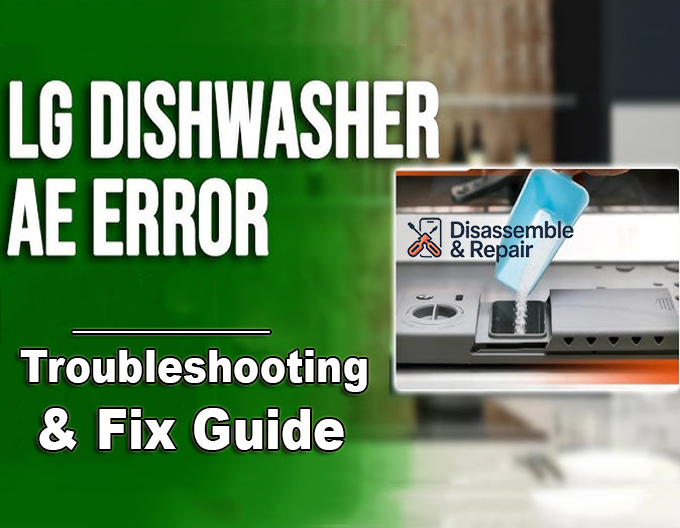
If your appliance has suddenly stopped mid-cycle and started beeping, seeing the LG dishwasher AE error code on the display can be frustrating. This specific error indicates a leak detection issue where water has accumulated in the base of the unit, triggering the safety mechanisms to prevent flooding.
Understanding the LG dishwasher AE error code
The LG dishwasher AE error code is a critical safety warning designed to protect your home from water damage. Unlike standard operational errors, the AE code is specifically tied to the unit’s leak detection system.
At the bottom of your dishwasher chassis, underneath the tub, lies a base pan. This pan is equipped with a safety device known as a float switch (or sometimes referred to as a flood switch). When water leaks from the tub, hoses, or valves, it collects in this pan. As the water level rises, it lifts the styrofoam float, which triggers the switch.
Once the switch is activated, the water leakage sensor sends a signal to the control board to immediately shut off the water intake and engage the drain pump continuously. This is why you might hear the pump running even if you try to turn the dishwasher off.
NOTE: You can also check out common fixes for frequently encountered LG dishwasher error codes—like: LG dishwasher HE error code, LG dishwasher IE error code
Immediate Steps: Reset and Basic Checks
Before tearing your dishwasher apart to find a leak, it is important to rule out temporary glitches or simple usage errors.
Performing a Dishwasher Reset
Sometimes, a power surge or a software glitch can trigger a false positive on the control board.
- Power Down: Turn off the dishwasher and unplug it from the wall, or flip the circuit breaker off at your electrical panel.
- Wait: Leave the power off for at least 15 to 20 minutes. This allows the internal capacitors on the control board to discharge and reset.
- Restart: Restore power and attempt to run a short cycle. If the LG dishwasher AE error code returns immediately, you likely have a genuine leak.
Managing Excessive Suds
One of the most common non-mechanical causes for this error is excessive suds. If you use non-HE (High Efficiency) detergent, regular dish soap, or simply too much detergent, the machine can fill with foam.
- Overflow: The foam expands and pushes water out of the tub and into the base pan, tripping the sensor.
- Correction: If you see suds leaking from the door or remaining in the tub, scoop them out. Pour a cup of cooking oil or a cap of fabric softener into the bottom of the tub and run a “Rinse Only” cycle to break down the foam.
Advanced Troubleshooting: Locating the Leak
If a reset doesn’t work, you must physically locate the source of the water. Safety Warning: Always disconnect power and the water supply before accessing internal components.
Inspecting the Base Pan and Float Switch
To address the error, you need to clear the water from the sensor area.
- Remove the Kick Plate: Unscrew the lower access panel (kick plate) at the bottom front of the dishwasher.
- Check for Water: Use a flashlight to inspect the base pan. If you see standing water, use a sponge or towels to soak it up completely.
- Dry the Sensor: Ensure the float switch is dry and the styrofoam float moves down freely.
Note: Drying the pan might clear the code temporarily, but you must find where the water came from to prevent it from returning.
Checking the Water Supply Line and Inlet Valve
The water inlet valve is responsible for letting water into the machine and is a common leak point.
- Inspection: Locate the valve behind the kick plate on the left or right side (depending on your model). Check the connection where the water supply line attaches to the valve.
- Signs of Failure: Look for drips, corrosion, or moisture around the solenoid. If the valve is cracked or stuck open, it can overfill the tub, causing water to spill into the base.
Examining the Door Gasket and Spray Arms
Leaks often originate from the door or spray system.
- Door Gasket: Inspect the rubber seal around the door. If it is torn, brittle, or has food debris preventing a tight seal, water will escape and run down into the base pan.
- Spray Arms: Check the lower and middle spray arms for cracks. A split in a spray arm can shoot a jet of water directly at the door seal, overwhelming it and causing a leak that the water leakage sensor will eventually detect.
Drain Pump and Hose Connections
The drain pump removes water from the unit. If the pump housing is cracked or the hose clamps are loose, water will drip directly into the base pan during the drain cycle.
- Check the corrugated drain hose for kinks or punctures.
- Inspect the connection point where the drain hose meets the garbage disposal or sink plumbing to ensure no backflow is occurring.
When to Contact Support and Use LG Smart Diagnosis
If you have checked all the above components and cannot find a leak, the issue might be electronic.
- LG Smart Diagnosis: If your dishwasher is Wi-Fi enabled, use the LG ThinQ app. The LG Smart Diagnosis feature can run a deep check on the sensors and control board to confirm if the float switch is stuck or if the board itself is malfunctioning.
- Professional Help: If the base pan is bone dry but the error persists, the sensor itself may be faulty and require replacement.
By systematically checking these entities—from the inlet valve to the drain pump—you can isolate the cause of the leak and clear the LG dishwasher AE error code effectively.
Frequently Asked Questions
What does the AE error code mean on an LG dishwasher?
The AE error code is a safety warning indicating that the leak detection system has been triggered. This happens when water collects in the base pan at the very bottom of the unit, causing a float switch to rise and signal the control board that a leak may be occurring.
Why does my dishwasher keep running or draining when the AE code is displayed?
When the AE error is active, the dishwasher is programmed to automatically engage the drain pump to prevent a potential flood. The pump will often continue to run even if you try to power the unit off, as the machine is attempting to clear all water to protect your flooring.
Can using the wrong detergent cause an AE error?
Yes. Using non-HE detergent or regular dish soap creates excessive suds that can overflow the tub and leak into the base pan. This moisture will trip the water leakage sensor. If this happens, you should clear the suds and run a “Rinse Only” cycle with a small amount of cooking oil to break down the foam.
How do I clear the AE code after fixing a leak?
First, perform a hard reset by disconnecting the power for 15 to 20 minutes. If the code persists, you must remove the lower kick plate and manually dry the base pan with a sponge or towel. The error will not clear until the float switch is completely dry and has returned to its down position.
What are the most common parts that cause a genuine AE leak?
The most common culprits include a cracked water inlet valve, a torn door gasket, or a split spray arm that is spraying water directly against the door seal. Additionally, loose drain hose connections or a damaged drain pump housing can also cause water to accumulate in the base pan.