
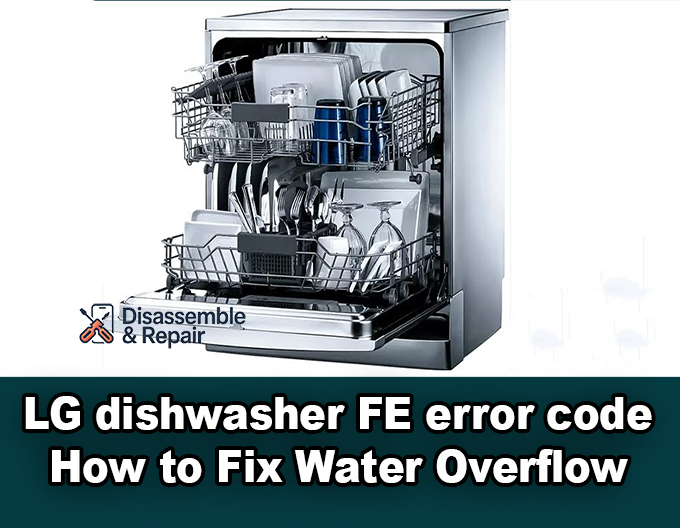
Encountering an LG dishwasher FE error code can be a frustrating interruption to your daily routine, signaling that your appliance has detected a water overflow issue. This specific code stands for “Fill Error,” indicating that the dishwasher’s sensors perceive an excess of water in the tub, which triggers the unit’s safety protocols to prevent flooding. When this error occurs, you will likely hear the drain pump running continuously as the machine attempts to empty the tub, even if the unit is turned off.
Understanding the root cause of this error is essential for a lasting repair. While the immediate reaction might be to panic about a potential leak, the issue is often internal, stemming from a malfunctioning component or a simple usage error. This guide will walk you through the technical aspects of the FE error, exploring the roles of critical entities like the water inlet valve, pressure switch, and control board. We will provide a detailed troubleshooting guide to help you diagnose and resolve the issue, potentially saving you a call to a professional appliance repair service.
Understanding the LG Dishwasher FE Error Code
The LG dishwasher FE error code is essentially a protective mechanism. Modern LG dishwashers are equipped with sophisticated sensors that monitor the water level throughout the wash cycle. If the water level exceeds a pre-determined safety threshold, the main control board triggers the FE code.
To protect your kitchen from water damage, the dishwasher automatically activates the drain pump. This is why you might hear a humming sound coming from the machine even if the cycle has been cancelled. The pump will continue to operate until the water level drops to a safe range or power is cut to the unit. While this prevents immediate flooding, it does not solve the underlying problem causing the water to overfill in the first place.
The Role of the Water Level Sensor
The water level sensor (sometimes referred to as a pressure switch in certain models) is the “eyes” of the control board. It measures the amount of water in the tub by detecting air pressure changes in a small tube connected to the sump.
- Normal Operation: As water fills the tub, air is compressed in the tube, pushing against a diaphragm in the switch.
- FE Trigger: If the sensor detects pressure corresponding to an abnormally high water level, it sends a high-voltage signal to the control board, which then halts the water intake and throws the FE code.
Common Causes of the FE Error
Several factors can lead to an overflow detection. Identifying which one applies to your situation is the first step in the repair process.
1. Faulty Water Inlet Valve
The water inlet valve is an electronically controlled solenoid that opens to let water enter the dishwasher and closes to stop the flow. It is one of the most common culprits for the FE error.
- Mechanical Failure: Over time, mineral deposits or debris can cause the valve to stick in the “open” position. If this happens, water will continue to seep into the dishwasher even when the machine is off, eventually triggering the overflow error.
- Electrical Failure: If the solenoid fails, it may not close rapidly enough, allowing too much water to pass through during the fill cycle.
2. Excessive Detergent Suds
Believe it or not, using the wrong type of soap can trick your machine. Detergent suds are less dense than water but can occupy a significant volume. If you use regular dish soap (meant for hand washing) or too much detergent, the excessive suds can confuse the float switch or water level sensor. The sensor may interpret the foam as a high water level, or the suds may physically lift the float switch, triggering the FE code.
3. Malfunctioning Float Switch or Pressure Switch
Most dishwashers have a backup safety device called a float switch. This is often a small plastic disc located on the floor of the tub.
- Stuck Float: If food debris, grease, or hard water scale accumulates around the float stem, it can get stuck in the “up” position. This signals the machine that it is full or overflowing, even if the tub is empty.
- Bad Pressure Switch: If the pressure switch itself is electrically defective, it might send erratic signals to the control board, falsely reporting an overflow condition.
4. Control Board Glitches
The control board is the brain of the dishwasher. It coordinates all functions, including opening the inlet valve and reading sensor data. If a relay on the control board gets stuck in the closed position, it might send continuous power to the water inlet valve, forcing it to stay open indefinitely. Alternatively, a software glitch could cause the board to misinterpret normal sensor readings as an overflow.
NOTE: You might also want to look into how to fix the LG dishwasher’s 1E error code — it’s one of the most common issues you’ll likely run into while using your LG dishwasher.
Step-by-Step Troubleshooting Guide
Before attempting any repairs, ensure safety by unplugging the dishwasher or turning off the circuit breaker. You should also turn off the water supply valve to the dishwasher.
Step 1: Perform a Power Cycle
Computers sometimes just need a reboot, and your dishwasher is no different. A power cycle can clear temporary logic errors from the control board.
- Turn Off: Press the power button to turn off the unit.
- Disconnect: Unplug the dishwasher or flip the corresponding circuit breaker in your home’s electrical panel to the “OFF” position.
- Wait: Leave the power off for at least 10 to 15 minutes. This allows the capacitors on the control board to discharge fully.
- Restart: Restore power and attempt to run a new cycle. If the FE error returns immediately or halfway through the cycle, proceed to the next step.
Step 2: Check for Detergent Suds
Open the dishwasher door and look at the bottom of the tub.
- Visual Check: Do you see a thick layer of white foam or bubbles? If so, suds are likely the culprit.
- The Fix: You need to remove the suds to clear the sensor error.
- Scoop out as much of the suds and water as possible with a cup or bowl.
- Pour 1 cup of cooking oil (vegetable or olive oil) or a cup of milk into the bottom of the tub. These fats help break down the foam.
- Pour a gallon of cold water into the tub to dilute the remaining soap.
- Turn the power on and run a “Drain Only” cycle or start a cycle and cancel it immediately to engage the drain pump. Repeat until no suds remain.
Step 3: Inspect the Water Inlet Valve
If the dishwasher fills with water even when it is turned off and unplugged, you have a mechanical failure of the water inlet valve.
- The Test:
- Turn off the water supply to the dishwasher.
- Remove the kick plate (the bottom panel) to access the valve, usually located on the left or right side behind the panel.
- Disconnect the water supply line (be prepared for some water spillage).
- Check the filter screen inside the valve for sediment. A clogged screen can sometimes prevent the valve from closing fully.
- Multimeter Test: If you are comfortable with appliance repair, use a multimeter to check the resistance of the valve solenoid. A reading of infinity indicates an open circuit (bad valve), while a reading that is significantly off from the manufacturer’s spec (typically 800-1200 ohms, but varies by model) indicates a fault.
- Replacement: A mechanically stuck valve cannot be repaired; it must be replaced.
Step 4: Examine the Float Switch and Pressure Switch
The float switch is located inside the tub, while the pressure switch is usually hidden behind the kick plate or side panels.
- Float Switch Maintenance:
- Locate the round mushroom-like float in the tub.
- Lift it up and down gently. It should move freely and you should hear a faint “click” as the switch activates.
- If it feels sticky or crunchy, clean the stem and the area underneath it thoroughly with vinegar and a soft brush to remove built-up gunk.
- Pressure Switch Hose:
- Access the pressure switch (consult your manual for location).
- Inspect the small hose connecting the switch to the sump.
- Ensure the hose is not kinked, cracked, or clogged with debris. A blockage here traps air, giving false readings to the water level sensor.
- Disconnect the hose and blow through it to clear any obstructions.
Step 5: Utilizing LG Smart Diagnosis
Modern LG appliances come equipped with LG Smart Diagnosis, a feature that allows the dishwasher to communicate directly with your smartphone to identify issues.
- Download the LG ThinQ app on your smartphone.
- Turn on the dishwasher.
- Place your phone’s microphone near the “Smart Diagnosis” logo on the dishwasher panel.
- Press and hold the designated diagnosis button (often marked or a combination of keys like “Delay Start”) until a tone sequence plays.
- The app will analyze the tone and provide a detailed diagnosis. It may confirm the LG dishwasher FE error code and offer specific next steps tailored to your model.
When to Call for Professional Appliance Repair
While many causes of the FE error can be resolved with DIY methods, some situations require professional intervention.
- Control Board Failure: If you have replaced the inlet valve and verified the sensors are working, but the error persists, the issue likely lies with the control board. Replacing a main PCB requires accessing the inner door panel and handling sensitive electronics. If the board is sending erroneous voltage to the fill valve, it must be replaced to ensure safety.
- Wiring Issues: Rodents or wear-and-tear can damage the internal wiring harness, causing shorts that mimic sensor failures. Tracing electrical faults is complex and hazardous without proper training.
- Persistent Leaks: If you cannot identify the source of water ingress, or if the unit is leaking onto the floor despite the drain pump running, shut off the main water valve to the house and call a technician immediately.
Conclusion
The LG dishwasher FE error code is a clear signal that your appliance is protecting your home from a potential flood. By systematically checking the most likely culprits—detergent usage, the water inlet valve, and the float system—you can often resolve the issue without the expense of a service call. Remember that regular maintenance, such as cleaning filters and using high-quality detergent, prevents many overflow error scenarios. However, if the troubleshooting steps above do not clear the code, do not hesitate to contact a certified appliance repair specialist to diagnose complex electrical faults within the control board or pressure sensor system.
Frequently Asked Questions
What exactly does the FE error code indicate?
The FE error code stands for “Fill Error.” It signifies that your LG dishwasher has detected an overfill or overflow condition in the tub. To prevent potential water damage to your kitchen, the unit triggers a safety protocol that automatically engages the drain pump to remove excess water, even if the cycle has been canceled.
Why does my dishwasher keep running its drain pump even after I turn it off?
This is a built-in safety feature associated with the FE error. When the sensors detect an abnormally high water level, the main control board forces the drain pump to stay active to prevent flooding. The pump will often continue to hum until the water reaches a safe level or the power is disconnected from the unit.
Can using the wrong detergent trigger an FE error?
Yes. Using standard hand-dishwashing soap or excessive amounts of dishwasher detergent can create a massive volume of suds. These suds are less dense than water but can physically lift the float switch or interfere with the water level sensor, tricking the dishwasher into “thinking” the tub is overflowing.
How can I tell if my water inlet valve is the problem?
A primary sign of a faulty water inlet valve is if the dishwasher continues to fill with water even when the power is turned off or the unit is unplugged. This indicates a mechanical failure where the valve is stuck in the “open” position. If this occurs, you should shut off the manual water supply to the machine immediately to prevent a flood.
What is the first step I should take to clear the FE code?
You should start with a power cycle. Turn off the dishwasher and unplug it (or flip the circuit breaker) for at least 10 to 15 minutes. This allows the capacitors on the control board to discharge and resets the system’s logic, which can often clear temporary glitches or sensor errors.