
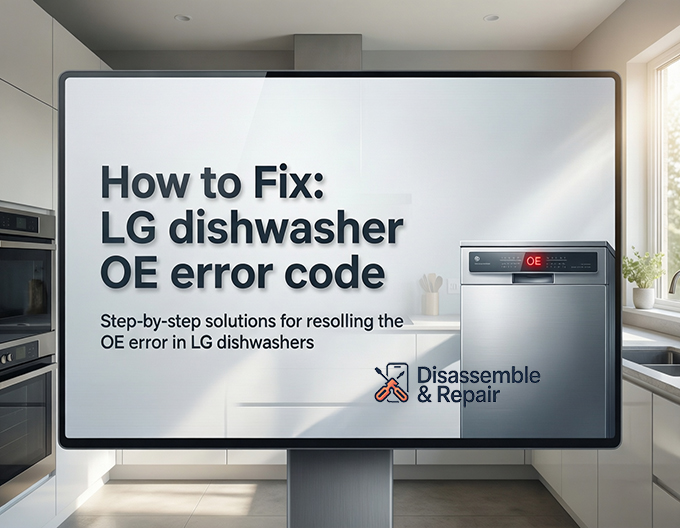
If you see the LG dishwasher OE error code on your display, it means your appliance is having trouble draining water. This common fault alerts users that the water drainage system is blocked, malfunctioning, or detecting a false positive, preventing the cycle from completing properly.
The OE error stands for “Output Error” or “Outlet Error,” specifically related to the drain function. When this code appears, you will likely find standing water at the bottom of the tub. While this can be alarming, the issue is often resolvable without professional help. By methodically checking the drainage path from the sump assembly out to your kitchen’s plumbing, you can identify the culprit.
What Causes the LG Dishwasher OE Error Code?
The error is triggered when the dishwasher’s main control board does not receive a signal that the water level has dropped within a specific time frame (usually 5–10 minutes) after the drain cycle begins.
The most frequent causes include:
- A kinked hose restricting flow.
- A clogged dishwasher filter or sump assembly.
- Blockages in the garbage disposal or air gap.
- A mechanical failure of the drain pump or its pump impeller.
- A stuck check valve preventing water from exiting.
- A malfunction in the control board itself.
Step-by-Step Troubleshooting Guide
Follow these steps in order, moving from the simplest external fixes to more complex internal inspections.
1. Check for Kinks and External Blockages
Before taking the appliance apart, inspect the external plumbing. The drain hose is the corrugated tube that carries dirty water from the dishwasher to your sink’s drain or disposal unit.
- Inspect the Hose: Look under your sink and ensure the drain hose is not twisted or bent. A kinked hose will physically stop water from passing through. Straighten any bends you find.
- Check the Air Gap: If your kitchen has an air gap (a small cylinder fitting on the sink deck next to the faucet), it may be clogged. Unscrew the cap and remove any debris. A blocked air gap is a very common reason for drainage failure.
- Garbage Disposal Connection: If you recently installed a new garbage disposal, ensure the knockout plug was removed. If the plug is still inside, the dishwasher cannot drain into the disposal.
2. Clean the Filter and Sump Assembly
If the external plumbing is clear, the blockage is likely inside the unit. Food particles often bypass the initial catch and settle in the sump assembly, which is the pit at the bottom of the tub where water collects.
- Remove the Racks: Pull out the bottom rack to access the floor of the dishwasher.
- Clean the Dishwasher Filter: Twist and remove the mesh filter. Rinse it under hot water to remove grease and food debris.
- Inspect the Sump: With the filter removed, look into the opening. This is the sump assembly. Use a turkey baster or sponge to remove any standing water. Check for solid debris like broken glass, bones, or plastic that might be blocking the inlet to the drain pump.
3. Inspect the Drain Pump and Impeller
The drain pump is the mechanical heart of the drainage system. It uses a small rotating component called a pump impeller to force water out of the dishwasher.
- Test the Pump: Close the door and try to run a “Cancel & Drain” cycle (often done by holding the Start/Cancel button for 3 seconds). Listen for a humming sound. If you hear a hum but no water moves, the pump might be jammed.
- Check the Impeller: If you are comfortable with minor disassembly, you can access the drain pump (usually behind the kick plate at the bottom front). Remove the pump motor to inspect the pump impeller. If the impeller vanes are broken or if a piece of hard debris is preventing it from spinning, the pump will need to be replaced.
4. Verify the Check Valve
The check valve is a small flap, usually located near the drain pump outlet or within the drain hose connection. Its job is to prevent dirty water from flowing back into the dishwasher.
- Symptoms of Failure: If the check valve is stuck in the closed position, water cannot leave. If it is stuck open, dirty water may flow back in, triggering the error later.
- Inspection: Ensure the valve moves freely and is not gummed up with grease or calcium deposits. Clean or replace it if it appears stiff or damaged.
Resolving a Persistent LG Dishwasher OE Error Code
If you have cleared all blockages, straightened the hoses, and verified the pump is spinning, but the LG dishwasher OE error code persists, the issue may be electrical.
Control Board Malfunction
The control board is the brain of the dishwasher. It sends voltage to the drain pump to turn it on and monitors the water level sensor.
- Relay Failure: If the relay on the control board responsible for the drain pump has failed, the pump will never receive power, regardless of whether the line is clear.
- Wiring Issues: Inspect the wire harness connecting the control board to the drain pump. Loose connections or damaged wires can prevent the signal from reaching the pump.
Resetting the System
Sometimes, the error code is a “glitch” stored in the memory. To perform a hard reset:
- Turn off the dishwasher.
- Flip the circuit breaker off or unplug the unit for 60 seconds.
- Restore power and run a test cycle.
Preventive Maintenance
To prevent the OE error from returning, incorporate these habits into your routine:
- Rinse Dishes: scrape off large food scraps before loading.
- Clean the Filter Weekly: A clean dishwasher filter ensures optimal water drainage.
- Run a Cleaning Cycle: Use a dishwasher cleaner once a month to dissolve grease build-up in the drain hose and sump assembly.
By systematically checking these components, you can usually clear the OE error and restore your LG dishwasher to full functionality without the need for an expensive service call.
Frequently Asked Questions
What does the OE error code actually mean?
The OE code stands for “Output Error” or “Outlet Error.” It indicates that your LG dishwasher is having trouble draining water. The error is triggered when the control board detects that the water level has not dropped sufficiently within 5 to 10 minutes after the drainage cycle has begun.
Can I fix the OE error code without calling a plumber?
Yes, many causes of the OE error are simple DIY fixes. Most issues stem from a kinked drain hose, a clogged mesh filter, or a blockage in the sink’s air gap. By following a systematic troubleshooting guide to clear these obstructions, you can often resolve the problem yourself.
Why did the OE code appear right after I installed a new garbage disposal?
This is a very common issue caused by the “knockout plug” inside the new garbage disposal. When disposals are manufactured, the port where the dishwasher hose connects is blocked by a plastic plug. If you don’t remove this plug during installation, the dishwasher will be unable to pump water into the disposal, triggering the error.
How do I perform a hard reset to clear the error message?
If you have cleared all physical blockages and want to reset the dishwasher’s memory, turn the unit off and unplug it from the power outlet (or turn off the circuit breaker) for at least 60 seconds. Once you restore power, the “glitch” should be cleared, and you can run a test cycle to ensure it is draining properly.
How often should I clean my dishwasher filter to prevent drainage issues?
To prevent food debris from building up in the sump assembly and causing an OE error, you should remove and rinse the dishwasher filter at least once a week. Additionally, running a monthly cleaning cycle with a dedicated dishwasher cleaner can help dissolve grease and calcium deposits inside the drain hose.