
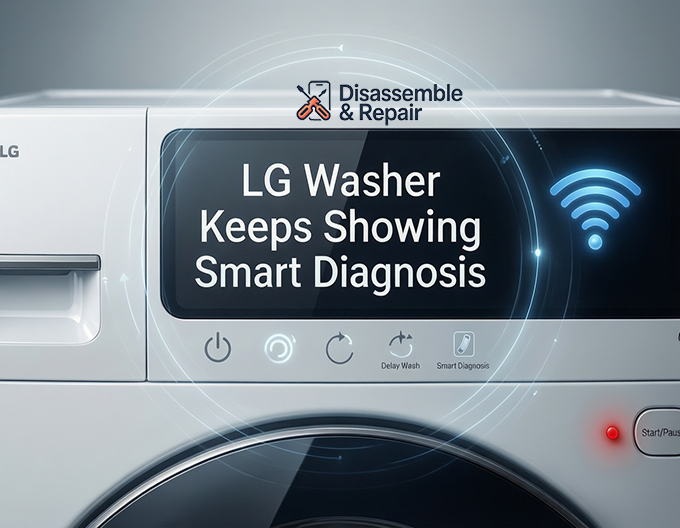
If your LG washer keeps showing smart diagnosis unexpectedly, it can be a frustrating interruption to your laundry routine. Instead of starting a wash cycle, the machine may emit loud audible signals, display a countdown, or seem stuck in a loop where it constantly prompts you to run a diagnostic check. This issue often stems from a combination of user interface glitches, stuck buttons on the control panel, or connectivity errors within the LG ThinQ app.
Understanding why this mode triggers automatically is the first step toward resolving the problem. Whether it is a physical issue with the buttons or a software communication error, this guide will walk you through professional appliance troubleshooting steps to clear the error and get your washer back to normal operation.
Why Your LG Washer Keeps Showing Smart Diagnosis
The Smart Diagnosis feature is a powerful tool designed to communicate error codes to a smartphone or a customer service center. However, it should only activate when you specifically command it to. When your LG washer keeps showing smart diagnosis without your input, it typically points to one of the following root causes:
1. Stuck Control Panel Buttons
The most common physical cause is a stuck or collapsed button. On many LG models, the Smart Diagnosis mode is triggered by holding down a specific button—often the Water Temp or Soil Level button—for three seconds. If this button is physically stuck due to detergent buildup, debris, or wear, the main control board interprets this as a constant command to enter diagnostic mode immediately after powering on.
2. Wi-Fi Connectivity Loops
Modern LG washers rely heavily on the LG ThinQ app for smart features. If the washer is in the middle of a firmware update or if the Wi-Fi module is struggling to maintain a connection, the system may default to a diagnostic state. This is often accompanied by a blinking Wi-Fi symbol. Users attempting to pair their device might also accidentally trigger this mode if they select the wrong connection method (e.g., trying to use Wi-Fi setup on a model that only supports NFC Tag On).
3. Electronic Glitches in the Main Control Board
The main control board acts as the brain of the washer. Power surges or electrical glitches can corrupt the temporary memory, causing the logic to “freeze” in the last known active state, which might be the diagnostic mode. This is often why a simple power-off doesn’t fix the issue immediately; the capacitors on the board retain a charge that keeps the memory alive.
4. Sensor Malfunction Triggers
While less common, a critical sensor malfunction—such as a failure in the water level sensor or thermistor—can sometimes force the machine into a protective state. While usually this results in a specific error code (like PE or tE), in some firmware versions, the machine may prioritize the diagnostic tool to ensure the user records the fault data.
Immediate Fixes for a Washer Stuck in Diagnostic Mode
Before calling a technician, perform these troubleshooting steps to rule out minor glitches.
Perform a Hard Reset (Master Reset)
A standard LG washer reset is the most effective way to clear temporary logic errors from the control board.
- Power Off: Press the Power button to turn the washer off.
- Unplug: Disconnect the power cord from the wall outlet completely.
- Discharge Energy: Press and hold the Start/Pause button for exactly 5 seconds while the machine is unplugged. This dissipates any residual static electricity stored in the capacitors of the main control board.
- Restart: Plug the washer back in and turn it on. Attempt to run a short cycle, such as “Rinse & Spin,” to see if the issue is resolved.
Inspect and Clean the Control Panel
If the reset does not work, closely examine the button responsible for triggering Smart Diagnosis.
Read more How to reset LG washer spin cycle
- Tactile Check: Press the button designated for diagnosis (usually marked with the phone icon). Does it click and rebound, or does it feel mushy and stuck?
- Cleaning: Use a soft, damp cloth to clean around the edges of the buttons. If dried detergent has seeped into the crevices, it may be creating a permanent contact.
Troubleshooting LG ThinQ App and Wi-Fi Issues
Connectivity issues are a frequent culprit when the washer loops into diagnostic mode, especially during the initial setup or after a network change.
Read more LG washing machine water not stopping
Distinguishing Between Wi-Fi and NFC Tag On
One of the biggest sources of user error is confusing Wi-Fi capabilities with NFC Tag On technology.
- Wi-Fi Models: These connect directly to your home network and allow remote control. If the Wi-Fi setup fails repeatedly, the washer may revert to a “listening” mode for audible diagnosis.
- NFC Models: These require you to physically tap your Android smartphone against the Tag On logo on the washer. They do not have a Wi-Fi radio. If you try to force a Wi-Fi connection in the app for an NFC-only model, the app may repeatedly prompt the washer to enter diagnostic mode to “search” for a signal that doesn’t exist.
Resetting the Wi-Fi Module
If your machine has Wi-Fi connectivity, a hung connection can cause erratic behavior.
- Turn on the washer.
- Press and hold the Wi-Fi button (often a secondary function on the Spin or Delay Wash button) for 3 seconds until the icon blinks or beeps.
- Open the LG ThinQ app and re-configure the network settings. This refreshes the communication link between the appliance and the server.
Checking for Firmware Updates
A firmware update can fix known bugs in the washer’s software. Open the LG ThinQ app and check if an update is available for your specific model. Ensure the washer is powered on and connected to the internet during this process. Do not interrupt the update, as a partial installation can cause the control board to lock up.
Understanding Audible Signals and Error Codes
When the Smart Diagnosis mode is active, your washer will emit a series of rhythmic, fax-like audible signals. These tones contain encrypted data regarding the machine’s status.
How to Use Audible Diagnosis Correctly
If you cannot stop the mode and need to understand what the machine is trying to tell you:
- Open the LG ThinQ app and select “Smart Diagnosis.”
- Follow the screen prompts to “Audible Diagnosis.”
- Hold your phone’s microphone near the Power button (where the Smart Diagnosis logo is usually located).
- The app will record the tones and decode them into readable text.
Common Error Codes Detected
Using the diagnostic mode may reveal underlying issues that are triggering the loop. Watch for these codes:
- IE (Input Error): Water supply issues.
- OE (Output Error): Drainage problems (clogged filter or hose).
- UE (Unbalanced Error): Load is unevenly distributed.
- tE (Thermistor Error): Heating sensor malfunction.
If the app reports a specific sensor failure, replacing that component (e.g., the water inlet valve or thermistor) will likely stop the washer from forcing the diagnostic check.
When to Replace the Main Control Board
If you have performed a hard reset, verified that no buttons are physically stuck, and ensured that the Wi-Fi settings are correct, but the washer still immediately enters Smart Diagnosis mode upon powering up, you are likely dealing with a failed main control board.
In this scenario, the board’s internal logic has permanently failed, constantly sending the “activate diagnosis” signal. This is a hardware failure that cannot be fixed with button presses or app updates. You will need to contact a professional technician to replace the PCB (Printed Circuit Board).
Summary of Prevention Tips
To prevent your LG washer from falling into this loop in the future:
Read more How to reset LG washer WiFi
- Keep the Control Panel Clean: Wipe down the buttons after every few washes to prevent detergent from gluing them down.
- Use the App Correctly: Ensure you have identified whether your machine uses Wi-Fi or NFC Tag On and use the appropriate connection method in the LG ThinQ app.
- Monitor Power: Connect your washer to a surge protector if you live in an area with unstable electricity, as voltage spikes can damage the sensitive electronics in the control board.
By systematically isolating the cause—whether it is a stuck button, a software loop, or a faulty board—you can effectively stop the cycle where your LG washer keeps showing smart diagnosis and return to stress-free laundry days.
Frequently Asked Questions
How do I stop my LG washer from being stuck in Smart Diagnosis mode?
The most effective way to clear this mode is by performing a hard reset. Power off the washer and unplug it from the wall. While it is unplugged, press and hold the Start/Pause button for five seconds to discharge any remaining electricity from the control board. Plug the machine back in and attempt to run a short cycle like “Rinse & Spin.”
Why is my washer making loud, fax-like noises?
Those rhythmic tones are audible signals that contain encrypted data about your washer’s performance. To understand them, open the LG ThinQ app on your smartphone, select “Audible Diagnosis,” and hold your phone’s microphone near the Power button. The app will decode the sounds into specific error codes like IE (water inlet issues) or OE (drainage problems).
Can a stuck button trigger Smart Diagnosis automatically?
Yes. On many LG models, the Smart Diagnosis mode is activated by holding down buttons like “Water Temp” or “Soil Level.” If detergent buildup or debris causes these buttons to stick in a pressed position, the washer will interpret this as a constant command to enter diagnostic mode every time it is powered on.
What is the difference between Wi-Fi and NFC Tag On models?
It is important to use the correct connection method in the LG ThinQ app to avoid software loops. Wi-Fi models connect directly to your home network for remote control, while NFC models require you to physically tap an Android smartphone against the “Tag On” logo. Attempting to force a Wi-Fi connection on an NFC-only model can cause the machine to repeatedly enter a diagnostic “search” state.
When should I replace the main control board?
If you have performed a hard reset, cleaned the control panel buttons, and verified your Wi-Fi settings, but the machine still defaults to Smart Diagnosis every time you turn it on, the main control board has likely suffered a hardware failure. At this point, the board’s internal logic is corrupted, and the component will need to be replaced by a professional.