
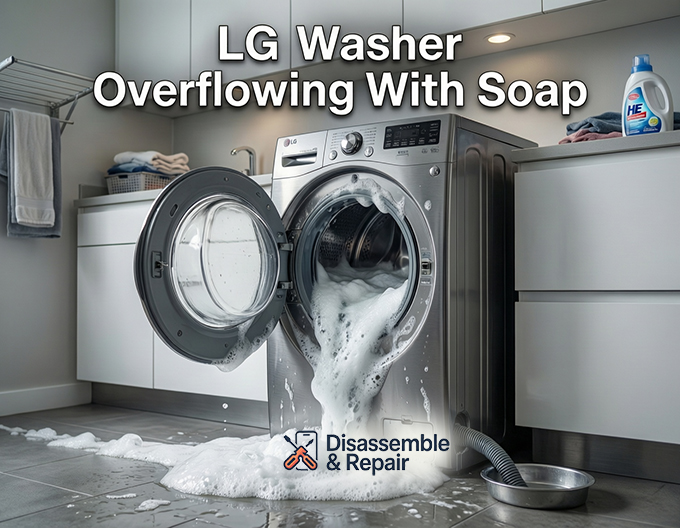
Walking into your laundry room to find your LG washer overflowing with soap can be a distressing experience that threatens both your appliance and your flooring. While LG manufactures some of the most reliable appliances on the market, an LG washer overflowing with soap is a specific issue that usually points to user error or a specific component failure rather than a total machine breakdown. As a homeowner, understanding the mechanics of your washer is crucial to preventing a minor foamy mess from becoming a major repair bill.
In this comprehensive guide, we will analyze the technical reasons behind soap overflow, examine the chemistry of detergents, and provide step-by-step protocols for troubleshooting and resolving the issue.
Why Is My LG Washer Overflowing with Soap?
The primary reason you are experiencing an LG washer overflowing with soap is a phenomenon known technically as over-sudsing. Unlike older top-load machines that used gallons of water to agitate clothes, a modern front-load washer relies on a tumbling action and very little water. Because there is less water to dilute the detergent, the margin for error is significantly smaller.
When too many suds are generated, they fill the drum and rise through the vents, the dispenser drawer, or even the back of the machine. This creates a “vapor lock” effect in the pump system, often referred to as a suds lock. When the pump attempts to drain water, it instead sucks in air and foam, causing the pump to cavitate and fail to expel the water. The pressure builds up, and the path of least resistance becomes the exterior vents or the door seal, leading to an overflow.
The Critical Role of HE Detergent
The most common culprit in overflow scenarios is the misuse of detergent. It is imperative that you strictly use HE detergent (High Efficiency) in an LG front-load washer.
HE vs. Regular Detergent
Regular detergents are formulated to create high volumes of suds because, in traditional washers, suds were used to suspend soil. However, in a high-efficiency machine, the mechanical tumbling action cleans the clothes. HE detergent is low-sudsing and quick-dispersing. If you use regular detergent, even in small amounts, it will generate an uncontrollable volume of foam.
Liquid Detergent Dosage
Even when using the correct type of soap, quantity matters. Many users fill the cap to the brim, but modern liquid detergent is highly concentrated. For a normal load, you often only need two tablespoons. If you have a water softener installed in your home, the water is more effective at activating the soap’s cleaning agents. Consequently, soft water requires significantly less detergent than hard water. If you use the manufacturer’s recommended amount of soap with soft water, you are almost guaranteed to experience over-sudsing.
Diagnosing the Suds Error Code
LG washers are equipped with sophisticated sensors that monitor the wash cycle. When the machine detects an excessive amount of foam, it will trigger a specific error.
Read more LG washing machine fE error
The SUD or SD Code
If you see “SUD” or “SD” flashing on the display, the washer has entered a sud-reduction mode. This is a protective measure. The washer stops the cycle and adds water to try and dilute the foam, followed by a pause to let the bubbles burst.
Do not attempt to force the door open during a Suds error code event. The drum is likely full of water and foam. If you bypass the lock, the LG washer overflowing with soap problem will move from the interior of the machine to your laundry room floor immediately. Allow the machine to attempt to clear the error on its own, which may take up to two hours.
Hardware Culprits: The Pressure Sensor and Pump
If you are using the correct HE detergent in the proper amounts and still facing overflow issues, you must look at the hardware.
Read more LG washing machine dE error
The Pressure Sensor
The pressure sensor (or water level switch) determines how much water is in the drum. It operates via a small air tube connected to the bottom of the tub. As water rises, air pressure in the tube increases, triggering the sensor to shut off the water valve.
If the air tube is blocked by suds or debris, or if the sensor itself fails, the machine may not realize there is already water in the drum. It will continue to fill, or it will continue to agitate high-sudsing water, leading to an overflow. A failing pressure sensor often results in erratic water levels and is a leading mechanical cause of overflow.
The Drain Pump Filter
The drain pump filter is the kidney of your washing machine. It catches coins, lint, hair, and undissolved soap clumps. If this filter is clogged, the water cannot exit the drum fast enough during the drain cycle.
When the water fails to drain but the machine continues to tumble, the remaining soapy water is agitated into a thick foam, exacerbating the suds lock. Regular maintenance of this filter is non-negotiable for preventing leaks and overflows.
Step-by-Step Troubleshooting and Repair
If you are currently looking at a washer full of suds, follow this procedure to safely reset the machine and clear the blockage.
Step 1: Drain the Excess Water
Locate the small access door at the bottom front of your washer. Inside, you will find a small rubber drain hose and the pump filter housing.
- Place a shallow pan or several heavy towels on the floor.
- Pull out the small drain hose and remove the plug.
- Allow the water to drain into the pan. You will likely need to empty the pan multiple times.
- This manual draining relieves the pressure and bypasses the suds lock preventing the main pump from working.
Step 2: Clean the Drain Pump Filter
Once the water is drained via the hose:
- Twist the drain pump filter counter-clockwise to remove it.
- Prepare for a rush of remaining water and soap slime.
- Clean the filter thoroughly under hot running water. Remove any debris from the housing.
- Reinsert the filter and the drain hose plug securely.
Step 3: Clear the Dispenser Drawer
Remove the dispenser drawer entirely by pressing the release tab. Soap residue often builds up here, restricting water flow and causing improper mixing of the liquid detergent. Wash the drawer and the slot it fits into with warm water and a brush to remove all sticky residue.
Step 4: Run a Maintenance Cycle
Once the machine is empty and the filters are clean, run a “Rinse + Spin” cycle with no clothes and no detergent. This flushes out the remaining suds from the internal hoses. Afterward, run a full Tub Clean cycle using a specialized washer cleaner or white vinegar to strip away soap scum buildup on the outer tub.
Prevention and Best Practices
To ensure you never have to deal with an LG washer overflowing with soap again, adopt the following professional maintenance habits:
- Switch to HE Detergent: Verify the “HE” logo is on your bottle.
- Reduce Quantity: Use no more than 2 tablespoons of liquid detergent per load. If you have a water softener, reduce this to 1 tablespoon.
- Monthly Filter Cleaning: Clean the drain pump filter once a month to ensure the pump can evacuate water efficiently.
- Use High Heat: Occasionally run a sanitary or hot water cycle. Cold water washing is energy efficient, but it contributes to the buildup of soap scum and biofilm that can trigger sensor errors.
- Leave the Door Open: After every wash cycle, leave the door and the dispenser drawer slightly ajar. This allows moisture to evaporate, preventing mold and keeping the pressure sensor tube clear of condensation blockages.
By respecting the technical limitations of a front-load system and managing your chemical inputs, you can maintain the high performance of your LG washer for years to come.
Frequently Asked Questions
Why does my LG washer display a “SUD” or “SD” error code?
These codes indicate that the sensors have detected an excessive amount of foam inside the drum, a condition known as a “suds lock.” When this happens, the washer automatically enters a sud-reduction mode, pausing the cycle to allow the bubbles to dissipate and adding water to dilute the soap. You should not attempt to force the door open during this time, as the machine is likely full of water and foam.
Can I use regular detergent if I use a smaller amount?
No, you should strictly use HE (High Efficiency) detergent. Regular detergents are formulated to create high volumes of suds, which are difficult to rinse away in the low-water environment of a front-load washer. Even a small amount of regular detergent can create an uncontrollable volume of foam due to the mechanical tumbling action of the machine.
How much detergent should I use for a standard load?
For most modern LG front-load washers, you only need about two tablespoons of concentrated HE liquid detergent. If your home has a water softener, you should reduce this amount to one tablespoon. Using the full capacity of the detergent cap is a common mistake that leads to buildup and over-sudsing.
What should I do if my washer is currently overflowing with suds?
First, do not open the main door. Use the small manual drain hose located behind the access panel at the bottom front of the machine to drain the water into a shallow pan. Once the water is removed, unscrew and clean the drain pump filter to remove any debris or soap slime. Finally, run a “Rinse + Spin” cycle without clothes or detergent to flush out the remaining residue.
How often should I clean the drain pump filter?
To prevent clogs and drainage issues that lead to soap overflow, you should clean the drain pump filter at least once a month. This filter catches lint, hair, and undissolved soap that can otherwise cause the pump to fail or trigger suds-related error codes.
Read more LG top load washing machine not filling with water