
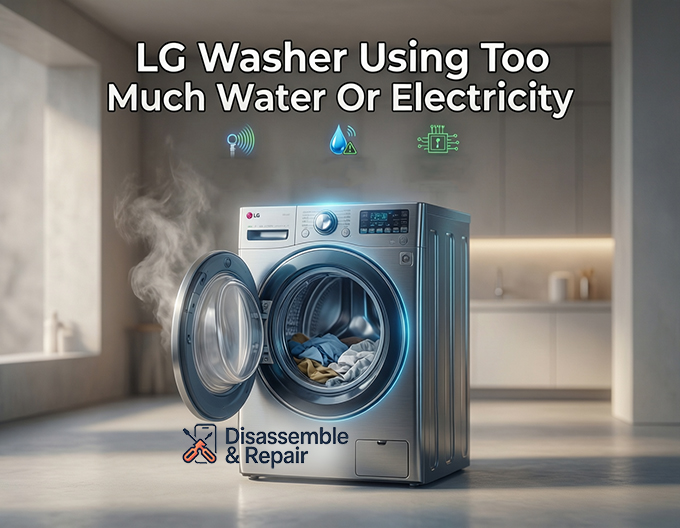
Homeowners often notice a sudden spike in their utility bills and realize their LG washer using too much water or electricity is the primary culprit. While LG appliances are generally renowned for their Energy Star efficiency, component failures or incorrect settings can turn these machines into resource hogs.
As a Senior SEO Specialist and appliance expert, I have compiled a comprehensive guide to diagnosing these inefficiencies. This article explores the mechanical and digital causes behind excessive consumption, focusing on critical components like the main control board, water sensors, and the inverter motor.
Troubleshooting an LG Washer Using Too Much Water or Electricity
When diagnosing an LG washer using too much water or electricity, it is essential to distinguish between a mechanical failure and a user-error issue related to cycle selection. Modern washing machines rely on a complex network of sensors to determine the appropriate amount of resources required for a specific laundry load. When these sensors fail, or when the physical valves governing water flow malfunction, the machine defaults to inefficient operation modes.
Read more LG washer tearing clothes
The following sections breakdown the specific hardware and software issues that lead to waste.
The Role of Load Sensing Technology
Modern LG units are equipped with load sensing technology. Before the cycle begins, the tub spins briefly without water. The Inverter Direct Drive Motor measures the resistance and weight of the dry clothes to calculate the exact water level needed.
If your washer is filling the tub to the brim for a small load, the load sensing system may be malfunctioning. This is often caused by a degradation of the suspension springs or the hall sensor on the motor, which sends incorrect weight data to the main control board. Consequently, the board commands the water valves to remain open longer than necessary, drastically increasing the gallons per cycle used.
Malfunctioning Water Inlet Valve
One of the most common hardware failures leading to water waste is a defective water inlet valve. This component consists of solenoids that open and close to let water into the tub. Over time, mineral deposits or mechanical fatigue can cause a valve to stick in the “partially open” position.
If you hear a faint buzzing sound or notice water trickling into the drum even when the machine is turned off, the inlet valve is likely the issue. This results in the washer filling continuously, often triggering a drain cycle to prevent flooding, which creates a loop of constant filling and draining. This not only wastes hundreds of gallons of water but also keeps the drain pump running continuously, consuming excess electricity.
Read more How to reset LG washer WiFi
Pressure Switch and Water Level Sensor Failures
The pressure switch, also known as the water level sensor, is the component responsible for telling the main control board how much water is currently in the tub. It operates via a small air tube connected to the drum; as water rises, air pressure increases, tripping the switch.
If the air tube is clogged with debris or the switch itself is electrically faulty, the machine will not “know” that the water has reached the target level. The control board will assume the tub is empty and continue to power the inlet valves. This leads to overfilling, potential leaks, and extended cycle times that drive up energy costs.
Impact of Detergent on Efficiency
Believe it or not, the soap you use dictates your energy consumption. LG front-load and top-load high-efficiency machines require High-efficiency (HE) detergent. These detergents are formulated to produce low suds.
If you use standard detergent or too much HE detergent, the washer detects an “oversuds” condition. The machine’s logic responds by initiating multiple additional rinse cycles to clear the bubbles. Each extra rinse requires the drain pump to run, the motor to spin, and the valves to fill again. A single tablespoon of the wrong soap can extend a wash cycle by 30 to 60 minutes, significantly contributing to the issue of an LG washer using too much water or electricity.
Analyzing Electrical Consumption Spikes
While water waste is often visible, electrical waste is silent. If your electricity usage is climbing, consider the following components and settings.
The Drain Pump and Clogs
The drain pump is responsible for expelling water from the tub. If the drain filter (often located at the bottom front of the machine) is clogged with lint, coins, or hair, the pump must work much harder to push water out.
In severe cases, the main control board may detect that the water level is not dropping fast enough and extend the drain cycle. Instead of running for two minutes, a struggling pump might run for ten. Over the course of a month, this adds up. Furthermore, a clogged system can prevent the spin cycle from reaching high speeds, leaving clothes wet. This forces the user to run the dryer longer, indirectly causing the washer to be the source of total home energy waste.
Wash Cycle Settings and Heater Use
The most energy-intensive component in a washing machine is not the motor, but the internal water heater (if equipped). Wash cycle settings play a massive role in energy draw.
- Sanitary / Allergiene Cycles: These settings activate the internal heater to raise water temperatures to extremely high levels. This draws significant amperage.
- Bright Whites: Often utilizes hot water and longer agitation periods.
- Normal / Speed Wash: These typically utilize the hot water from your home’s water heater (via the inlet valve) rather than the internal heater, which is more energy-efficient.
To maintain Energy Star standards, stick to “Normal” or “Cold Wash” settings for daily loads. Only use high-heat settings when absolutely necessary for sanitation purposes.
Read more LG washing machine E5 error
Appliance Troubleshooting: A Step-by-Step Guide
If you suspect your unit is malfunctioning, follow this appliance troubleshooting checklist before calling a professional.
1. The “Off” Test
Turn the washer off but leave the water supply faucets on the wall open. Look inside the drum. If you see water accumulating or dripping after an hour, your water inlet valve is defective and must be replaced.
2. The Filter Clean-out
Locate the debris filter access panel. Open it and unscrew the filter (have a towel ready for residual water). Clean out any debris. This simple maintenance step ensures your drain pump operates at peak efficiency, reducing cycle time and electricity usage.
3. Sensor Calibration
Some LG models allow you to recalibrate the load sensing technology. Consult your manual for the specific button combination (often holding two buttons while powering on) to reset the weight sensors. This resets the main control board’s baseline, ensuring it doesn’t overestimate load size and use too much water.
4. Check the Pressure Switch Tube
Remove the top panel of the washer (on front loaders) or the control panel (on top loaders) to access the pressure switch. Ensure the clear plastic tube connecting the switch to the tub is not kinked, punctured, or clogged. A clear airway is vital for accurate water level readings.
Conclusion
An LG washer using too much water or electricity is rarely a sign that the machine is “broken” beyond repair; rather, it is usually a symptom of a specific component failure or inefficient user habits. By ensuring you are using the correct High-efficiency (HE) detergent, maintaining the drain pump filter, and monitoring the water inlet valve for leaks, you can restore your appliance to its factory efficiency.
Modern appliances are designed to save resources. When the Inverter Direct Drive Motor and main control board are working in harmony with calibrated sensors, your LG washer should be an asset to your household budget, not a drain on it. Regular maintenance and attention to wash cycle settings are the keys to longevity and sustainability.
Frequently Asked Questions
Why is my LG washer filling with too much water for small laundry loads?
This issue is typically linked to a failure in the load sensing technology. LG washers use an Inverter Direct Drive Motor to sense the weight of the clothes before the cycle begins. If the motor’s hall sensor is faulty or the suspension springs have degraded, the machine may receive incorrect weight data and default to a maximum fill level regardless of the load size.
How does using the wrong detergent impact my washer’s efficiency?
LG high-efficiency washers require HE detergent, which is formulated to be low-sudsing. If you use standard detergent, the machine detects an “oversuds” condition and automatically initiates several extra rinse cycles to clear the foam. These additional cycles significantly increase both the gallons of water used and the electricity required to run the pump and motor for the extended time.
Read more LG washer light blinking
Why is my washer still drawing water even when it is turned off?
If you notice water trickling into the drum while the machine is powered down, the water inlet valve is likely defective. This happens when the internal solenoids become stuck in a partially open position due to mineral deposits or mechanical wear. This constant flow not only wastes water but often triggers the drain pump to run automatically to prevent an overflow, which consumes extra electricity.
Which wash settings are the most expensive to run?
The most energy-intensive settings are those that activate the washer’s internal heating element, such as the Sanitary or Allergiene cycles. These cycles draw significant amperage to reach high temperatures. For maximum energy efficiency, use the “Normal” or “Cold Wash” settings, which rely on your home’s external water heater rather than the machine’s internal heater.
Can a clogged drain filter affect my electricity bill?
Yes. When the drain filter is clogged with lint or debris, the drain pump must work much harder and run for a longer duration to empty the tub. This extended run time increases electrical consumption. Furthermore, if the water isn’t drained efficiently, the machine may fail to reach high spin speeds, leaving clothes wetter and forcing your dryer to run longer, further increasing your total home energy costs.