
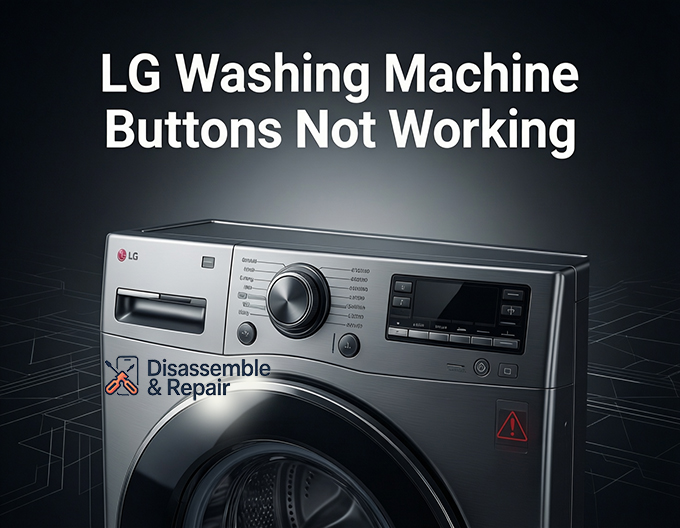
Few household occurrences are as frustrating as loading a pile of dirty laundry only to discover your LG washing machine buttons not working. This specific issue prevents the appliance from starting, changing cycles, or even powering off, leaving your laundry routine in a state of suspension. While the situation may seem like a catastrophic electronic failure, the root cause often lies in simple settings, software glitches, or minor hardware obstructions that can be resolved without a technician.
As a Senior SEO Specialist and appliance expert, I have compiled a comprehensive guide to help you navigate this problem. By understanding the intricate components of your washer, from the control panel to the internal circuitry, you can diagnose the issue effectively. This article covers everything from basic troubleshooting—such as disengaging the Child Lock (CL code)—to advanced hardware inspection involving the Printed Circuit Board (PCB).
Why Are My LG Washing Machine Buttons Not Working?
When you encounter an unresponsive interface, it is rarely a random event. The problem usually stems from one of three primary categories: user settings, software freezes, or hardware degradation. Understanding these categories is the first step toward a solution.
1. The Child Lock Feature (CL Code)
The most frequent reason for buttons becoming unresponsive is the accidental activation of the Child Lock feature. LG designs this safety mechanism to prevent children from changing cycle settings or starting the machine. When active, the control panel locks all buttons except for the power button. If you see a “CL” or a lock icon on the display board, the machine is not broken; it is simply secured.
Read more LG washing machine CL error
2. Electronic Glitches and Static
Modern front load washer and top load washer models are essentially computers that clean clothes. Like any computer, they are susceptible to software freezes, static electricity buildup, or minor logic errors. A surge in power or a long uptime without a reset can cause the system to hang, rendering the touch sensor or physical buttons useless.
3. Hardware Component Failure
If settings and software are ruled out, the issue likely resides in the physical components. This could be a failing membrane switch (the layer behind the buttons), a corroded display board, or a faulty main Printed Circuit Board (PCB). In humid environments, moisture can penetrate the console, damaging the conductive traces that register your touch.
Step-by-Step Troubleshooting: The Hard Reset
Before you reach for a screwdriver or call for appliance repair, you must attempt to reset the machine’s internal logic. This process is known as a hard reset or a power cycle. It clears the residual electrical charge in the capacitors on the main board, often resolving “ghost touch” issues or frozen controls.
To perform a proper power cycle:
- Disconnect Power: Unplug the washing machine from the wall outlet. If the plug is inaccessible, flip the dedicated circuit breaker to the “OFF” position.
- Discharge Energy: While the machine is unplugged, press and hold the “Start/Pause” button for 5 to 10 seconds. Then, press and hold the “Power” button for another 5 to 10 seconds. This action drains any stored electricity in the main board.
- Wait: Leave the machine unplugged for at least 5 to 10 minutes.
- Reconnect: Plug the washer back in or flip the breaker on.
- Test: Turn the machine on and attempt to select a cycle.
If the LG washing machine buttons not working issue persists after this reset, proceed to the specific diagnostics below.
Read more LG washing machine E7 error
Deactivating the Child Lock (CL Code)
If your buttons are non-functional but the power button still works, the Child Lock is the prime suspect.
- Inspect the Display: Look closely at the LED or LCD screen. Is there a code reading “CL”? Is there a small red or orange padlock icon illuminated?
- Identify the Trigger Buttons: On the control panel, look for a lock icon printed between two buttons or underneath a specific button (commonly “Rinse + Spin,” “Prewash,” or “Extra Rinse”).
- The Unlock Procedure: Press and hold the indicated button(s) simultaneously for 3 to 5 seconds. You should hear a chime, and the “CL” code or lock icon will disappear.
- Verification: Once the code is gone, try pressing the wash cycle buttons to see if they respond.
Assessing the Control Panel and Touch Sensors
Modern LG washers often utilize touch sensor technology (capacitive touch) rather than mechanical buttons. These sensors rely on the electrical properties of the human body to register input.
Read more LG washing machine water not stopping
Cleaning the Surface
Capacitive sensors are highly sensitive to moisture, grease, and debris. If the interface is dirty, it cannot detect your finger.
- Use a soft, microfiber cloth.
- Lightly dampen the cloth with water or a mild electronic cleaner (do not spray directly on the washer).
- Wipe the entire control panel vigorously to remove invisible oil films or detergent residue.
- Dry the surface completely.
Moisture Intrusion
If your washing machine is located in a humid environment (like a basement or a bathroom without ventilation), moisture may have accumulated behind the plastic fascia. This can bridge the electrical contacts, causing buttons to fail or activate randomly. If you suspect this, use a hairdryer on a “cool” or “low heat” setting to blow air around the edges of the display for a few minutes to help evaporate trapped humidity.
Advanced Diagnosis: Hardware Inspection
If the Child Lock is off, the machine has been reset, and the panel is clean, you are likely dealing with a hardware failure. This section involves examining the internal components. Note: Always unplug the machine before removing any panels.
The User Interface (UI) Board
The display board (also called the UI board) sits directly behind the buttons. It houses the LEDs and the receptors for the buttons.
- Front Load Washer: You typically need to remove the top panel (two screws at the back) and then slide the detergent drawer out to access screws holding the control panel fascia.
- Top Load Washer: The console usually flips up after removing screws from the back or releasing clips at the front using a putty knife.
Once accessed, inspect the UI board for signs of corrosion or oxidation. If you see white or green residue on the circuit board, it has been water-damaged. In this case, the display board must be replaced.
The Membrane Switch
On older models or specific budget-friendly units, LG uses a membrane switch. This is a flexible ribbon cable with pressure pads. Over time, the repeated pressing of buttons can wear out the conductive tracks inside the ribbon.
- Inspect the ribbon cable connecting the buttons to the main board.
- Look for creases, tears, or loose connections.
- If the ribbon is damaged, the entire button assembly usually needs replacement.
The Main Printed Circuit Board (PCB)
The main Printed Circuit Board (PCB) is the brain of the washer. Even if the display board is working, the main PCB might not be receiving or processing the signals.
- Locate the main PCB (often found in the back of the machine or side panel, encased in plastic).
- Check for “blown” capacitors (they will look swollen or bulging) or burn marks.
- Ensure all wire harnesses are seated firmly. Vibrations from the spin cycle can sometimes loosen these connections.
Error Codes and Button Functionality
Sometimes, the buttons appear dead because the machine is locked in an error state. If an error code is flashing, the washer will disable most inputs to prevent operation during a fault.
Read more LG washer light blinking
Common codes that freeze the panel include:
- IE: Water inlet error (water not entering).
- OE: Drain error (water not leaving).
- UE: Unbalance error.
- DE: Door error.
If an error code is present, you must resolve the underlying mechanical issue (e.g., cleaning the drain filter for an OE error) before the buttons will function again. Consult your manual to interpret specific error codes.
Read more LG washing machine AE error
Front Load vs. Top Load Specifics
While the electronics are similar, the physical layout differs:
- Front Load Washer: The control board is often subjected to more steam and humidity if the door seal fails, allowing steam to rise directly into the electronics mounted above the door. If you frequently wash on high heat and have button issues, check for steam damage behind the console.
- Top Load Washer: These units are prone to shaking more violently if unbalanced. This vibration is the leading cause of loose wire harnesses connecting the display board to the main PCB. Always check the wire connections first on a top loader.
When to Call a Professional
While many of these steps are DIY-friendly, there are limits. You should seek professional appliance repair if:
- Soldering is required: If you identify a broken component on the PCB, do not attempt to solder it unless you are trained. PCBs are coated in silicone (conformal coating) which makes rework difficult.
- Multimeter Testing: If you cannot visually spot the damage, a technician can use a multimeter to trace voltage and continuity through the membrane switch and boards to pinpoint the exact failure.
- Warranty Status: If your machine is under warranty, opening the console screws may void your coverage. Always check your warranty status first.
Conclusion
Finding your LG washing machine buttons not working is a major inconvenience, but it is rarely a terminal issue for the appliance. By systematically ruling out the Child Lock, performing a hard power cycle, and ensuring the control panel is clean and dry, you can resolve the majority of these cases. Whether you own a front load washer or a top load washer, the interaction between the touch sensor, the display board, and the main Printed Circuit Board (PCB) is critical.
If basic troubleshooting fails, the issue is likely a degraded electronic component requiring replacement. By following this guide, you have either fixed the machine yourself or equipped yourself with the knowledge to explain the exact symptoms to a repair technician, ensuring a faster and more accurate repair process.
Frequently Asked Questions
Why is my LG washer showing “CL” and not responding to any buttons?
The “CL” code stands for Child Lock, a safety feature designed to prevent children from changing cycles or starting the machine. When active, it disables most buttons on the control panel. To deactivate it, locate the two buttons joined by a lock icon (often “Rinse + Spin” or “Prewash”) and press and hold them simultaneously for 3 to 5 seconds until the “CL” code disappears.
How do I perform a hard reset on my LG washing machine?
A hard reset, or power cycle, can clear electronic glitches or static buildup. Unplug the washing machine from the power source. Press and hold the “Start/Pause” button for 5 to 10 seconds, then press and hold the “Power” button for another 5 to 10 seconds to discharge any remaining energy. Leave the machine unplugged for at least 10 minutes before plugging it back in and testing the interface.
Can a dirty control panel prevent the touch sensors from working?
Yes. Modern LG washers use capacitive touch sensors that rely on the electrical properties of your skin. If the panel is covered in detergent residue, grease, or moisture, it may fail to register your touch. Clean the interface thoroughly with a soft, dry microfiber cloth. If the environment is very humid, you can also use a hairdryer on a “cool” setting to remove any moisture trapped behind the panel.
What should I do if an error code is flashing on the display?
When an LG washer detects a mechanical fault, such as a drainage issue (OE) or a water inlet problem (IE), it may lock the control panel to prevent further operation. You must address the specific mechanical problem indicated by the error code before the buttons will become functional again. Consult your user manual for the specific steps to clear the fault.
When is it necessary to replace the Printed Circuit Board (PCB)?
If you have performed a hard reset, ensured the Child Lock is off, and cleaned the panel but the buttons still do not work, the issue is likely internal. You should suspect a hardware failure if there is visible corrosion on the display board or if the main PCB has swollen capacitors or burn marks. In these instances, the affected electronic board will typically need to be replaced by a professional.