
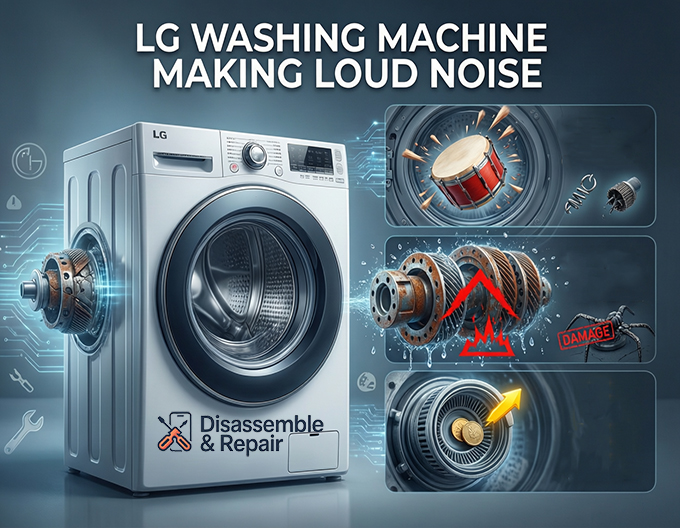
Is your LG washing machine making loud noise during the spin cycle, turning a peaceful laundry day into a headache? Finding the root cause of an LG washing machine making loud noise requires a bit of detective work, as the culprit could range from a simple unbalanced load to a failing mechanical part.
This guide will walk you through the most common reasons for these disruptions, focusing on critical components like the Inverter Direct Drive motor, shock absorbers, and drum bearings. By identifying the specific type of sound—whether it’s grinding, banging, or humming—you can pinpoint the issue and determine if it’s a DIY fix or a job for a professional.
Why is your LG washing machine making loud noise?
To effectively troubleshoot, you must first identify the type of noise your washer is producing. LG washers are generally quiet, thanks to their Inverter Direct Drive motor technology, which eliminates the noisy pulleys and belts found in older machines. However, when things go wrong, the specific sound is your best clue.
Read more LG washer taking too long to finish
1. Banging or Thumping Sounds
If you hear a loud banging or thumping, especially during the spin cycle, it often indicates stability issues.
- Unbalanced Load: This is the most common and easily fixable cause. Heavy items like wet towels or bedding can clump on one side of the drum, causing violent shaking.
- Shock Absorbers: In a front load washer, shock absorbers prevent the drum from banging against the cabinet frame. If these are worn out, the machine will vibrate excessively.
- Suspension Springs: These hold the tub in place. If a spring stretches or breaks, the tub will become unstable and bang against the sides.
2. Grinding or Roaring Noises
A grinding noise typically points to mechanical friction or failed bearings.
- Tub Bearings: Over time, the water seal can fail, allowing water to reach the metal bearings. When these rust, they create a loud “roaring” or “jet engine” sound that gets louder as the spin speed increases.
- Spider Arm Assembly: This metal bracket attaches the drum to the motor shaft. If it corrodes or cracks (often due to detergent buildup), the drum will wobble and grind against the outer tub.
3. Humming or Buzzing
- Drain Pump: If the noise occurs while the water is emptying, a small object (like a coin or button) might be stuck in the drain pump filter, or the pump motor itself may be failing.
Inspecting Key Components
Here is a professional breakdown of the specific entities that are likely causing your LG washing machine making loud noise.
Shock Absorbers and Suspension Springs
In front load washers, the heavy drum is suspended by suspension springs and dampened by shock absorbers at the bottom.
- How to check: Push down on the drum inside the washer. It should feel firm and return to position immediately. If it bounces up and down like a pogo stick, your shock absorbers are likely “shot.” Inspect the springs for any signs of detachment or stretching.
Drum Bearings and Tub Bearings
Drum bearings (also called tub bearings) are critical for smooth rotation. When they fail, the noise is deafening.
Read more LG washing machine sound problem
- The “Play” Test: Open the door and push the inner metal drum upwards near the top edge. If there is significant movement or “play” between the inner drum and the outer plastic tub, your bearings (and likely the spider arm assembly) are damaged. This is a complex repair that often requires a full machine teardown.
Inverter Direct Drive Motor vs. Drive Belt
Most modern LG washers feature the Inverter Direct Drive motor, which connects directly to the back of the drum without a belt. This design is robust, but issues can still arise.
- Rotor Position: Sometimes, the plastic splines on the rotor (the magnetic part of the motor) can strip, or the center bolt can loosen, causing a rattling or grinding sound.
- Drive Belt: If you have an older, non-Direct Drive model, a worn or loose drive belt can cause squealing. However, for most users reading this, the focus should be on the motor assembly itself.
The Drain Pump
The drain pump is the heart of the water removal system.
- Diagnosis: If the loud noise is a rhythmic buzzing or clicking that only happens when water is draining, checking the pump is your first step.
- Solution: Locate the debris filter (usually a small door on the bottom front). Open it (have a towel ready for water) and check for foreign objects like coins, lint, or bra wires that might be hitting the impeller.
Troubleshooting Step-by-Step
If you are tired of your LG washing machine making loud noise, follow this systematic approach to silence it.
- Level the Machine: Ensure all four feet are touching the floor firmly. Use a bubble level. If the machine rocks, it will be noisy.
- Check the Load: Redistribute wet laundry. Avoid washing single heavy items like a bath mat; add towels to balance the weight.
- Clean the Drain Filter: This resolves many humming and buzzing complaints instantly.
- Inspect for Transit Bolts: If this is a brand new installation, ensure the shipping bolts (used to secure the drum during transport) have been removed.
- Perform the Spin Test: Run an empty spin cycle.
- Silence: The issue was likely an unbalanced load.
- Banging: Check shock absorbers and suspension springs.
- Roaring/Grinding: Suspect drum bearings or the spider arm assembly.
When to Call a Professional
While cleaning a drain pump filter or leveling the feet are simple DIY tasks, other issues require professional intervention.
Read more LG washing machine OL error
- Bearing Replacement: Replacing tub bearings involves disassembling the entire machine to pull the tub out. It requires special tools and significant time.
- Spider Arm Assembly: Similar to bearings, accessing the spider arm is labor-intensive. If this part breaks, it can damage the outer tub or the Inverter Direct Drive motor if not fixed immediately.
By understanding the role of components like the shock absorbers, drive belt (if applicable), and drum bearings, you can make an informed decision: order the parts and fix it yourself, or call an expert to restore the peace and quiet your home deserves.
Frequently Asked Questions
Why does my LG washer make a loud roaring sound during the spin cycle?
A roaring or “jet engine” noise typically indicates that the tub bearings have failed. This happens when the water seal breaks, allowing water to rust the metal bearings. The sound will progressively get louder as the spin speed increases and usually requires a professional repair.
Read more How to fix LG washing machine door lock
What should I do if my washing machine makes a loud humming noise while draining?
If the noise only occurs when water is leaving the machine, check the drain pump filter. Small objects like coins, hairpins, or buttons can get stuck in the filter and hit the pump impeller. You can usually find the access door for the filter at the bottom front of your LG washer.
My new LG washing machine is vibrating violently; what is wrong?
If the machine is brand new, the most likely cause is that the transit bolts (shipping bolts) were not removed during installation. These bolts secure the drum during shipping but must be removed before use, or the machine will bang and shake uncontrollably.
How can I tell if my shock absorbers are worn out?
You can perform a simple “bounce test.” Open the washer door and push down firmly on the bottom of the drum, then let go. A healthy drum should return to its original position immediately. If the drum bounces up and down several times like a pogo stick, the shock absorbers are likely “shot” and need to be replaced.
Why is my washing machine banging even though the load looks balanced?
If the machine is level and the load is balanced but it still bangs, a suspension spring may have stretched or detached. Additionally, check the leveling feet to ensure all four are firmly touching the floor; if the machine can rock back and forth when pushed, it will produce a loud thumping sound during the spin cycle.