
If you find your LG washing machine not draining water, it can be a frustrating halt to your laundry routine. Often accompanied by an OE error code on the display, this issue typically signals that water is unable to leave the drum due to a blockage or mechanical failure. Fortunately, many of these problems can be resolved without calling for professional appliance repair.
This guide outlines a professional approach to diagnosing and fixing drainage issues in both front load and top load LG washers.
Understanding the LG washing machine not draining water
The LG washing machine not draining water is LG’s specific indicator of a drainage fault. It triggers when the main control board detects that the water level has not dropped within a set time limit—usually 10 minutes—during the drain cycle. While the code indicates the symptom, the root cause typically lies in the drain hose, filter, or pump assembly.
Before attempting any repairs, ensure you unplug the machine to prevent electrical shock and turn off the water supply.
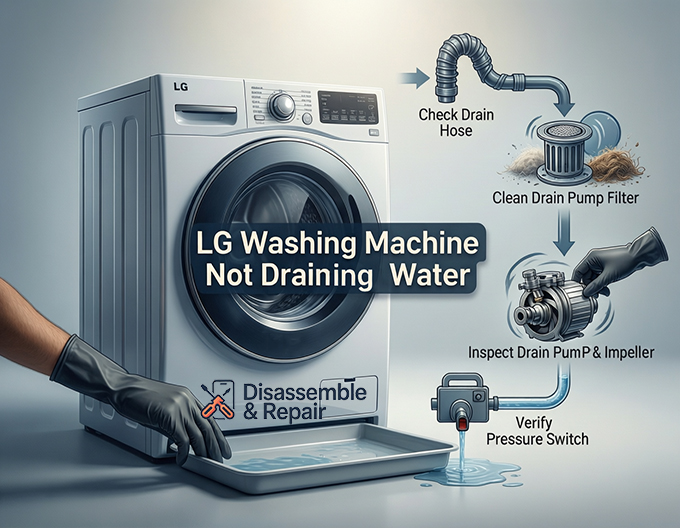
Step 1: Check the Drain Hose for Kinks and Clogs
The most common and easily fixable cause for an LG washing machine not draining water is a simple restriction in the flow path.
- Inspect for Kinks: Pull the washer forward carefully to inspect the drain hose behind the unit. A kinked hose can physically stop water from flowing. Straighten any bends and ensure the hose is not crushed between the machine and the wall.
- Check Height Requirements: The drain hose must be installed correctly. If it is pushed too far down the standpipe, it can cause siphoning or back-flow issues. Conversely, if the outlet is too high (typically above 96 inches), the drain motor may struggle to push water out.
- Clear Clogs: Disconnect the hose and run water through it with a garden hose to check for internal obstructions. accumulated lint or small clothing items often get stuck here.
Step 2: Clean the Drain Pump Filter (Coin Trap)
In an LG front load washer, the drain pump filter, often referred to as a coin trap, is the first line of defense against debris. If this filter is clogged, the pump cannot evacuate water.
Read more LG washing machine no power no lights
How to Clean the Filter:
- Locate the Access Panel: Find the small square door on the bottom front corner of the machine.
- Drain Remaining Water: Pull out the small black emergency drain tube, remove the plug, and let the excess water flow into a shallow pan. This prevents a flood when you open the filter housing.
- Remove the Filter: Twist the large round filter cap counter-clockwise to remove it.
- Remove Debris: Clean out any lint, coins, hairpins, or debris blockage. Wash the filter under warm running water.
- Check the Housing: Shine a flashlight into the filter housing to ensure no objects are stuck in the back near the impeller.
Step 3: Inspect the Drain Pump and Impeller
If the filter and hose are clear, the issue may lie with the pump itself. The pump motor is responsible for driving the impeller, a small fan-like mechanism that pushes water out of the drum.
- Mechanical Failure: With the filter removed, use your finger to spin the impeller blades inside the housing. It should spin with some magnetic resistance (a “bouncy” feel). If it spins freely with no resistance, or if the blades are broken or separated from the shaft, the pump is defective and requires replacement.
- Electrical Failure: If the impeller feels normal but the pump does not run, the motor windings may be open. A multimeter can be used to test the resistance of the drain motor. A reading of infinity (open loop) indicates a failed motor.
Step 4: Verify the Pressure Switch
The pressure switch (or water level sensor) tells the control board how much water is in the tub. If this switch or its air tube is clogged or malfunctioning, the machine may “think” it is empty when it is full, or vice versa.
- Symptoms: If the washer drains constantly or refuses to spin despite being empty, the pressure switch might be at fault.
- Fix: Check the clear plastic tube connecting the tub to the pressure switch for sediment or holes. Blow through the tube to clear any minor blockages. If the sensor itself is faulty, it will need to be replaced to restore proper communication with the control board.
Summary of Troubleshooting
By systematically checking the kinked hose, clearing the debris blockage in the coin trap, and inspecting the pump motor and impeller, you can resolve most drainage issues. Whether you have a front load washer or a top loader, regular maintenance of the drain pump filter prevents the dreaded OE error code and keeps your appliance running efficiently. If these steps do not resolve the problem, the issue may require a new drain pump or professional service.
Read more LG washing machine iE error
Frequently Asked Questions
What does the OE error code mean on my LG washing machine?
The OE error code is a specific indicator that the washing machine has encountered a drainage fault. It triggers when the main control board detects that the water level has not dropped sufficiently within approximately 10 minutes during the drain cycle. This is usually caused by a clogged filter, a kinked hose, or a failing drain pump.
Read more How to Fix the OE Error on an LG Washing Machine
Where is the drain pump filter located and how do I clean it?
On LG front load washers, the drain pump filter (also known as a coin trap) is located behind a small access door on the bottom front corner of the unit. To clean it, first use the small emergency drain tube to empty excess water into a pan, then unscrew the large filter cap counter-clockwise. Remove any debris like coins or lint, rinse the filter under warm water, and check the housing for obstructions.
How can I tell if my drain pump motor has failed?
If your machine isn’t draining but the filters are clear, you should inspect the pump’s impeller. After removing the filter, feel the blades inside the housing; they should spin with slight magnetic resistance (a “bouncy” feel). If the impeller spins loosely with no resistance, or if the blades are broken, the pump is defective. You can also test the motor with a multimeter; a reading of infinity (open loop) indicates an electrical failure.
Read more LG washer spinning too fast
Can the position of the drain hose affect how the machine drains?
Yes, proper installation of the drain hose is critical. If the hose is pushed too far down into the standpipe, it can cause a siphoning effect. Additionally, the outlet of the hose should not be higher than 96 inches from the floor; if it is too high, the drain motor may lack the power to push the water out effectively. Always ensure the hose is not kinked or crushed against the wall.