
Owners of premium appliances often face a baffling and frustrating reality: their expensive LG washing machine rusting seemingly out of nowhere. While LG is renowned for technological innovation in the laundry sector, a persistent issue with corrosion on specific models—particularly top-loaders—has plagued consumers for years. This degradation is not just a cosmetic eyesore; if left unchecked, it can compromise the structural integrity of the machine and even stain the very clothes you are trying to clean.
This comprehensive guide delves into why this metal degradation occurs, how to identify the early warning signs, and the professional steps required to halt the spread of oxidation. whether you are dealing with a small bubble of paint or a jagged edge of exposed metal, understanding the chemistry and mechanics behind the rust is the first step toward a permanent solution.
Why is My LG Washing Machine Rusting?
To effectively combat LG washing machine rusting, one must first understand the materials involved. Most washing machine cabinets and frames are constructed from galvanized steel. This material is steel that has been coated in a layer of zinc to protect it from rust. However, this protection is not infinite. When the protective layer is breached—either through manufacturing defects, chemical exposure, or physical scratches—the underlying iron is exposed to oxygen and moisture, triggering oxidation.
The Bleach and Detergent Factor
A primary culprit in this chemical breakdown is the detergent dispenser drawer. In many LG top-load models, the dispenser is situated directly above the steel frame. Over time, splashing bleach or liquid detergent can seep through the seams of the plastic housing. Chlorine bleach is a powerful oxidizer; when it sits on galvanized steel for prolonged periods, it eats through the zinc coating and the appliance enamel faster than water alone. This creates a hidden pocket of corrosion that often isn’t visible until the paint starts bubbling up from underneath.
Humidity and Environmental Stress
Humidity levels in your laundry room play a massive role in the longevity of your appliance. High humidity accelerates the electrochemical reactions that cause rust. If your washer is located in a damp basement or a bathroom without adequate ventilation, the constant presence of moisture in the air keeps the metal components in a perpetual state of vulnerability. This is compounded by the design of certain washers where moisture can get trapped between the plastic top console and the metal lid or frame.
Identifying Critical Danger Zones
Rust does not attack the machine uniformly. There are specific “danger zones” on LG washers where surface rust typically manifests first. Catching the corrosion in these early stages is vital for a successful repair.
The Top-Load Washer Frame
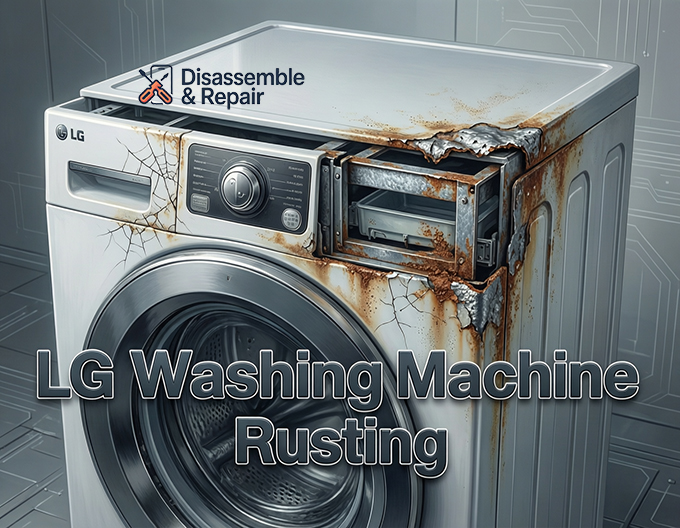
The most widely reported issue involves the top-load washer frame, specifically the area around the bleach inlet and the detergent dispenser. Owners often notice small, spider-web-like cracks in the paint or brown staining near the dispenser cup. As the rust expands, it can cause the paint to flake off in chips, dropping rust particles into the wash drum. This is a critical failure point because the frame supports the heavy components of the lid and console.
Read more LG washer showing error but no code
The Detergent Dispenser Drawer
On both front-load and top-load models, the housing for the detergent dispenser drawer is a moisture trap. Residual water left in the dispenser after a cycle creates a micro-climate of 100% humidity. If the enamel coating in this recess is thin or porous, rust will form rapidly. In severe cases, the rust can spread from the drawer housing to the exterior front panel of the machine, creating unsightly streaks that run down the front of the unit.
Front-Load Washer Gasket Area
While less common on the exterior cabinet, the area surrounding the front-load washer gasket (the gray rubber seal) is another hotspot. Moisture trapped behind the gasket can wick toward the metal lip of the door opening. If the paint edge is rough or unsealed, water ingress will cause the metal beneath the rubber to rust. This is particularly problematic because the rough, rusted metal can eventually tear the rubber gasket, leading to water leaks that cause further damage to the floor and the machine’s internal components.
Read more LG front load washing machine not filling with water
Professional Repair: Halting the Corrosion
Fixing a rusting washing machine is not as simple as painting over the spot. To stop LG washing machine rusting permanently, you must chemically neutralize the oxidation before applying any cosmetic finish. Failing to remove the rust entirely will simply allow it to continue spreading beneath the new paint.
Step 1: Safety and Preparation
Before beginning any repair, unplug the washing machine to ensure safety. You will need to ventilate the area well, as the chemicals involved can be potent. Remove the detergent drawer and, if possible, the top console of the washer to access the full extent of the damage. Often, the rust you see is only 10% of the actual corrosion; the rest is hiding under the plastic bezel.
Step 2: Mechanical Removal
Using medium-grit sandpaper (around 120-grit) or a wire brush, aggressively remove all loose paint and flaky rust. You must sand down until you see bright, bare metal or at least a solid, non-flaky surface. Do not be gentle here; any microscopic pocket of rust left behind will act as a seed for future corrosion. Feather the edges of the surrounding good paint so there is a smooth transition between the bare metal and the painted surface.
Read more LG washing machine fE error
Step 3: Chemical Treatment with Rust Inhibitor
This is the most crucial step. Apply a high-quality rust inhibitor or rust converter to the exposed metal. These chemical solutions typically contain tannic acid or phosphoric acid, which reacts with the iron oxide (rust) and converts it into iron tannate or iron phosphate—a stable, black inert material that prevents further corrosion. Allow this treatment to cure fully according to the manufacturer’s instructions (usually 24 hours). This creates a chemical barrier that moisture cannot penetrate.
Step 4: Applying Appliance Enamel
Once the inhibitor has cured, you must seal the surface. Do not use standard wall paint or generic spray paint. You specifically need appliance touch-up paint or a high-heat epoxy appliance spray. These paints are formulated to resist the thermal cycling, vibration, and chemical exposure (bleach/detergent) that washing machines endure.
- For small spots: A bottle of liquid touch-up paint with a brush applicator is sufficient. Apply thin layers, allowing them to dry between coats.
- For large areas: Use spray enamel. Mask off the surrounding areas of the washer with painter’s tape and plastic sheeting to prevent overspray. Apply multiple light coats to build up a durable shell.
Prevention Strategies for Long-Term Durability
Preventing the recurrence of rust requires a change in how you maintain and use the machine. By controlling the environment and your usage habits, you can significantly extend the life of the galvanized steel cabinet.
Controlling Humidity Levels
If your laundry room is damp, invest in a dehumidifier to keep humidity levels below 50%. This reduces the atmospheric moisture available for the oxidation process. Additionally, always leave the washer door or lid open after a cycle. This allows the internal components, the drum, and the detergent dispenser drawer to dry out completely. For front-loaders, wiping down the front-load washer gasket and the metal rim after every wash is a non-negotiable habit for rust prevention.
Chemical Management
Be incredibly careful when pouring bleach or detergent. If you spill any chemicals on the washer’s frame, wipe them up immediately with a damp cloth and then dry the area. Do not let these corrosive agents sit on the surface. Furthermore, consider using powder detergents or high-efficiency (HE) liquid detergents sparingly, as excess suds can overflow into crevices where they degrade the protective sealants.
Periodic Waxing
It may sound unusual for an appliance, but applying a layer of automotive wax to the metal exterior of your washing machine once a year provides an excellent sacrificial barrier against moisture. The wax fills in microscopic pores in the appliance enamel and beads water away from the metal, offering an extra line of defense against splashes and high humidity.
Conclusion
Dealing with LG washing machine rusting is an unfortunate reality for many, but it does not have to spell the end of your appliance’s life. By recognizing the early signs of surface rust around the dispenser and frame, and understanding the vulnerability of galvanized steel to household chemicals, you can take action. A disciplined approach to repair—involving thorough sanding, the application of a rust inhibitor, and sealing with proper appliance touch-up paint—can restore your machine’s appearance and function. Combined with smart maintenance habits to lower humidity and chemical exposure, you can stop the decay in its tracks and protect your investment for years to come.
Frequently Asked Questions
Why does rust specifically form around the detergent dispenser on my LG washer?
Rust frequently occurs in this area because the dispenser is often situated directly above the galvanized steel frame. Over time, splashing bleach or concentrated liquid detergents can seep through the plastic housing. Because bleach is a powerful oxidizer, it eats through the protective zinc coating and appliance enamel much faster than water, leading to hidden corrosion that eventually causes the paint to bubble and flake.
Read more door not opening in lg washing machine
Can I fix the rust by simply applying a new coat of paint?
No, simply painting over the rust is a temporary fix that will fail. To stop the corrosion permanently, you must first mechanically remove all loose rust with sandpaper until you reach bare metal. Then, you must apply a chemical rust inhibitor or converter to neutralize the oxidation. Only after the metal is chemically stabilized should you apply a moisture-resistant appliance enamel or touch-up paint.
How can I prevent rust from developing in my laundry room?
The best way to prevent rust is to control the environment and your usage habits. Keep the humidity in your laundry room below 50% using a dehumidifier and always leave the washer lid or door open after a cycle to allow internal components to dry. Additionally, wipe up any detergent or bleach spills immediately and consider applying a thin layer of automotive wax to the machine’s exterior once a year to create a water-beading protective barrier.
Where are the most common “danger zones” I should check for early signs of rust?
You should regularly inspect three main areas: the frame surrounding the bleach and detergent inlets on top-loaders, the internal housing of the detergent dispenser drawer on both front and top-loaders, and the metal lip hidden behind the gray rubber door gasket on front-load models. Identifying small paint bubbles or brown “spider-web” cracks in these areas early can prevent structural damage.
Is the rust on my washing machine dangerous for my clothes?
Yes, if left untreated, rust can become a significant issue for your laundry. As the corrosion progresses, the paint will flake off, and jagged edges of oxidized metal can snag delicate fabrics. More importantly, rust particles can flake off into the wash drum during a cycle, leading to permanent orange or brown stains on your clothing that are very difficult to remove.