
If you are staring at your appliance display wondering why the cycle has stopped, you are likely dealing with the Lg Washing Machine Sud Error. This common fault code, often displayed as “SUD” or “Sd,” is a protective mechanism designed to prevent water damage and ensure your laundry is rinsed properly.
While LG washers are renowned for their reliability and advanced technology, they are highly sensitive to the amount of foam inside the drum. Understanding why this error occurs and how to clear it is essential for maintaining the longevity of your machine. This guide will walk you through the causes, immediate fixes, and long-term prevention strategies, ensuring you can get your laundry back on track.
Understanding the SUD code
The SUD error is not a sign that your machine is broken; rather, it indicates that the washing machine has detected Excessive Foam during the wash or rinse cycle. Modern LG units, particularly the Front Load Washer, are designed to operate with very little water. Because of this low-water environment, even a small amount of incorrect soap can create a massive volume of suds.
Read more LG washer shaking violently during spin
Technically, the machine uses a Pressure Switch (also known as a water level sensor) to monitor the internal environment of the drum. When there are too many suds, the air pressure inside the drum changes, preventing the water level sensor from getting an accurate reading. The Control Board interprets this confusing signal as a risk of overflow or pump failure and halts the cycle to allow the foam to dissipate.
Common causes of the SUD error
To effectively fix the issue, you must first identify the source of the Over-sudsing.
1. Incorrect detergent usage
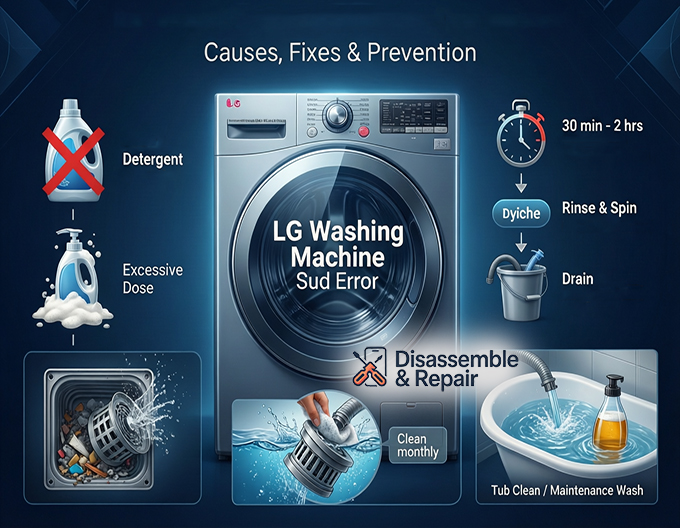
The most frequent culprit is the type of detergent being used. LG front loaders are High Efficiency (HE) machines. They require HE Detergent, which is specifically formulated to clean clothes with minimal water and low sudsing action. Using regular detergent, which produces high volumes of rich lather, will almost immediately trigger the SUD code.
2. Excessive detergent quantity
Even if you are using the correct HE Detergent, using too much of it can lead to trouble. Modern detergents are highly concentrated. Pouring more than the recommended amount into the Soap Dispenser does not result in cleaner clothes; instead, it leaves a chemical residue that builds up over time and creates unmanageable foam.
3. Drainage restrictions
If the suds cannot exit the machine, the sensor will continue to read an error. A clogged Drain Pump Filter or a kinked Drain Hose can prevent the soapy water from draining fast enough. If the pump cannot evacuate the water and foam mixture, the machine assumes the suds level is still dangerously high.
Read more LG washing machine dE2 error
Troubleshooting the LG washing machine Sud error
When the error appears, your washer might seem stuck. However, in most cases, the machine is simply in a “waiting” mode. Here is how to handle the situation immediately.
Step 1: Patience is key
When the “SUD” code flashes, the washer often enters a suds-reduction routine automatically. It pauses the cycle to let the bubbles burst naturally. This process can take anywhere from 30 minutes to two hours. If you are not in a rush, simply waiting is the easiest solution. The Control Board will resume the cycle once the Pressure Switch detects that the foam level has dropped.
Step 2: Running a rinse cycle
If the machine does not resume or if you want to speed up the process, you may need to force the foam out.
- Power off the machine and wait a few minutes.
- Power it back on and select a “Rinse & Spin” cycle.
- Do not add any more detergent.
- This Rinse Cycle introduces fresh water to dilute the Excessive Foam and forces the drain pump to evacuate the suds.
Step 3: The Emergency drain
If the drum is full of water and foam and the door is locked, you may need to drain it manually before you can troubleshoot further.
- Locate the small access panel at the bottom front corner of your washer.
- Open it to reveal a small rubber hose and the Drain Pump Filter cap.
- Pull out the small hose (often called the emergency drain hose), place it in a shallow bowl or bucket, and remove the plug.
- Allow the water and foam to drain completely. This relieves the pressure inside the drum.
Deep cleaning your LG washer
Once you have cleared the immediate error, you must address the residue that caused it. If you do not perform a deep clean, the Lg Washing Machine Sud Error will likely return on the next load.
Read more LG washing machine E3 error
Cleaning the drain pump filter
The drain filter is the kidney of your washing machine; it catches lint, coins, and sludge. If it is clogged, suds stay trapped in the drum.
- After draining the water via the emergency hose (as described above), unscrew the large circular cap of the Drain Pump Filter.
- Remove the filter and wash it under warm running water. Remove any lint or debris.
- Check the housing for any obstructions.
- Reinsert the filter and tighten it securely. Loose filters are a major cause of leaks.
Inspecting the drain hose
Check the grey corrugated Drain Hose at the back of the machine. Ensure it is not bent, crushed, or clogged. If the hose connects to a sink spigot or a standpipe, make sure the end of the hose is not submerged in water, which can cause siphoning issues and trap air bubbles.
Performing a maintenance wash
Over time, soap scum builds up in the outer tub (the part you cannot see) and the Soap Dispenser. This residue creates suds even when you do not add detergent.
Read more lg washing machine not filling with water
- Remove all clothes from the washer.
- Pour a cup of white vinegar or a commercial washing machine cleaner into the detergent compartment.
- Select the Maintenance Wash cycle (often labeled as “Tub Clean” on LG washers). If your model lacks this button, select the hottest water setting and the longest cycle available.
- Allow the machine to run completely. The hot water and vinegar will dissolve the soap scum and clear the Pressure Switch tube of any foamy blockages.
Advanced troubleshooting: Hardware failures
If you have switched to HE Detergent, cleaned the filters, and performed a maintenance wash, but the error persists, you might be facing a hardware malfunction.
Faulty pressure switch
The Pressure Switch determines water level via air pressure. If the tube connecting the switch to the drum is clogged with dried soap (“gunk”), it may give false readings. In rare cases, the electrical switch itself fails and “thinks” the drum is full of foam when it is empty. A technician can test this component with a multimeter to see if it needs replacement.
Control board issues
The main Control Board is the brain of the washer. If it fails to process the signal from the sensors correctly, it might display the SUD error erratically. This is the least common cause and should only be considered after all other options (soap, filters, drainage) have been exhausted. Replacing a control board is complex and typically requires professional service.
Prevention tips for high efficiency washers
Preventing the Lg Washing Machine Sud Error is far easier than fixing it. By following a few strict laundry habits, you can ensure your machine runs efficiently for years.
- Stick to HE Detergent: Never use standard detergent in a Front Load Washer. The mechanics of the tumbling action create too much agitation for high-sudsing soaps.
- Measure Correctly: For a normal load, you often need only 1 to 2 tablespoons of 2x concentrated HE Detergent. Ignore the lines on the cap, which are often designed to make you use more product than necessary.
- Clean the Soap Dispenser: Pull out the dispenser drawer periodically and rinse it with hot water. Mold and old soap jelly often accumulate here, contributing to Over-sudsing.
- Monthly Maintenance: Make the Drain Pump Filter cleaning and Maintenance Wash a monthly ritual. This prevents the gradual buildup of biofilm that confuses the machine’s sensors.
Conclusion
The Lg Washing Machine Sud Error is a helpful warning rather than a catastrophic failure. It signals that your machine is struggling to manage Excessive Foam, usually caused by simple user errors regarding detergent type or quantity. By switching to High Efficiency detergent, keeping your Drain Pump Filter clean, and ensuring your Drain Hose is clear, you can eliminate this error permanently. Regular care not only stops the flashing lights but also ensures your clothes come out cleaner and fresher every time.
Frequently asked questions
What does the SUD or Sd error code actually mean?
The SUD error code indicates that your LG washing machine has detected excessive foam inside the drum. This isn’t a mechanical breakdown, but a protective pause. The machine stops the cycle because too many suds prevent the water level sensor (pressure switch) from getting an accurate reading, which could lead to an overflow or damage to the pump.
How long should I wait for the SUD error to clear?
If you choose to let the suds dissipate naturally, it typically takes between 30 minutes and two hours. Modern LG washers often have an automatic suds-reduction routine that will resume the cycle once the foam levels have dropped to a safe point.
Can I use regular detergent if I use a smaller amount?
No, you should strictly avoid using regular detergent in an LG front-load washer. These machines are High Efficiency (HE) units designed to work with very little water. Regular detergent is formulated to create a high volume of suds, which will trigger the error code regardless of the amount used. Always look for the “HE” logo on your detergent packaging.
Why does the SUD error appear even when I don’t add much detergent?
This usually happens because of “soap creep” or residue buildup. Over time, old detergent and fabric softener can create a film on the outer tub or clog the pressure switch tube. When the machine agitates, this residue re-suds. Additionally, a clogged drain pump filter can trap soapy water in the machine, causing the sensor to repeatedly trigger the error.
How much HE detergent is recommended per load?
For a standard load of laundry, you generally only need 1 to 2 tablespoons of 2x concentrated HE detergent. Many users follow the lines on the detergent cap, but these measurements are often excessive for high-efficiency machines. Using less detergent will help prevent foam buildup and keep your machine running smoothly.