
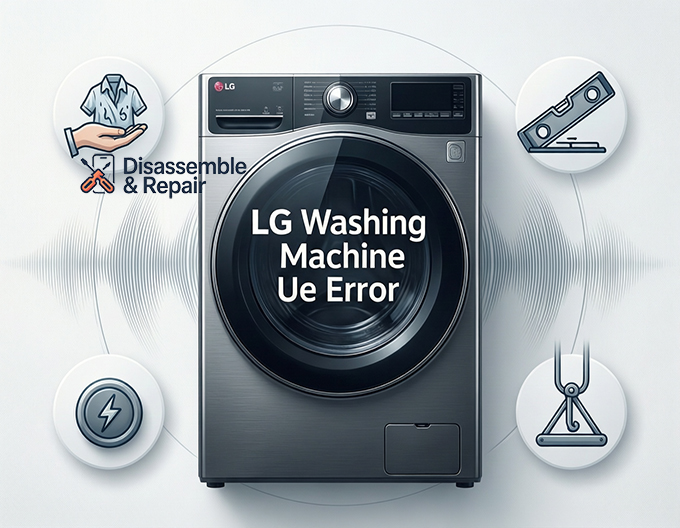
If you see an Lg Washing Machine Ue Error on your display, it indicates that the appliance is struggling to balance the laundry load during the spin cycle. This common code is designed to protect your machine from damage caused by violent shaking, but it can be frustrating when it interrupts your laundry routine.
Understanding the difference between a “uE” and “UE” code is the first step toward a solution. Often, the fix is as simple as redistributing your clothes, but persistent errors may point to mechanical issues like worn suspension rods or unlevel footing.
Understanding the Error: “uE” vs. “UE”
LG washers use a two-stage system to manage unbalanced loads. It is vital to distinguish between the lowercase and uppercase versions of this code.
- uE (Lowercase): This indicates automatic rebalancing. The washer has detected an imbalance and is attempting to fix it automatically. The machine may fill with water, agitate, and drain repeatedly to shift the laundry distribution. You generally do not need to intervene at this stage; simply wait to see if the washer can correct itself.
- UE (Uppercase): This is the actual Unbalanced load error. The machine failed to rebalance the load automatically after several attempts and has stopped the spin cycle to prevent damage. This requires your immediate attention.
Common Causes of the Lg Washing Machine Ue Error
Several factors can trigger this error code, ranging from user habits to mechanical wear.
Read more LG washing machine E7 error
1. Improper Laundry Distribution
The most frequent cause is a single heavy item (like a wet towel or blanket) stuck on one side of the drum, or a load that is too small or too large. This throws off the center of gravity, causing the vibration sensor to trip and stop the machine.
Read more LG washing machine OL error
2. The Machine is Not Level
For the spin cycle to operate smoothly, the washer must sit perfectly flat on the floor. If the leveling legs are not adjusted correctly, the machine will rock back and forth, triggering the error.
3. Mechanical Failures
- Top Load Washer: In these models, the tub hangs on suspension rods. Over time, the springs in these rods can lose tension, causing the tub to bang against the sides of the cabinet.
- Front Load Washer: These rely on shock absorbers and springs. If the shock absorbers wear out, they cannot dampen the movement of the heavy drum.
Step-by-Step Troubleshooting Guide
Follow these steps to diagnose and clear the error.
Step 1: Redistribute the Load
When the “UE” code appears, the door usually unlocks. Open the washer and manually untangle the clothes.
- If washing a large item like a duvet, add a few heavy towels to balance the weight.
- If the load is too small, add more items.
- Ensure the clothes are not clumped together.
Step 2: Check the Leveling Legs
If the load seems fine but the washer vibrates excessively, check if the appliance is level.
Read more LG washing machine iE error
- Place a bubble level on top of the machine (check both front-to-back and side-to-side).
- If it is uneven, use a leveling tool (typically a wrench provided with the washer) to adjust the leveling legs at the bottom.
- Turn the legs clockwise to lower or counter-clockwise to raise the corner until the bubble is centered.
- Press down on the opposing corners of the top panel to ensure there is no “wobble.”
Step 3: Perform a Master Reset
Sometimes the electronic control board needs a hard reset to clear a glitch.
Read more LG washing machine CE error
- Unplug the washing machine from the power outlet.
- Press and hold the
Start/Pausebutton for 5 seconds. - Plug the machine back in.
- Run a “Rinse + Spin” cycle to test if the error returns.
Step 4: Inspect Suspension Rods (Top Load Only)
If you own a top load washer and hear a loud banging noise before the error appears, your suspension rods are likely shot.
- To test this, push the tub down firmly and let go. It should pop back up and stop immediately.
- If the tub bounces up and down multiple times like a pogo stick, the rods are worn out and require appliance repair.
Step 5: Check Rotor Mounting Nut
In rare cases, the nut holding the motor’s rotor (on the back of the drum) can come loose. This causes the drum to wobble independently of the motor, confusing the Hall sensor. This is a more advanced repair that involves removing the back panel.
Prevention Tips
To avoid seeing the Lg Washing Machine Ue Error in the future:
- Wash similar fabrics together: Don’t mix heavy denim with lightweight synthetics.
- Use the correct cycle: Use the “Bulky/Bedding” wash cycle for comforters and large blankets. This cycle uses a different spin profile designed to handle heavy loads.
- Regular maintenance: Check the leveling of your machine every few months, as vibration can cause the lock nuts on the legs to loosen over time.
Frequently Asked Questions
What is the difference between the “uE” and “UE” error codes?
A lowercase “uE” means the washing machine has detected an unbalanced load and is attempting to fix it automatically by redistributing the clothes. An uppercase “UE” indicates that the machine failed to rebalance the load on its own and has stopped the cycle, requiring you to manually intervene.
How do I perform a master reset to clear the error?
To perform a master reset, unplug the washing machine from the power source. Press and hold the Start/Pause button for 5 seconds, then plug the machine back in. You should then run a “Rinse + Spin” cycle to confirm the error is resolved.
How can I tell if my suspension rods are bad?
For top-load washers, you can perform a “bounce test.” Open the lid and firmly push the wash tub down, then let go. If the tub pops back up and stops immediately, the rods are likely fine. If the tub bounces up and down several times like a pogo stick, the suspension rods are worn out and need to be replaced.
What is the best way to prevent the UE error from happening?
To prevent imbalances, always wash similar fabric weights together (e.g., don’t mix heavy towels with light t-shirts). Additionally, use the “Bulky/Bedding” cycle for large items like comforters and ensure your machine stays level by checking the leveling legs every few months.